
Google Nano Banana 2.1 Brings GA Image Generation and Editing to Gemini
Google has released Nano Banana 2.1 as a generally available Gemini image generation and editing model with 1K, 2K, and 4K output options.
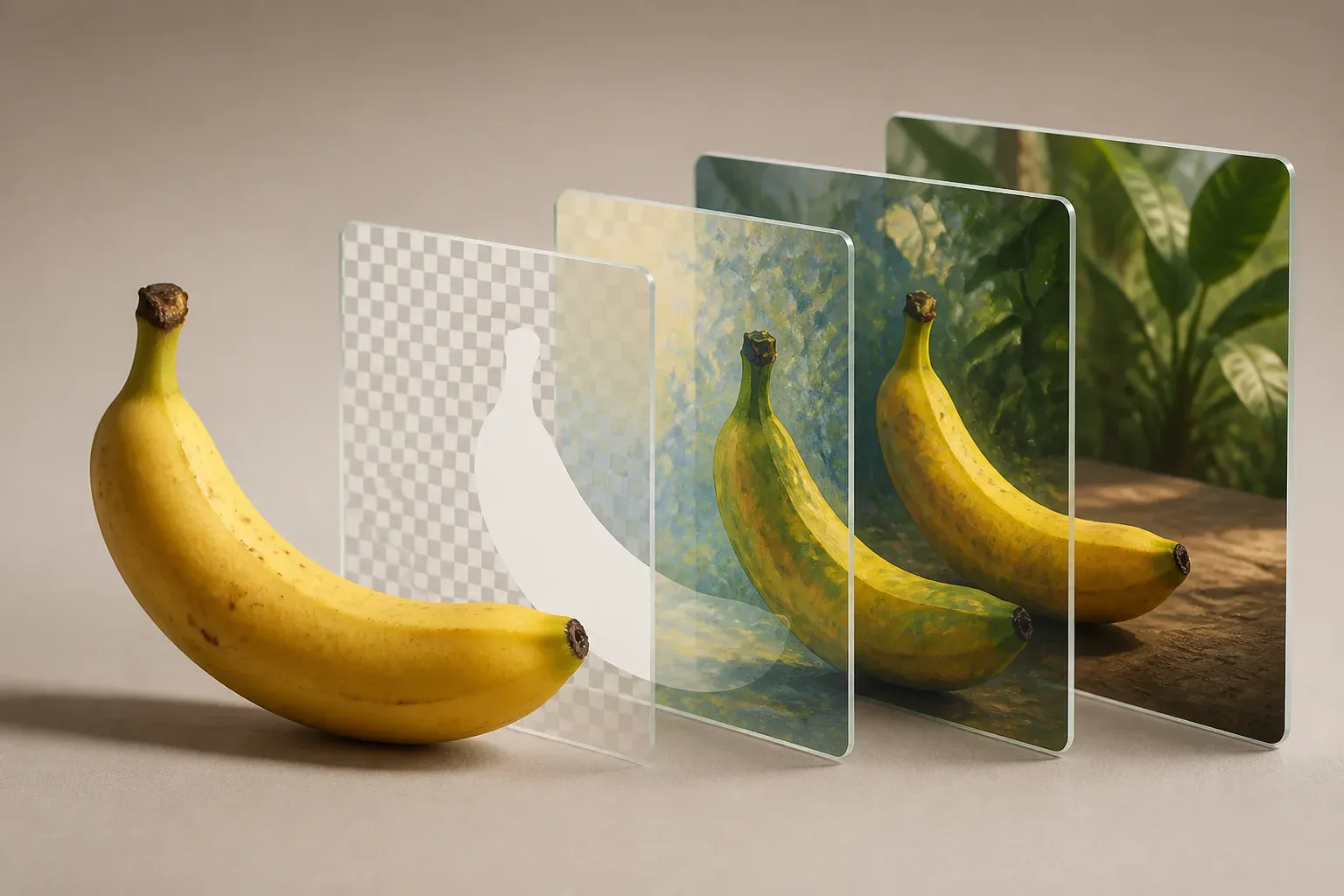
Google has made Gemini Nano Banana 2.1 generally available as an image generation and editing model on the Gemini Enterprise Agent Platform. The model is designed to balance price and performance while supporting image-and-text workflows, content credentials, and output resolutions up to 4K. For teams producing marketing assets, product visuals, or content variations, the release matters because it formalizes another Google image model option with documented limits and pay-as-you-go availability.
According to Google Cloud's Nano Banana 2.1 model documentation, the model ID is gemini-nano-banana-2.1, its launch stage is GA, and its release date is October 6, 2026. Google lists the model as globally available and provisioned through the Gemini Enterprise Agent Platform.
The important distinction is that Nano Banana 2.1 is not only a text-to-image model. Google documents both image generation and image editing, allowing a workflow to begin with a prompt or use images as part of the input. That can make the model relevant where teams need to create new assets and adapt existing ones, rather than treating image generation as a one-step creative task.
What Nano Banana 2.1 supports
Google positions Nano Banana 2.1 for multimodal image work. Its documented capabilities include interleaved text and images, which means prompts can combine written instructions with image inputs. The documentation also lists content credentials, image generation and editing, plus support for image-related prompting that can handle 2D and 3D-like concepts.
For practical content operations, these capabilities could support tasks such as:
- Producing visual concepts from written campaign briefs.
- Creating alternate versions of product or promotional imagery from supplied images and instructions.
- Adapting the composition, aspect ratio, or resolution of visual assets for different channels.
- Building image steps into broader content-production processes that already use text prompts and source files.
These are potential applications, not guarantees of a particular visual quality or workflow outcome. Google has not supplied real-world latency or throughput figures in the material provided, so organizations should validate output quality and turnaround time against their own asset requirements.
Resolution, tokens, and upload limits
Nano Banana 2.1 uses token-based consumption for image inputs and outputs. Google documents an input cost of 1,120 tokens per image. Output-token use rises with the requested target resolution, which is important for planning higher-resolution creative work.
| Model setting or limit | Documented value | Practical implication |
|---|---|---|
| Image input | 1,120 tokens per image | Image-based editing and prompting consume input tokens. |
| 1K image output | Approximately 1,120 output tokens | Lowest documented output-token level of the listed resolutions. |
| 2K image output | Approximately 1,680 output tokens | Requires more output tokens than 1K. |
| 4K image output | Approximately 3,780 output tokens | Has the highest listed output-token requirement. |
| Maximum output tokens per prompt | 32,768 | Sets the documented output-token ceiling for a prompt. |
| Direct upload file limit | 500 MB | Applies to files supplied directly to the model. |
Google supports 1K, 2K, and 4K image resolutions, along with multiple aspect ratios. The documentation does not provide an exact currency price per image or output token. It identifies pay-as-you-go consumption and points readers to Google Cloud pricing resources for current rates. As a result, image cost depends on the selected resolution and the applicable pricing at the time of use, rather than a fixed published per-image figure in the supplied documentation.
Controls that are not listed for this model
Nano Banana 2.1 is built for a defined image generation and editing workflow, and Google does not list every Gemini control as available. The documentation identifies several unsupported parameters: seed, topK, logprobs, temperature, and topP.
It also does not list RAG, chat completions, or fine-tuning as supported for this variant. This matters when evaluating fit. A team looking for a configurable conversational model, a retrieval-based system, or a fine-tunable model should not assume those functions come with Nano Banana 2.1. Its documented role is image-focused multimodal generation and editing.
What the release means for image workflows
The GA designation is significant because it moves Nano Banana 2.1 beyond an experimental or teaser-stage product description. Google documents it as globally available through its platform, with PayGo consumption. That gives organizations a clearer foundation for assessing whether the model belongs in a production-oriented visual workflow.
For marketing and ecommerce work, the most relevant question is not simply whether an AI model can create images. It is whether the model's supported inputs, outputs, resolutions, and operating limits align with the job. A campaign concept may be suitable for fast generated variations, while a high-resolution product image may require more careful testing, review, and token-cost planning.
Content credentials are another documented feature worth noting. Their presence signals that provenance-related information is part of the model's listed feature set. The supplied material does not explain how those credentials appear in every downstream tool or distribution channel, so teams should confirm their behavior in the specific systems where images will be stored or published.
The model's interleaved text-and-image support can also help simplify handoffs between creative instructions and reference material. Rather than describing every visual detail from scratch, a workflow can potentially pair a source image with explicit text instructions. The actual result will still depend on the prompt, source material, requested output, and internal review process.
If your team is considering AI-generated imagery as part of a repeatable content process, Scalevise can help connect model capabilities to the systems that already run your work. Our AI workflow automation service focuses on reducing manual handoffs, structuring review steps, and turning suitable AI tasks into practical operations. Assessing the model, resolution needs, approval path, and cost controls before scaling can prevent a promising experiment from becoming another disconnected tool. Discuss an AI automation project with Scalevise.
Questions to resolve before adoption
Google's documentation provides core model details, but several operational questions remain outside the supplied information. These include exact current pricing, typical generation speed under real workloads, and the model's interaction with other Gemini products and services. Businesses should consult the relevant current Google Cloud pricing information and test the model with representative assets before forecasting volume or production costs.
Frequently Asked Questions
What is Google Nano Banana 2.1?
Google Nano Banana 2.1 is a generally available Gemini model for image generation and image editing on the Gemini Enterprise Agent Platform. Its model ID is gemini-nano-banana-2.1.
When did Nano Banana 2.1 become generally available?
Google's documentation lists Nano Banana 2.1 as GA with a release date of October 6, 2026.
What image resolutions does Nano Banana 2.1 support?
Google lists 1K, 2K, and 4K image output resolutions, with output-token use of approximately 1,120, 1,680, and 3,780 tokens respectively.
How is Nano Banana 2.1 priced?
The supplied documentation identifies pay-as-you-go consumption and token usage, but does not provide exact currency prices per image or token. Google Cloud's current pricing resources should be checked for applicable rates.
Which controls are not supported by Nano Banana 2.1?
Google does not list seed, topK, logprobs, temperature, or topP as supported parameters. RAG, chat completions, and fine-tuning are also not listed as supported for this model variant.
Conclusion
Nano Banana 2.1 is a formal GA addition to Google's Gemini image model lineup, with documented generation and editing capabilities, global availability, and resolution-based token usage. Its strongest fit is likely in image-focused workflows that can benefit from combining text instructions with image inputs. Exact costs and real-world performance still require current pricing checks and hands-on testing, particularly before a team scales output volume.