
Google Opens SynthID Detector Globally in English for AI Media Verification
Google's SynthID Detector is now publicly available globally in English, giving users a way to check supported images, video, and audio for SynthID watermarks.
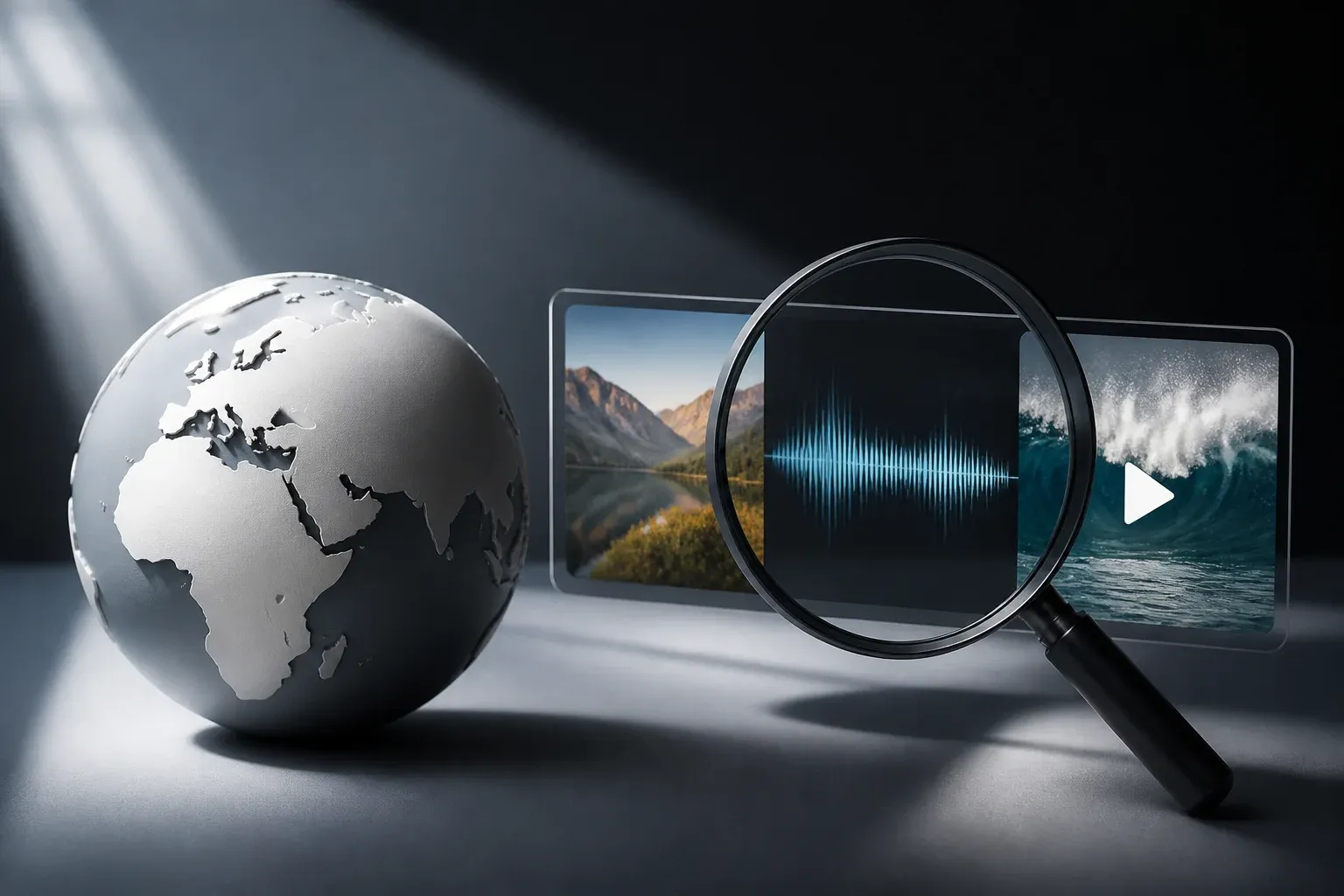
Google has expanded the SynthID Detector to a global public rollout in English, making its media-verification portal available to anyone. The tool checks whether uploaded images, video, or audio files carry a SynthID watermark, Google’s provenance technology for AI-generated content. For businesses that publish, review, or accept media from outside contributors, the release offers a more accessible way to investigate the origin of supported files, but it is not a universal test for all AI-generated content.
In its official October 7, 2026 announcement, Google said the portal can verify content made with Google AI and participating industry partners, including OpenAI, NVIDIA, and Kakao. Apple support is described as coming soon. The expanded access builds on a limited 2025 launch for journalists and media professionals, shifting a previously restricted verification capability into a public-facing tool at synthid.com.
SynthID is a watermarking framework that Google has embedded in output from its AI tools since 2023. When the detector finds that watermark, it can also highlight the parts of a file where the mark is most likely present. That makes the result more useful than a simple yes-or-no label: users can assess whether a supported provenance signal exists and where it appears in the content.
What the SynthID Detector can and cannot verify
The detector is designed to identify SynthID watermarks, not to determine whether any file was made or edited with AI. That distinction is essential for publishers, marketing teams, marketplaces, and customer-facing businesses handling user-submitted media.
A positive result indicates that the uploaded file carries a SynthID watermark. A negative result is inconclusive. It does not prove that a file is human-made, authentic, or free from AI editing. Content generated by systems that do not embed SynthID, or content whose watermark cannot be detected, may return no match.
Google positions the rollout as part of a broader effort to improve transparency and content provenance. Its existing verification features in Search, the Gemini app, and Chrome collectively handle more than one million verification requests per day. The public portal broadens access to those provenance checks, while partner participation potentially expands the set of media that can be recognized over time.
| Area | Earlier access | Global public rollout |
|---|---|---|
| Who could use the detector | Journalists and media professionals in the 2025 limited release | Anyone globally, in English |
| Supported media | Files carrying SynthID watermarks | Images, video, and audio carrying SynthID watermarks |
| Covered ecosystems | Google’s SynthID-enabled AI content | Google content and participating partner content from OpenAI, NVIDIA, and Kakao |
| What a result means | Detection of a SynthID provenance signal | Detection of a SynthID provenance signal, with likely watermark regions highlighted |
A practical content-review workflow
The portal can be useful as one step in a proportionate review process, especially when media provenance matters to a business decision. Teams can use it to:
- check supported assets before republishing user-generated photos, video, or audio
- review agency, freelancer, or creator submissions when disclosure of AI use is relevant
- investigate questionable files received through support, community, or marketplace channels
- document a provenance check alongside existing editorial, brand-safety, or moderation review
The key is to treat SynthID detection as evidence of a specific watermark, rather than a replacement for human judgment. A business may still need to consider the source of the file, permissions, context, possible manipulation, and its own policies on AI-assisted media.
Pricing, API access, and integration questions
Google’s announcement confirms public access through the SynthID Detector portal, but the supplied update does not provide pricing details or announce an API for automated checks. That means organizations should not assume the portal can currently be integrated into a high-volume ingestion or moderation workflow.
For now, the immediate value is accessible manual verification for supported files. Companies with recurring media-review needs should distinguish between a public portal and an operational system capable of processing content at scale. Google’s partner expansion is significant because it may make provenance checks relevant across more content ecosystems, but coverage still depends on whether a file contains a detectable SynthID watermark.
For businesses adopting generative media, the release also reinforces a practical expectation: provenance information is becoming part of content handling. Teams that create AI-assisted marketing assets or receive media from third parties can start defining when a verification check is useful, what a result means internally, and how to communicate AI use clearly when appropriate.
Businesses that need to turn AI tools and verification steps into reliable day-to-day processes can benefit from a clear implementation plan. Scalevise AI consultancy helps teams assess practical AI use cases, select suitable tools, and design workflows that reduce manual work without treating limited detector results as definitive proof. Establishing sensible rules now can make content review more consistent as provenance technologies evolve. Request an AI consultation.
Frequently Asked Questions
What is Google SynthID Detector?
Google SynthID Detector is a public portal that checks uploaded images, video, and audio for SynthID watermarks. These watermarks are provenance signals embedded in content produced by Google AI tools and participating partners.
Can SynthID Detector identify all AI-generated content?
No. It detects SynthID watermarks specifically. A result showing no watermark does not establish that a file was created by a person or that it has not been edited with AI.
Which companies' AI content can the detector check?
Google says the detector can verify qualifying watermarked content from Google and industry partners including OpenAI, NVIDIA, and Kakao. Apple support is described as coming soon.
Is SynthID Detector available to the public?
Yes. Google expanded SynthID Detector to a global public rollout in English on October 7, 2026. It was previously released on a limited basis to journalists and media professionals in 2025.
Does Google offer SynthID Detector pricing or an API?
The supplied announcement confirms access through the public portal but does not provide pricing information or announce API access.
Conclusion
Google’s global English rollout makes SynthID watermark checks available to far more people, including teams that routinely assess outside media. Its value lies in providing a concrete provenance signal for supported files. Businesses should use it as a useful verification layer, while recognizing that no detected watermark is not proof that media is human-made or otherwise authentic.