
Microsoft Ignite 2026 Expands MAI Models Across Coding, Voice, Images and Security
Microsoft Ignite 2026 highlighted a broader MAI model family spanning reasoning, coding, image, voice, speech and cybersecurity capabilities across Foundry and Copilot.
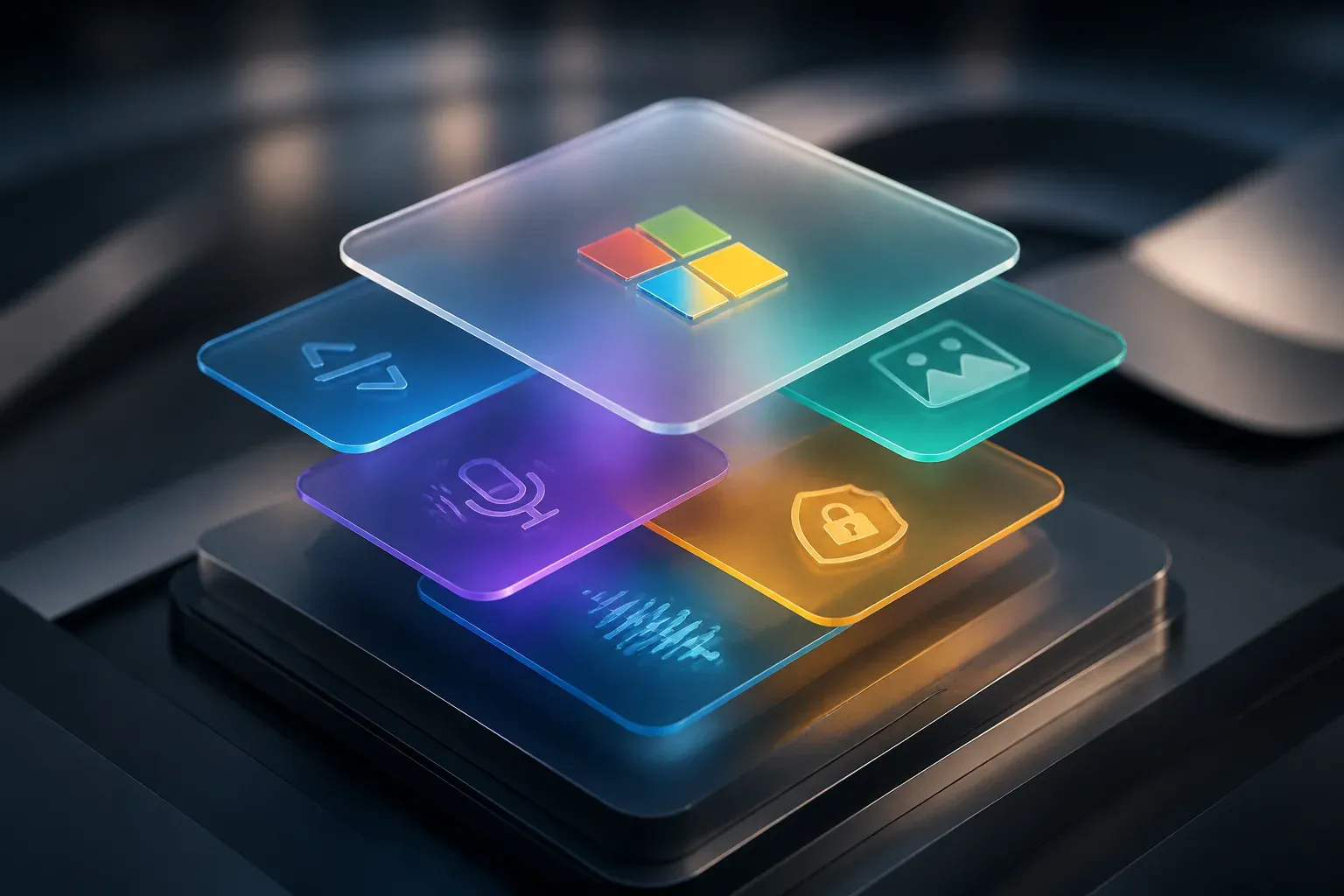
Microsoft used Ignite 2026 to show that its MAI, or Microsoft AI, model strategy is extending well beyond a single chatbot or coding assistant. The company is expanding an in-house model lineup across text and reasoning, code, image generation, voice, transcription and cybersecurity, with deployment paths through Microsoft Foundry, Copilot and security products. For developers and business teams, the important shift is the growing availability of specialized Microsoft-built models for distinct AI tasks.
Microsoft's official Ignite 2026 announcement confirms new MAI-driven capabilities across coding, image, audio and threat defense. It also highlights the general availability of the Microsoft-Decision-1.1 decision-model family and Microsoft Perception, a threat-defense framework that combines specialized agents powered by MAI-Cyber.
The announcement is best understood as a platform expansion. Rather than positioning one MAI model as the answer to every workload, Microsoft is building a family of models and capabilities intended for different tasks. That approach matters because developers can increasingly choose models based on the work they need to perform, such as generating code, processing speech or supporting security operations.
What Microsoft expanded at Ignite 2026
The MAI portfolio now spans several practical AI categories. Microsoft has separately documented MAI Thinking-1, MAI Code 2 and MAI Code 2 Flash, updates to MAI Image, and MAI Transcribe and MAI Voice capabilities. Model cards and release materials provide the clearest source for understanding the scope of individual releases, while Foundry communications place these capabilities in a development platform context.
At Ignite, the new capabilities included both models and systems that use models as components. Microsoft Perception is an example of the latter: it fuses specialized agents powered by MAI-Cyber for threat defense. Microsoft-Decision-1.1, meanwhile, is a decision-model family that reached general availability.
| MAI area | Examples identified by Microsoft | Reported platform or availability context |
|---|---|---|
| Text and reasoning | MAI Thinking-1 and Microsoft-Decision-1.1 | Microsoft-Decision-1.1 is generally available; MAI models are being introduced through Foundry. |
| Code | MAI Code 2 and MAI Code 2 Flash | Microsoft has published model cards and identified coding as a MAI capability area. |
| Image | MAI Image updates | Microsoft Foundry communications cover MAI image models. |
| Voice and speech | MAI Transcribe and MAI Voice variants | Foundry updates include introductory pricing information for specific streaming transcription and voice variants. |
| Cybersecurity | MAI-Cyber and Microsoft Perception | Microsoft Perception is generally available as a specialized-agent framework for threat defense. |
This division of capabilities is significant. A business building an internal support workflow may have different requirements from a team creating product imagery, transcribing calls or improving code production. Specialized models do not remove the need to test quality, cost and fit for a particular workflow, but they give teams more options than a one-model approach.
Microsoft is also linking the MAI family to both Foundry and Copilot. Foundry is the key route for developers that want to build with models, while Copilot is part of the broader cross-product adoption picture described in the research. The supplied materials do not establish that every model or feature has identical availability across every Microsoft product, so teams should check the relevant Foundry release notes and product documentation before planning an implementation.
Pricing, availability and practical implications
Microsoft's Foundry updates have begun to publish introductory pricing for named MAI-Transcribe-2-Streaming and MAI-Voice-2 variants. The verified material does not provide pricing amounts, so it would be premature to estimate a budget or compare these models on cost alone. Still, the fact that pricing and availability details are appearing in Foundry is an important move from model announcements toward practical developer access.
For businesses, the near-term opportunity is not simply to deploy more AI. It is to identify work where a specialized capability can reduce repetitive effort or improve the speed of a customer-facing process. Potential areas, depending on the models and product access available to a team, include:
- Turning spoken interactions into text for follow-up workflows.
- Adding voice experiences where they suit a customer or employee process.
- Supporting developers with code-focused AI capabilities.
- Using image capabilities in content or product-related workflows.
- Exploring specialized threat-defense tooling in security operations.
The constraints are equally practical. A model's presence in the MAI family does not by itself prove that it is the right choice for a particular task. Teams still need to validate output quality, integration requirements, usage pricing and the availability of the desired model in their chosen Microsoft environment. The distinction between a standalone model, a Foundry capability and a Copilot experience also matters when assigning ownership and estimating implementation effort.
For organizations already using Microsoft tools, the broader MAI rollout could simplify experimentation by placing more Microsoft-developed options within familiar platforms. For developers, it creates a reason to reassess model selection rather than assuming that a general-purpose model is the best fit for every workflow. The most useful signal from Ignite is the breadth of the portfolio and its connection to product surfaces where teams can build or use AI.
Businesses that want to turn a growing model catalog into measurable results need a clear view of which workflows are worth changing first. Scalevise helps teams assess use cases, select practical tools and map implementation steps around existing operations, rather than adopting AI because it is newly available. A focused AI implementation and adoption consultation can help identify where coding, voice, transcription or other AI capabilities may save time and where they do not fit. Request a consultation to prioritize an actionable AI roadmap.
Frequently Asked Questions
What did Microsoft announce about MAI at Ignite 2026?
Microsoft expanded its MAI model and capability portfolio across coding, images, audio, voice, speech and cybersecurity. The company also highlighted the general availability of Microsoft-Decision-1.1 and Microsoft Perception.
Is Microsoft-Decision-1.1 generally available?
Yes. Microsoft's Ignite 2026 communications identify the Microsoft-Decision-1.1 decision-model family as generally available.
Where can developers access MAI models?
Microsoft has announced MAI models in Microsoft Foundry across text and reasoning, image, voice and speech. Availability can vary by model and product surface, so developers should consult the relevant Foundry documentation and release notes.
Did Microsoft publish MAI pricing at Ignite 2026?
Microsoft Foundry updates have published introductory pricing information for specific MAI-Transcribe-2-Streaming and MAI-Voice-2 variants. The verified material does not provide the price amounts.
What is Microsoft Perception?
Microsoft Perception is a generally available framework for threat defense that fuses specialized agents powered by MAI-Cyber.
Conclusion
Microsoft Ignite 2026 established MAI as a multi-domain model family with roles in Foundry, Copilot and security capabilities. The most immediate takeaway is not a single flagship model, but a widening set of specialized options for reasoning, coding, images, voice, speech and threat defense. Businesses and developers should now focus on the specific models, access paths and pricing details that match their workflows.