
Nod by n8n Labs Brings Local, Open-Source Personal Automation to Your Computer
Nod is n8n Labs' research-preview personal agent for local task automation across apps and websites, with a sandboxed browser, local data handling, and provider choice.
Automate your SEO and GEO workflows with this free n8n SEO template.
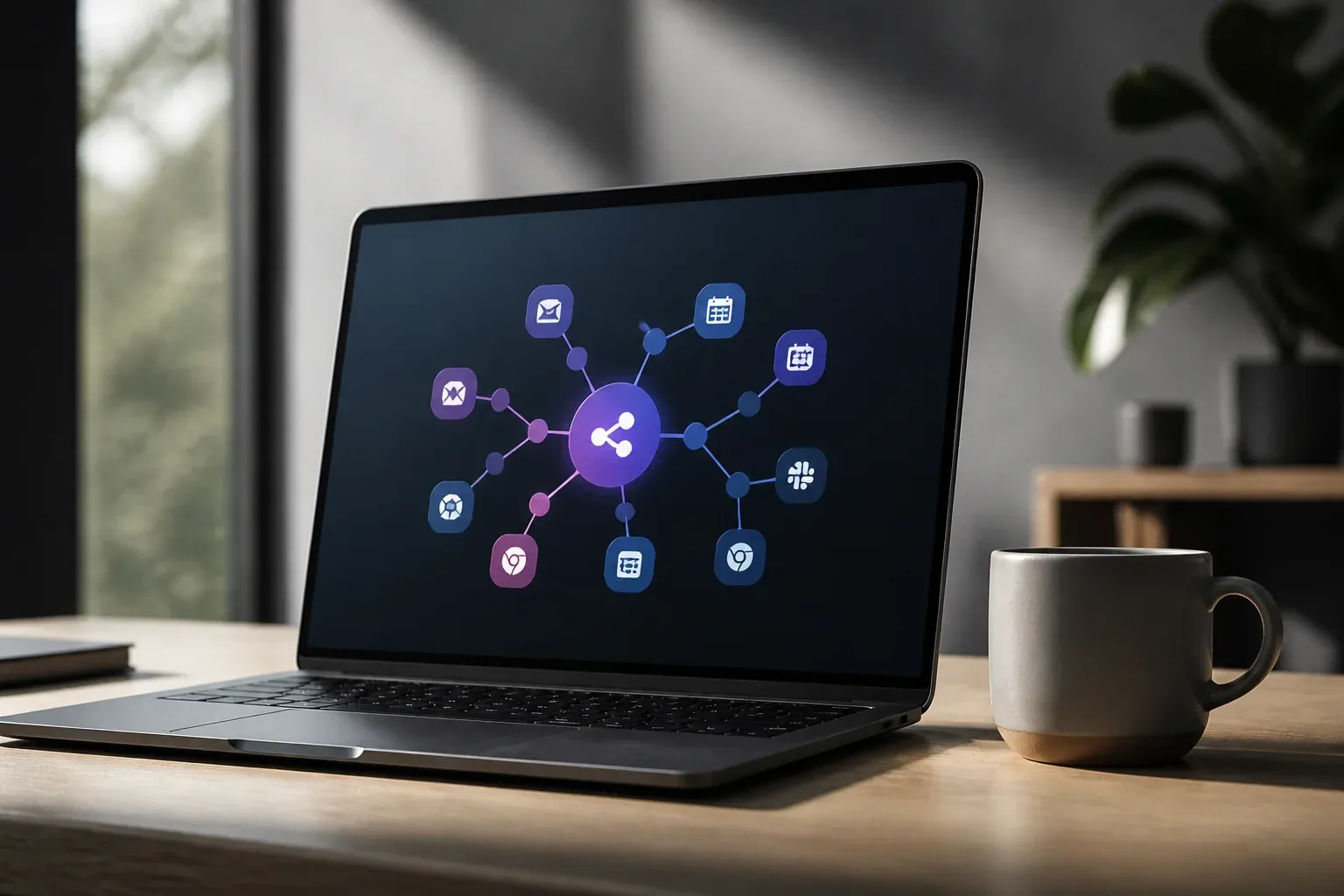
n8n Labs has introduced Nod, a standalone open-source personal agent that runs on a user's computer and can complete tasks across applications and websites. The research-preview tool has its own browser and operates in a private virtual machine, giving individuals a local-first way to automate work such as preparing for calls, downloading invoices, monitoring prices, and cancelling subscriptions.
Unlike n8n's established workflow automation product, Nod is built for one person's ongoing tasks. It does not require an n8n account to get started, and it can use API keys or an existing ChatGPT plan to connect with the AI provider a user chooses. According to n8n Labs' official Nod announcement, the project is intended to complement n8n workflows rather than replace them.
What Nod automates and how it works
Nod is designed to act across the tools people already use, including Gmail, Calendar, Drive, and Slack. Its separate browser also gives it a route to work with supplier portals, dashboards, and other websites that do not offer a direct software integration.
The practical distinction is important. A conventional integration can only act where a service exposes an API or a supported connector. Nod is intended to complete browser-based steps when those routes are unavailable, while still running on the user's own machine.
Examples outlined by n8n Labs include:
- Preparing for calls using information from connected tools.
- Downloading invoices from supplier portals.
- Monitoring prices.
- Finding and booking travel.
- Cancelling subscriptions.
- Pulling dashboard data into reporting work.
Nod's local execution model is particularly relevant for recurring administrative tasks that otherwise require people to switch between browser tabs, log into portals, and manually copy information. It is not positioned as an unattended company-wide automation platform. Instead, it is a personal automator that can take on ongoing jobs for an individual user.
| Area | Nod | Core n8n product |
|---|---|---|
| Primary role | Personal agent for a single user | Workflow automation capabilities |
| Execution described in the announcement | Runs in a private VM on the user's computer with its own browser | Not presented as Nod's execution environment |
| Relationship | Designed to complement n8n workflows | Continues to support its own workflows |
| n8n account at the start | Not required | Not addressed in the Nod announcement |
Provider choice is part of the design
Nod does not lock users into one model provider. n8n Labs says users can connect their preferred AI provider through API keys or use an existing ChatGPT plan. That choice may matter for people who already have access to a particular model service or want to decide which provider handles a given task.
The announcement does not claim that every provider will behave identically. Agent performance will still depend on the selected model and the task being attempted. The key confirmed point is that provider selection is built into Nod's approach, rather than being limited to a single n8n-operated model service.
Local data handling, permissions, and preview limits
n8n Labs frames Nod's architecture around keeping sensitive information close to the user. Nod runs in a private VM on the computer, while data, memory, and saved logins remain local. The company says the AI model receives only what is required to perform the relevant task.
That approach does not remove the need for care. An agent that can work across websites may encounter sensitive information and consequential actions. Nod includes several controls intended to make those actions more visible and deliberate:
- A separate permission check before an action is taken.
- On-device handling of user data.
- Encryption for stored credentials.
- Logs of actions and associated costs, providing a record of what occurred.
For businesses, those features may make browser-based automation easier to evaluate for personal operational work, especially where portal credentials and invoice data are involved. They should not be treated as a substitute for reviewing which accounts an agent can access, what permissions it receives, and whether the proposed task is appropriate for automation.
Nod is released under the Apache 2.0 license, with public code and documentation available from n8n Labs. Its open-source status gives technically capable users an opportunity to inspect and adapt the project, but the company is clear that it is currently a research preview. Hosted and always-on deployment options are on the roadmap, not available now. Nod currently runs locally on macOS and Windows.
For teams considering where personal agents fit, the most useful near-term question is narrow: which repetitive browser tasks consume time but are still best kept under an individual's direct oversight?
If repetitive portal work, manual data collection, or disconnected business apps are slowing your team down, Scalevise can help turn the opportunity into a dependable workflow. Our n8n automation implementation service can map the right processes, connect the systems involved, and build monitoring around the steps that should run automatically. That helps businesses focus automation on measurable time savings without forcing every task into a generic agent setup. Discuss an n8n automation project with Scalevise.
Frequently Asked Questions
What is Nod by n8n Labs?
Nod is a standalone, open-source personal agent from n8n Labs. It runs on a user's computer, uses its own browser, and is designed to automate tasks across apps and websites for one person.
Does Nod require an n8n account?
No. n8n Labs says an n8n account is not required to begin using Nod.
Which AI providers can Nod use?
Nod can connect to a user's chosen AI provider through API keys or an existing ChatGPT plan. The announcement presents provider choice as part of its design.
How does Nod handle data and saved logins?
n8n Labs says Nod runs in a private VM on the user's computer. User data, memory, and saved logins remain local, stored credentials are encrypted, and the model sees only what a task requires.
Is Nod ready for hosted or always-on use?
Not yet. Nod is a research preview, and n8n Labs lists hosted and always-on deployment options as roadmap items.
Conclusion
Nod gives n8n Labs a distinct local-first personal agent alongside its workflow automation product. Its browser-based task execution, provider choice, and local data design could make it useful for individuals handling repetitive work across websites and productivity tools. As a research preview, it is best approached as an emerging option for supervised personal automation, with its future hosting and deployment model still to be defined.