
OpenAI GPT-6.1 Terra Brings Lower-Cost Computer Use to Visual Workflows
GPT-6.1 Terra is OpenAI's lower-cost GPT-6.1 option for visual reasoning, natural writing and computer-use workflows across application screens.
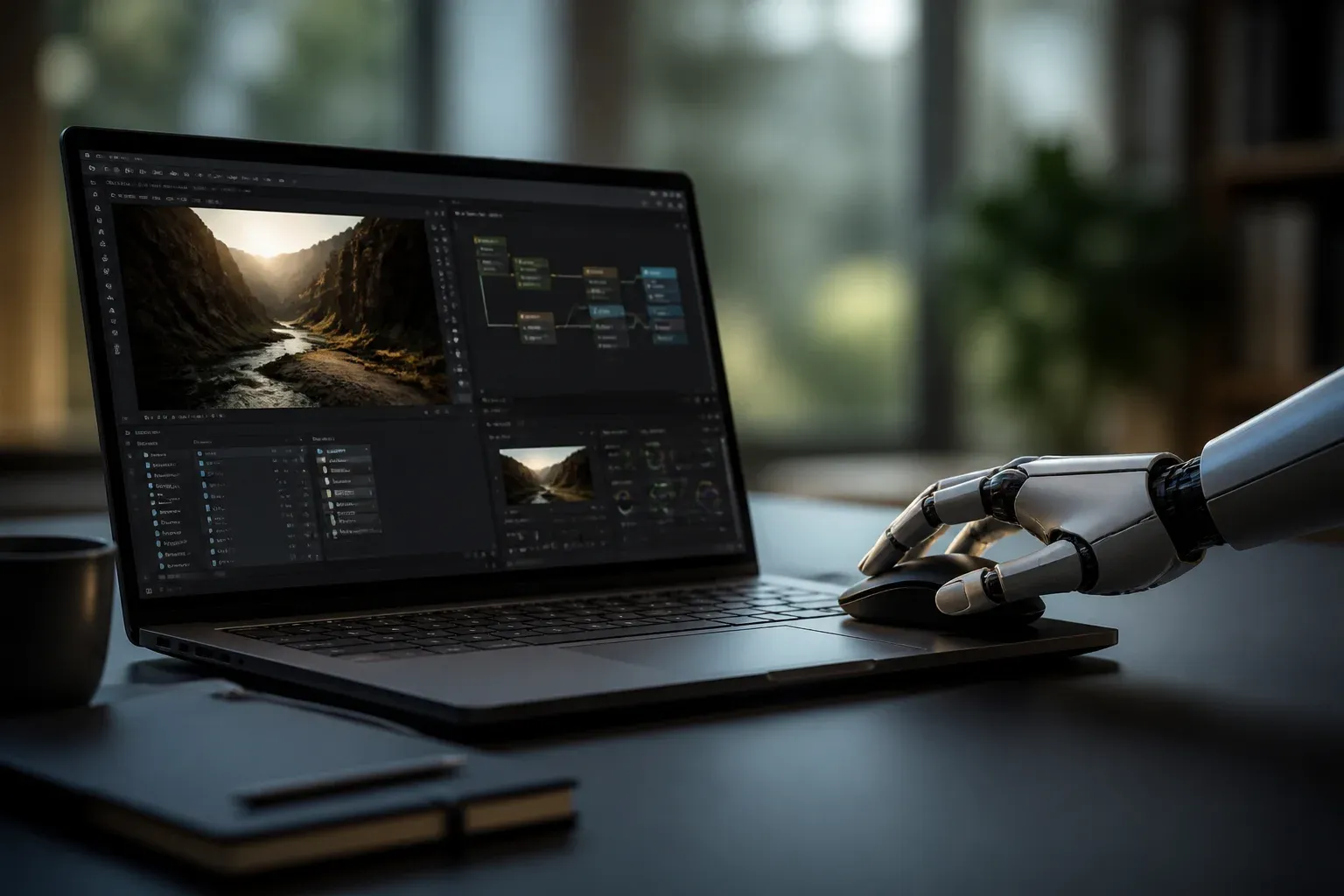
OpenAI has documented GPT-6.1 Terra, a GPT-6.1 family model positioned for fast, efficient visual reasoning and computer-use tasks at a lower API price tier. The model can work with text and image inputs, understand what appears on application screens, and take actions across apps. For businesses exploring agent-like automation, the important distinction is practical: Terra is designed to connect screen understanding, tool use and clear natural-language output in one model.
According to OpenAI's GPT-6.1 Terra model documentation, the model supports use cases including matching product photos to catalog entries, interpreting technical drawings and acting on application screens. It has a 1,050,000-token context window and can generate up to 128,000 output tokens. OpenAI lists pricing of $1 per million input tokens and $5 per million output tokens, alongside separate cache and write costs.
What GPT-6.1 Terra is designed to do
Terra's defining capability is not simply image analysis. OpenAI describes it as a model for visual reasoning and precise computer use, meaning it can interpret screen-based context and perform actions in software environments. That can matter where a workflow depends on information presented visually rather than cleanly exposed through a single data source.
Examples documented by OpenAI include:
- Matching product images with catalog records.
- Interpreting technical drawings.
- Understanding application screens and taking actions across apps.
- Producing clear, natural writing as part of a broader work process.
The model also participates in the GPT-6 tool ecosystem, with support listed for tools such as web search, file search, Code Interpreter and Hosted Shell. This gives developers options to combine computer-use tasks with retrieval, file analysis or code execution, rather than treating a screen interaction as an isolated prompt-and-response task.
Context length and multimodal inputs
A context window of 1,050,000 tokens gives Terra room to process large bodies of information in a single workflow. The 128,000-token maximum output is also substantial. Those limits do not automatically make every process cheaper or more reliable, but they can reduce the need to split some long documents, image-rich materials or extended task histories into many smaller model calls.
Terra accepts text and image inputs, with the associated outputs documented by OpenAI. That combination is relevant to workflows where an employee currently has to compare a product image with a record, read a diagram, review a screen state and then update another system manually.
| Area | GPT-6.1 Terra | Higher-end GPT-6 variants |
|---|---|---|
| Positioning | Lower-cost option in the GPT-6 line | Higher-cost tiers in the GPT-6 line |
| Input pricing | $1 per million tokens | Not specified in the supplied documentation |
| Output pricing | $5 per million tokens | Not specified in the supplied documentation |
| Core documented focus | Visual reasoning, precise computer use and natural writing | Not specified in the supplied documentation |
What the price positioning means for workflow pilots
OpenAI's model catalog identifies Terra as a lower-cost member of the GPT-6 line. Its published token prices make the model easier to assess for workflows that require repeated model calls, such as reviewing many product images or navigating a sequence of application screens.
However, token price is only one part of the cost of a computer-use workflow. A realistic evaluation should also account for the number of steps per task, image inputs, tool calls, cache and write charges, exception handling and human review. The strongest initial use cases are usually repetitive processes with a clear success condition, such as confirming a catalog match or completing a defined update in an application.
How businesses can evaluate Terra without overcommitting
Terra's specifications make it a candidate for visual and screen-based automation, but a pilot should test the actual process rather than assume a general productivity gain. Computer use can be valuable when a task spans applications or relies on what appears in a user interface. It also introduces operational questions around permissions, error recovery and which actions require a person to approve the result.
A focused evaluation can establish whether the model fits a workflow:
- Select a narrow, repeatable task that involves visual information or application screens.
- Define the expected result and the cases that must be escalated to a person.
- Measure task volume, model and tool usage, completion quality and manual rework.
- Compare those results with the existing process before expanding to more workflows.
This approach also helps teams decide whether they need direct API integration, a workflow automation layer or both. OpenAI documents the model's tool support, but the research does not specify a ready-made migration path from another GPT model. Any move to Terra should therefore be validated against the prompts, tools, data access and evaluation criteria used in the current workflow.
For companies handling recurring screen-based work, the opportunity is to reduce manual switching between applications while keeping people involved where judgment or exceptions matter. The practical value will depend on whether Terra can complete the specific task consistently enough to offset implementation and oversight effort.
Scalevise can help turn a promising computer-use use case into a controlled operational workflow, from selecting the right task to connecting tools and measuring results. Our AI workflow automation implementation service focuses on reducing manual work while building in the checks your team needs before automation expands. Discuss an AI automation project with Scalevise.
Frequently Asked Questions
What is GPT-6.1 Terra?
GPT-6.1 Terra is an OpenAI GPT-6.1 family model designed for fast, efficient visual reasoning, precise computer use and clear natural-language writing.
What does computer use mean for GPT-6.1 Terra?
OpenAI documents Terra as able to interpret application screens and take actions across apps. Its listed use cases also include product-photo matching and technical-drawing interpretation.
How much does GPT-6.1 Terra cost?
OpenAI lists input pricing of $1 per million tokens and output pricing of $5 per million tokens. Separate cache and write costs also apply.
Which inputs can GPT-6.1 Terra handle?
Terra supports text and image inputs. OpenAI lists a 1,050,000-token context window and a maximum output of 128,000 tokens.
Does GPT-6.1 Terra support OpenAI tools?
Yes. OpenAI documents support for the same tool ecosystem available to other GPT-6 models, including web search, file search, Code Interpreter and Hosted Shell.
Conclusion
GPT-6.1 Terra gives OpenAI's GPT-6.1 line a lower-cost option focused on visual reasoning and computer-use workflows. Its large context window, image support and tool compatibility make it relevant for defined tasks that combine screen understanding with actions across applications. The published pricing provides a clearer basis for pilots, but each business will still need to test quality, workflow costs and human oversight in its own process.