
OpenAI Invites Engineering Partners to Shape AI Workflows for the Physical World
OpenAI has opened a public call for engineers, engineering firms and software vendors to help develop frontier AI workflows for physical engineering and manufacturing.
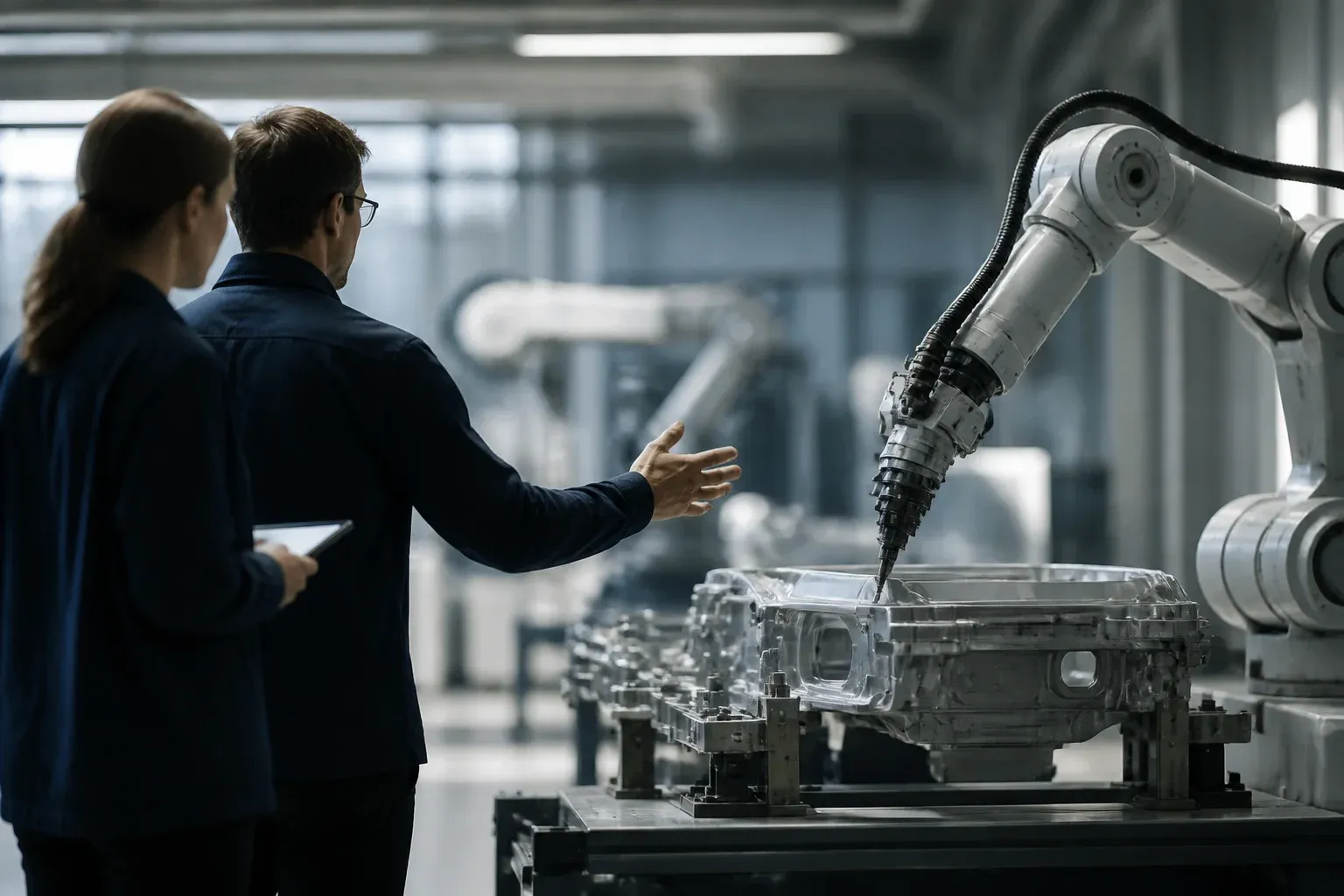
OpenAI is expanding its partner-focused AI efforts into physical engineering, inviting engineers, engineering firms and software vendors to help shape how frontier models are applied to the design and manufacture of physical products. The move is confirmed in OpenAI's official physical-engineering announcement, published November 3, 2026.
The company says its models are being used to help engineers design, simulate and build complex physical products across mechanical engineering, electrical engineering and end-to-end system design. Crucially, OpenAI is asking external collaborators to participate around the toolchains they already use, including CAD, simulation and PCB-design environments. That makes the announcement more than a description of internal capability: it is a public effort to co-develop practical AI-enabled engineering workflows with the people and software providers closest to those workflows.
For engineering teams and software companies, the immediate development is an invitation to contribute expertise and use cases. For businesses that build physical products, it signals that generative AI is becoming a more explicit part of the engineering software conversation, alongside its established role in writing, analysis and customer-facing work.
What OpenAI is inviting partners to shape
OpenAI presents physical engineering as a broad discipline involving mechanical, electrical and electromechanical work, as well as mechatronics and system-level design. The stated aim is to use frontier models to support work spanning the process of designing, simulating and building complex products.
The company cites an Astra device, acceleration of OpenAI hardware teams, and collaborations with Chip Ganassi Racing and Mazda as examples of the work informing this direction. The announcement does not present these examples as a standardized, off-the-shelf engineering product. Instead, it frames the effort as an early-stage collaboration in which outside participants can help train and develop models for engineering and manufacturing.
| Area | What OpenAI describes | Why partner input matters |
|---|---|---|
| Mechanical engineering | Models helping engineers design, simulate and build physical products | Engineering teams can help define useful workflows around their existing processes |
| Electrical engineering | Physical-product engineering support that includes electrical work | Software vendors and practitioners can bring domain-specific toolchain knowledge |
| Engineering software environments | Collaboration around CAD, simulation and PCB-design toolchains | Real-world tools and constraints are central to practical deployment |
The distinction matters. Engineering work is often dependent on specialized software, design constraints and iterative review. OpenAI's call for partners suggests that useful AI applications in this area will need to fit established engineering environments rather than exist only as general-purpose chat experiences.
A formal extension of OpenAI's deployment approach
OpenAI has previously pursued enterprise-oriented initiatives such as Forward Deployed Engineering, the Deployment Company and its Partner Network. The physical-engineering announcement extends that deployment and collaboration approach into hardware-related domains through a dedicated, first-party invitation to external contributors.
This is significant because physical engineering has different inputs and outputs from many knowledge-work use cases. A productive workflow may involve design files, simulation results, electronics documentation and interactions between multiple disciplines. OpenAI's focus on existing toolchains indicates that the practical challenge is not simply prompting a model. It is identifying where model assistance can support engineering work within the systems teams already rely on.
The announcement should not be read as confirmation of specific CAD, simulation or PCB product integrations. OpenAI identifies those environments as examples of the toolchains around which it wants to collaborate. The public invitation is the confirmed development, while the resulting tools, integrations and use cases will be shaped through that work.
What businesses and developers should watch
The opportunity is clearest for organizations with direct knowledge of recurring engineering bottlenecks. That could include reviewing documentation, connecting information across mechanical and electrical disciplines, supporting simulation-related work or reducing friction between design and manufacturing processes. Whether a particular task is suitable for AI will depend on its tools, data and engineering requirements.
OpenAI's invitation is aimed at three groups that can influence what becomes useful in practice:
- Engineers who understand the technical decisions, constraints and review points inside real design workflows.
- Engineering firms that can identify repeatable needs across client projects or internal delivery processes.
- Software vendors whose CAD, simulation, PCB or adjacent products form part of an engineer's everyday toolchain.
For smaller product companies and specialist engineering teams, the relevance is not that every process should be automated. It is that participation by software partners and domain experts could bring advanced AI capabilities closer to the tools that teams use today. The eventual value will depend on whether workflows become reliable, relevant to the discipline and usable within existing design practices.
The most practical preparation is to map the workflow before choosing technology. Teams can identify where engineering information is difficult to find, where handoffs introduce repetitive work and which systems contain the inputs needed for a more connected process. That creates a clearer basis for evaluating future tools or collaboration opportunities than adopting AI as a broad, undefined initiative.
Physical-engineering AI is most valuable when it fits the way teams already design, simulate and share information. Scalevise can help businesses assess high-value use cases, define a realistic implementation path and connect AI initiatives to day-to-day operations through practical AI consultancy for business teams. Request a consultation to turn a promising engineering workflow into an actionable AI plan.
Frequently Asked Questions
What did OpenAI announce for physical engineering?
OpenAI announced a public effort to work with engineers, engineering firms and software vendors on frontier AI for designing, simulating and building complex physical products.
Which engineering fields does OpenAI's initiative cover?
OpenAI describes mechanical engineering, electrical engineering and end-to-end system design, with potential relevance to electromechanical design, mechatronics and related work.
Does the announcement confirm integrations with CAD, simulation or PCB tools?
No. OpenAI names CAD, simulation and PCB design as examples of existing toolchains around which it wants to collaborate, but the announcement does not confirm specific product integrations.
Who can participate in OpenAI's physical-engineering collaboration effort?
OpenAI is seeking engineers, engineering firms and software vendors to help train and develop frontier models for engineering and manufacturing.
Conclusion
OpenAI's physical-engineering initiative is a confirmed expansion of its public partner and deployment efforts into hardware-related work. Its importance lies in the invitation to shape AI around real engineering tools and processes, not in a finished standalone product announcement. Engineers, firms and software vendors that understand where current workflows create friction are well placed to influence the next stage of this effort.