
OpenClaw Explained: Why Most Real-World Implementations Fail at Scale
OpenClaw is a powerful self-hosted AI assistant platform, but it is often misused as a shortcut automation tool.
OpenClaw is increasingly visible across developer communities, hosting marketplaces, and AI automation content. It is an open-source platform designed to run self-hosted AI assistants across multiple communication channels.
However, the growing popularity of so-called AI automations has created a dangerous disconnect between what OpenClaw actually is and how it is often used in practice.
💡 Want to evaluate OpenClaw properly? Launch it in a RunPod POD and test it in isolation before integrating it into your production stack.
This article explains it correctly, outlines what the platform is genuinely good at, and clarifies why many OpenClaw implementations fail when teams try to scale them beyond experimentation.
What OpenClaw Actually Is
OpenClaw is a self-hosted AI assistant platform that allows developers and teams to build, run, and manage AI-powered assistants across multiple messaging channels.
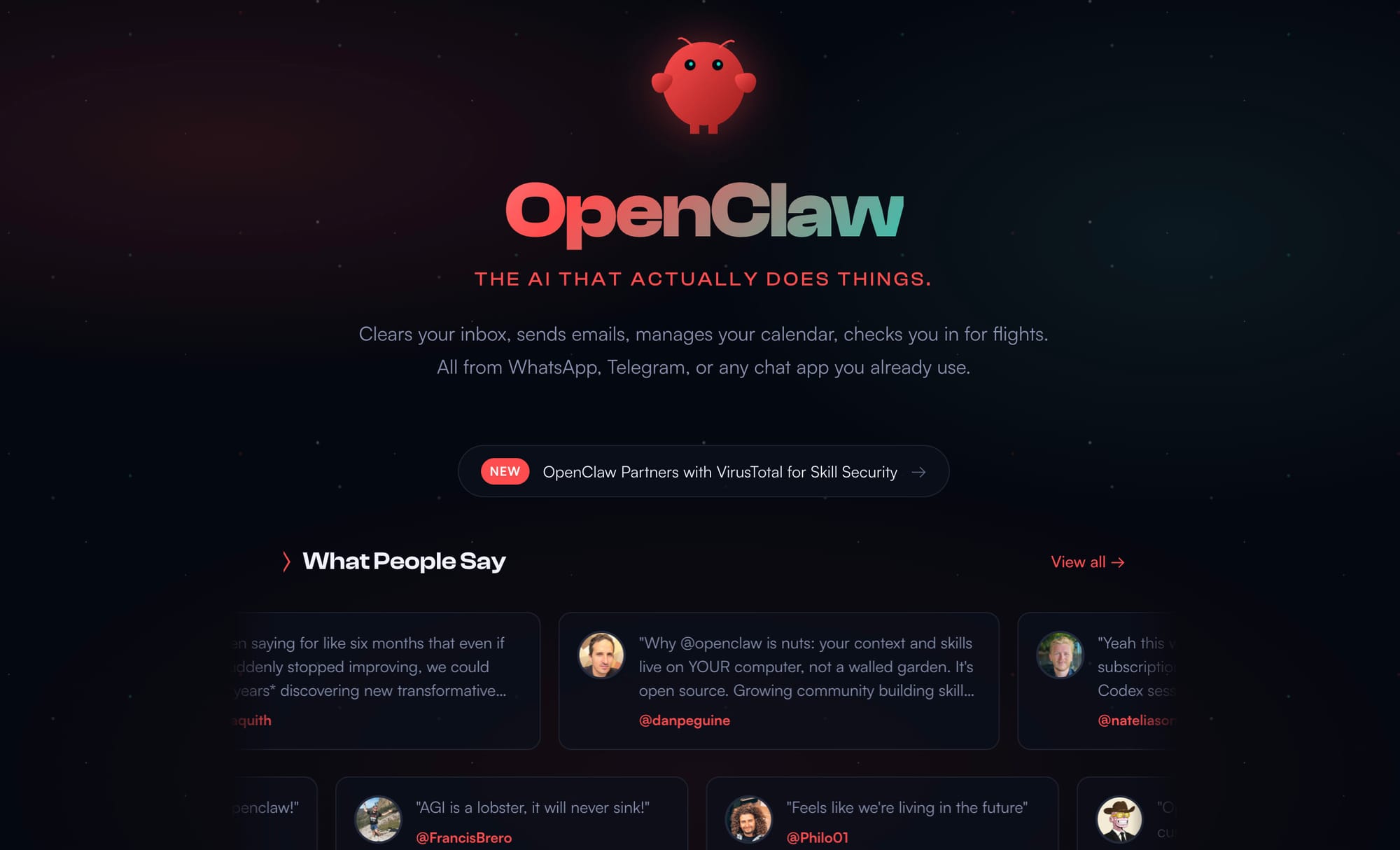
Technically, OpenClaw provides:
- A centralized gateway for multi-channel messaging
- Session and context management across conversations
- Support for multiple AI providers such as OpenAI and Anthropic
- Persistent workspaces and configurable runtimes
- API-based authentication and extensibility
- A Docker-first deployment model suitable for VPS environments
It is infrastructure software. Not a growth hack. Not a side-hustle tool.
Where OpenClaw Excels
Used as intended, OpenClaw is powerful.
It works particularly well for:
- Centralizing AI interactions across WhatsApp, Slack, Telegram, Discord, and similar channels
- Building internal AI assistants for teams or departments
- Creating controlled, self-hosted alternatives to SaaS chatbots
- Experimenting with AI-driven workflows while retaining infrastructure ownership
- Teams that need flexibility across models, channels, and integrations
In short, it's well suited for developers and technical teams who want control over their AI assistant infrastructure.
How the OpenClaw Automations Narrative Emerged
The problems begin when OpenClaw is framed as a shortcut.
Online, OpenClaw is increasingly presented as:
- A quick automation layer
- A way to spin up money-making workflows in minutes
- A no-code or low-effort automation engine
This framing does not originate from the platform itself. It comes from content creators repackaging as part of a broader automation hype cycle.
The result is a growing number of implementations that treat it as a disposable automation tool rather than as production infrastructure.
Also See: Moltbook Explained
Why Most OpenClaw Implementations Fail at Scale
The platform is rarely the problem. The architecture almost always is.
Infrastructure treated as a script
OpenClaw is often deployed like a one-off script. No redundancy, no monitoring, no lifecycle management.
Missing governance and ownership
Who owns the assistant behavior. Who approves changes. Who audits outputs. These questions are frequently unanswered.
Weak security posture
API keys, channel credentials, and data access are often poorly controlled, especially in fast-moving setups.
No observability
Logs exist, but there is no structured monitoring, alerting, or usage analysis. Failures are detected by users, not systems.
Scope creep without design
What starts as a simple assistant quickly expands into customer-facing or revenue-impacting workflows without any architectural re-evaluation.
At this point, it becomes a liability. Not because it is flawed software, but because it is being used outside its design assumptions.
When OpenClaw Makes Sense and When It Does Not
OpenClaw makes sense when:
- The assistant scope is clearly defined
- The failure impact is understood and acceptable
- The system is treated as infrastructure, not glue
- Deployment, updates, and access are actively managed
OpenClaw is a poor choice when:
- It is expected to replace a full automation or orchestration layer
- Business-critical decisions are delegated without safeguards
- Compliance, auditing, or traceability are required but not implemented
The Enterprise Reality
In enterprise environments, OpenClaw should never operate alone.
It needs:
- Clear system boundaries
- External orchestration or middleware
- Logging, audit trails, and access controls
- Explicit escalation paths for failures
Without these, even a technically solid platform becomes operational debt.
How Scalevise Approaches Architectures
At Scalevise, we do not treat this as an automation toy.
We treat it as one component within a broader system architecture:
- OpenClaw handles conversational AI and multi-channel interaction
- Custom middleware manages workflows, state, and business logic
- Governance, security, and observability are designed upfront
- AI assistants operate within defined permissions and responsibilities
This approach preserves OpenClaw’s strengths while eliminating the risks created by ad-hoc automation thinking.
Final Assessment
The danger lies not in the software, but in how it is positioned and deployed. When OpenClaw is treated as production infrastructure and integrated responsibly, it can be extremely effective. When it is treated as a shortcut, it eventually breaks.
Teams that understand this distinction avoid rework, risk, and architectural debt.
If you are considering OpenClaw beyond experimentation, the real question is not which tools to connect, but how the system should be designed to scale.
Considering AI and automation for a serious use case?
Scalevise helps organizations design, secure, and govern AI assistant architectures that hold up under real operational pressure.