
ZoomInfo’s Native n8n Integration Brings Live GTM Data Into Automated Workflows
ZoomInfo has launched a native n8n integration that lets authenticated workflows and AI agents query current contact, company, and buyer-signal data.
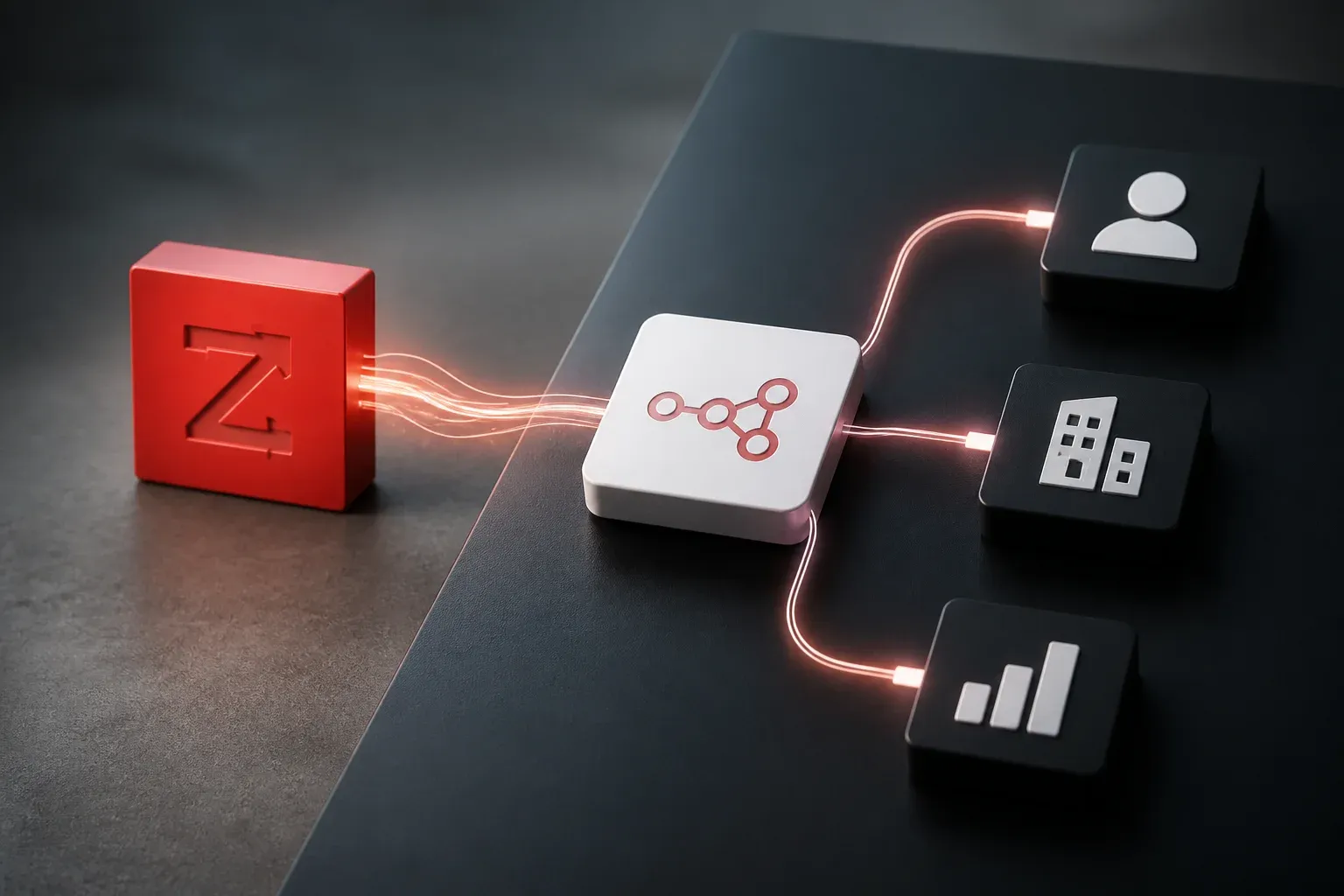
ZoomInfo has launched a native integration for n8n that brings its go-to-market data into automated workflows at runtime. Through a ZoomInfo-maintained node backed by GTM.AI, users can authenticate with their ZoomInfo account to search contacts and companies, enrich records, and read GTM signals without relying on periodic data exports. The integration can also be used as a tool by AI agents built in n8n.
The announcement matters because workflow timing is often as important as the workflow itself. A contact record exported days or weeks earlier may no longer reflect a company’s current situation. By making ZoomInfo data callable during workflow execution, the new node is intended to let teams act on current lookups and signals when a process runs. ZoomInfo’s official announcement confirms the integration was formally launched on October 12, 2026.
What the ZoomInfo node adds to n8n
The native node connects authenticated n8n workflows directly to ZoomInfo’s GTM Context Graph. ZoomInfo says that graph includes data covering more than 100 million companies, 500 million contacts, and billions of signals. Those figures are ZoomInfo’s description of the data available through its platform.
The official n8n integration listing identifies several supported functions: searching and enriching contacts and companies, reading GTM signals, OAuth 2.0 authentication, and compatibility with n8n AI Agent workflows. The signals described in the announcement include buyer intent, organizational changes, and news.
This is a meaningful change from a process built around hand-uploaded files or scheduled exports. Instead of treating prospect data as a static input, a workflow can request the relevant information while it is running. That does not guarantee a particular business outcome, but it can give automated processes a more current input for decisions such as prioritization, routing, or record updates.
| Workflow data approach | Periodic exports or uploads | Native ZoomInfo node in n8n |
|---|---|---|
| When data is available | Based on previously exported or uploaded data | During workflow execution through runtime lookups |
| Supported data tasks | Depends on the exported data and surrounding workflow | Contact and company search, record enrichment, and GTM signal reads |
| AI agent access | Not established by the announcement | The node can be invoked as a tool by n8n AI agents |
| Authentication | Not specified | Tied to the customer’s ZoomInfo account, with OAuth 2.0 listed by n8n |
What an AI agent can do with the data
The AI agent capability is significant because it makes ZoomInfo data available to an agent as a workflow tool, rather than only as a fixed data set prepared in advance. An agent can call the node when the workflow requires information from ZoomInfo. The announcement does not specify how every agent should make decisions, and companies should define the conditions under which an agent can use retrieved data or trigger later steps.
In practical terms, this can support workflows where an agent needs current context before it categorizes a request, prepares a follow-up task, or decides whether a record should be sent for human review. The confirmed capability is access to the ZoomInfo node from n8n AI agents. The exact workflow logic remains the responsibility of the organization building it.
Practical workflow opportunities and limits
The integration supports a straightforward set of automation patterns for teams that already use ZoomInfo and n8n. Examples that follow directly from the available search, enrichment, and signal functions include:
- Enriching a newly received contact or company record before it moves to another step in a workflow.
- Looking up a company or contact when a workflow needs additional context at runtime.
- Monitoring available buyer-intent, organizational-change, or news signals as workflow inputs.
- Giving an n8n AI agent access to ZoomInfo data when it needs that information to complete a workflow task.
A useful implementation principle is to separate data retrieval from business action. A workflow can retrieve a signal or enrich a record, then apply clear rules before sending a notification, updating another system, or assigning work to a person. That approach helps teams understand which ZoomInfo input affected a later action and where human judgment remains necessary.
The rollout also includes governance-related controls that are relevant to operational use. ZoomInfo says authentication remains connected to the customer’s ZoomInfo account, while access control, data lineage, and audit logging apply to the n8n node. These features can help teams trace data use inside a workflow and manage access through their existing ZoomInfo account arrangements.
However, the announcement does not establish pricing, regional availability, usage quotas, or performance characteristics for specific workflow designs. It also does not explain how the integration will behave alongside every existing automation pattern or external system. Businesses evaluating the node should confirm their ZoomInfo entitlements, available permissions, and the actions their n8n workflows are configured to take.
Teams that still move prospect data through exports or disconnected tools can lose time and act on outdated records. Scalevise can design and deploy production-ready n8n workflows that connect ZoomInfo lookups, signals, routing, and human review to the systems your team already uses. The goal is to reduce manual enrichment while keeping workflows observable and aligned with the permissions available in your accounts. Discuss an n8n automation project with Scalevise.
Frequently Asked Questions
What does the ZoomInfo integration for n8n do?
It lets authenticated n8n workflows search ZoomInfo contacts and companies, enrich records, and read GTM signals during workflow execution. The node is maintained by ZoomInfo and backed by GTM.AI.
Can n8n AI agents use ZoomInfo data?
Yes. ZoomInfo says the native node can be invoked as a tool by AI agents built in n8n, and the official n8n integration listing identifies AI Agent compatibility.
What security and governance controls apply to the node?
Authentication remains tied to the customer’s ZoomInfo account. ZoomInfo says access control, data lineage, and audit logging apply to the n8n node.
What does the ZoomInfo n8n integration cost?
The confirmed announcement and integration information do not specify pricing, usage quotas, or regional availability. Teams should verify their ZoomInfo account entitlements before implementation.
Conclusion
ZoomInfo’s native n8n node makes its contact, company, and GTM signal data available as a runtime workflow resource, including for compatible AI agents. For teams that already rely on both platforms, the main opportunity is to replace static data handoffs with current lookups and controlled automation. The value will depend on the workflow design, the organization’s ZoomInfo access, and the rules used to turn retrieved data into action.