
How AI Cameras Are Changing Surveillance Economics and Privacy
AI cameras no longer just record video. They interpret behaviour continuously, powered by new hardware that makes mass surveillance cheap and hard to control.
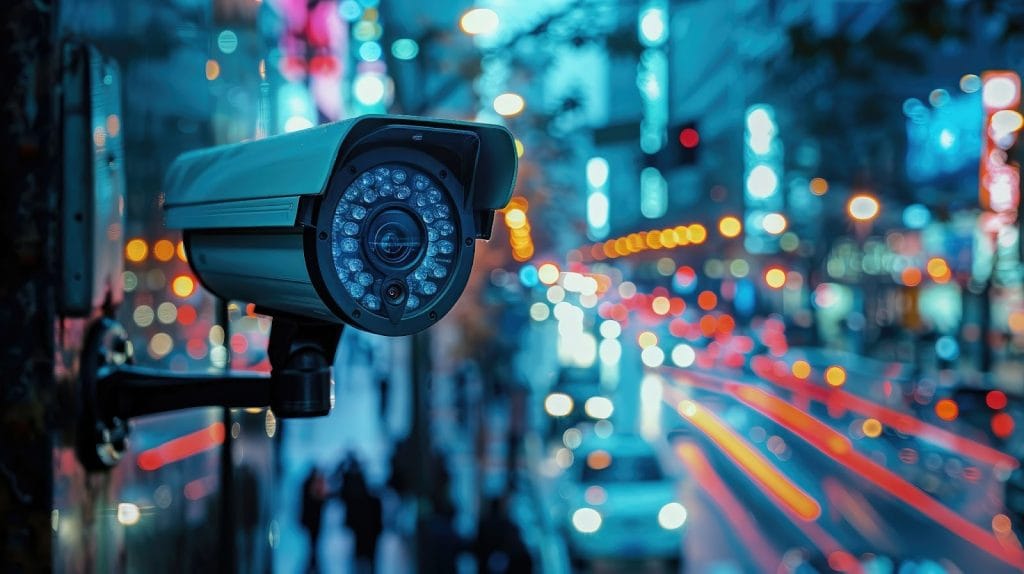
AI cameras are rapidly evolving from simple recording devices into intelligent systems that continuously analyse, interpret, and remember what they observe.
This shift is not driven by software innovation alone. Advances in AI hardware have made real time video inference cheap enough to deploy everywhere. As a result, large scale surveillance is becoming economically trivial, while the privacy implications are growing more complex and harder to control.
What used to be a security discussion is now a data governance problem.
AI Cameras Are No Longer Passive Observers
Traditional cameras captured footage and stored it for later review. They were reactive by design and largely useless without human interpretation.
Modern cameras operate continuously. They interpret video streams in real time and extract meaning from visual data. Instead of simply recording events, they evaluate behaviour, detect patterns, and compare current activity with historical context.
This transformation is enabled by edge-optimised AI hardware that allows inference to run directly on the device. Platforms from vendors such as NVIDIA make it possible to analyse multiple video streams locally with low latency and predictable costs.
👀 The camera no longer just sees. 🧠 It understands.
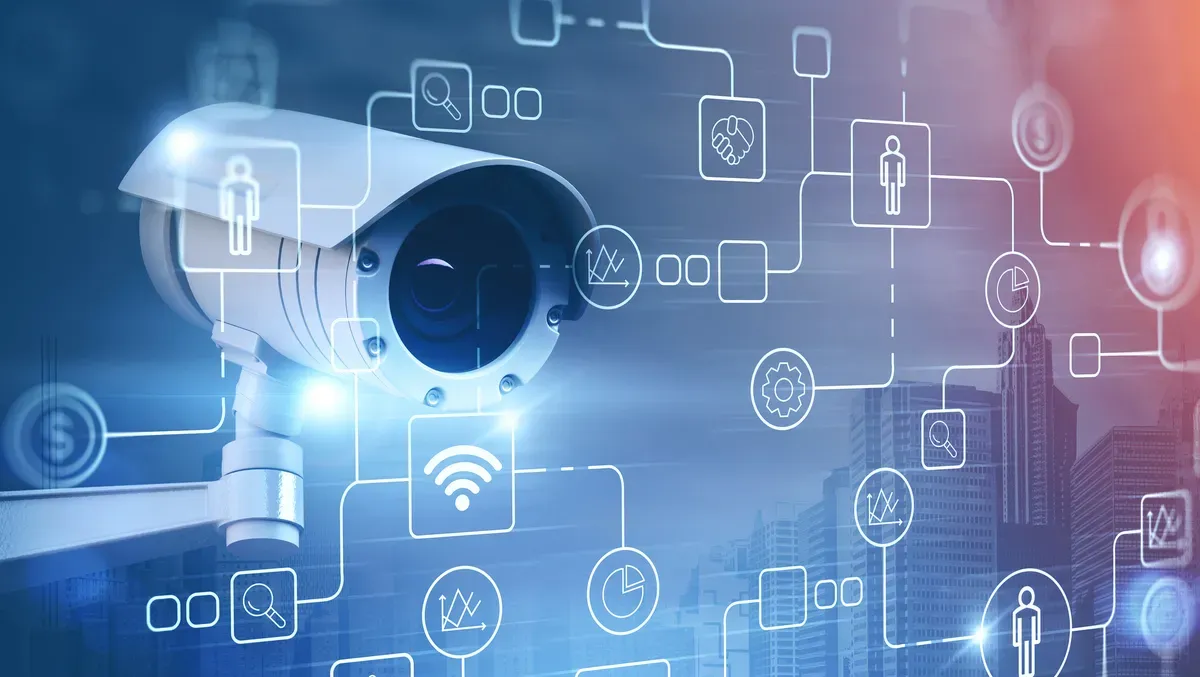
Why New AI Hardware Makes Mass Surveillance Affordable
For a long time, large scale AI based video analysis was constrained by cost. Continuous inference required expensive cloud infrastructure and generated high bandwidth usage.
That constraint is disappearing.
New generations of AI chips dramatically reduce the cost per analysed frame. They allow constant interpretation of video streams without proportional increases in energy consumption or compute expense.
This changes the economics in three fundamental ways:
- Continuous analysis becomes cheaper than selective recording
- Scaling from a few cameras to hundreds no longer multiplies cost linearly
- Always-on surveillance becomes financially viable by default
Affordability is no longer the limiting factor.
From Detection to Memory: What AI Cameras Retain
One of the most overlooked aspects of modern AI cameras is memory.
These systems do not merely detect objects or incidents. They build internal representations of behaviour over time. This includes movement patterns, dwell times, recurring paths, and deviations from what the system considers normal.
While this data is often stored as abstractions rather than raw video, it still represents behavioural information. Over time, such patterns can become highly specific, even without direct identification.
This marks a shift from observation to persistent monitoring.
Privacy Risks Go Beyond Video Storage
A common misconception is that privacy risks disappear once video footage is not stored or faces are anonymised.
That assumption is incorrect.
Behavioural data can be personal data even without explicit identifiers. Patterns of movement, presence, and interaction can be enough to infer identity, routines, or intent when observed over time.
Key privacy concerns introduced by AI cameras include:
- Continuous behavioural profiling
- Long term retention of inferred data
- Lack of transparency about what is analysed and remembered
- Secondary use of data beyond the original purpose
Where AI Camera Technology Is Heading
AI cameras are moving toward greater independence from human oversight. Future systems will increasingly make decisions based on learned context rather than predefined rules.
This includes automated alerts, access control decisions, anomaly detection, and behavioural scoring across locations.
As hardware continues to improve, more intelligence will reside entirely at the edge. Central systems will focus on coordination and aggregation rather than analysis.
This makes surveillance faster, cheaper, and more opaque.
The Real Question Is No Longer Technical
The technology is already ahead of regulation and governance.
The real question is not whether AI cameras work or whether they are affordable. Both are already true. The question is whether organisations and societies are prepared to define clear boundaries around what these systems are allowed to observe, infer, and remember.
AI cameras change surveillance from a passive activity into an active system of interpretation.
Once that line is crossed, privacy is no longer about footage.
It is about behaviour, memory, and control.