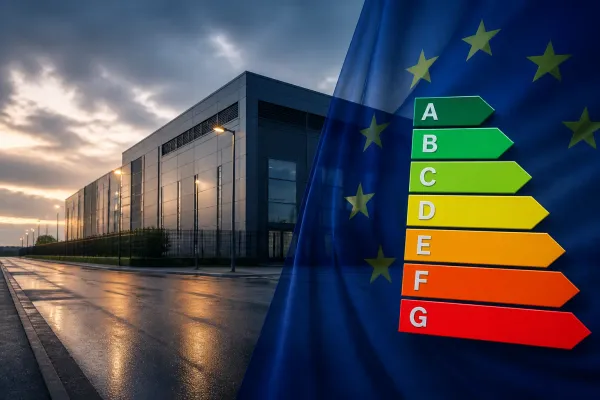
AI Governance & Workflow Compliance for Scalable Systems EU Data Centre Energy Rating Proposal: What It Could Mean for Cloud Buyers A proposed EU common rating scheme for data centres could make energy performance more visible, with indirect implications for cloud customers and technology buyers.
AI Governance & Workflow Compliance for Scalable Systems EU AI Act Deepfake Labels Are Now Mandatory: What Businesses Need to Do The EU AI Act's Article 50 transparency rules are in force. Businesses using AI-generated or manipulated media need to understand the labeling, timing and workflow implications.
AI Governance & Workflow Compliance for Scalable Systems EU Child Safety Panel Report Signals Stricter Rules and Age Verification Direction The European Commission has received recommendations from its Special Panel on Child Safety Online, putting age verification and stronger platform safeguards at the center of the next policy phase.
AI Governance & Workflow Compliance for Scalable Systems EU Cyberbullying Action Plan Puts Reporting, Support and Prevention at the Center The European Commission’s EU Action Plan Against Cyberbullying sets out a coordinated approach to prevention, reporting, victim support and evidence preservation across member states.
AI Governance & Workflow Compliance for Scalable Systems MODELAIR Uses AI-Powered 3D Digital Twins for Street-Level Air Quality Insights The EU-funded MODELAIR project is developing AI-enabled 3D city digital twins that combine simulations, sensors and urban models to predict air quality at street level.
AI Governance & Workflow Compliance for Scalable Systems EU SOTEU 2026 AI Warning Signals a Stronger Focus on Frontier Model Security Ursula von der Leyen used her 2026 State of the Union address to highlight frontier AI cyber risks, reinforcing the EU's focus on AI safety, security and vendor accountability.
AI Governance & Workflow Compliance for Scalable Systems EU State of the Union 2026: What Businesses Should Watch on Digital Policy Ursula von der Leyen will deliver the 2026 EU State of the Union in Strasbourg on 16 September. The address may set the policy direction businesses need to monitor across AI and digital regulation.
AI Governance & Workflow Compliance for Scalable Systems Europe’s First Five-Car Autonomous Race at Imola Shows the Demands of Real-Time AI Five teams raced identical driverless cars at Imola in A2RL’s first international event outside Abu Dhabi, offering a demanding test of autonomous racing systems.
AI Governance & Workflow Compliance for Scalable Systems TrustED Moves Privacy Preserving Data Sharing Into Real World European Pilots The EU-funded TrustED project is validating digital identity and privacy-preserving analytics through pilots for volunteering collaboration and clinical data analysis.
AI Governance & Workflow Compliance for Scalable Systems EU Signals Stronger Child Online Safety Rules, With Age Verification in Focus A European Commission push for safer online experiences for children puts age verification, platform design and possible social media restrictions in focus.
AI Governance & Workflow Compliance for Scalable Systems EU Commits €200 Million to Greenland for Connectivity, Satellites and Data Center Study A new EU Global Gateway package will support Greenland’s digital connectivity and satellite capacity while examining whether data centers could be viable.
AI Governance & Workflow Compliance for Scalable Systems EU Opens €96 Million in Cybersecurity Calls Covering AI Tools, SMEs and Cable Resilience Seven new Digital Europe cybersecurity calls make €96 million available for projects ranging from AI-powered security tools and SME support to preparedness testing and cable resilience.
AI Governance & Workflow Compliance for Scalable Systems EU Child Survey Highlights Reporting Follow-Up as a Priority for Online Platforms A new EU survey on cyberbullying shows that children want platforms to make reporting easier, provide meaningful follow-up and support victims.
AI Governance & Workflow Compliance for Scalable Systems EU Commits €200 Million to Greenland Connectivity, Satellites and Data Infrastructure A new €200 million EU Global Gateway package for Greenland puts digital connectivity, satellite solutions and data infrastructure alongside energy and raw materials.
AI Governance & Workflow Compliance for Scalable Systems EU Digital Services Act Guidelines Raise the Bar for Safer Design for Minors The European Commission's DSA guidance puts safety-by-design expectations at the center of services used by minors, from autoplay and notifications to advertising and age controls.
AI Governance & Workflow Compliance for Scalable Systems EU Cyberbullying Resolution Signals Stronger Platform Responsibility, Not a New Law A European Parliament resolution calls for consideration of harmonised action on cyberbullying and stronger platform responsibility, but it does not create a new EU-wide criminal offence.
AI Governance & Workflow Compliance for Scalable Systems EU DSA: Why ChatGPT, Roblox and Reddit VLOP Status Remains One to Watch Credible reporting points to possible EU Digital Services Act designations for ChatGPT and Roblox, but official confirmation of the reported trio has not yet appeared.
AI Governance & Workflow Compliance for Scalable Systems EU Digital Education Content Guidelines Give Schools a New Selection Framework The EU's Digital Education Content guidelines set out practical quality criteria for teachers and school leaders assessing digital learning resources.
AI Governance & Workflow Compliance for Scalable Systems EU AI Content Labeling Code Offers a Practical Framework for Businesses Using Generative AI The European Commission's new Code of Practice on marking and labeling AI-generated content gives generative AI deployers practical guidance on transparency, including labels for AI content and deepfakes.
AI Governance & Workflow Compliance for Scalable Systems XAIDA Uses AI to Explain Extreme Weather, Not Deliver a Business Forecast API The EU-funded XAIDA project is applying AI to detect, analyze and attribute extreme weather events. Its tools are research resources, not a commercial forecasting platform.
AI Governance & Workflow Compliance for Scalable Systems EU Roam Like at Home Now Covers Moldova and Ukraine: What Businesses Should Review Moldova and Ukraine have joined the EU's Roam Like at Home area. Businesses with travelling staff should review plan allowances, fair-use rules and usage patterns.
AI Governance & Workflow Compliance for Scalable Systems Henna Virkkunen’s Gamescom 2026 Visit Puts EU Games Strategy in Focus Gamescom 2026 will bring EU games policy and Creative Europe MEDIA support into view, with Henna Virkkunen scheduled to attend and speak.
AI Governance & Workflow Compliance for Scalable Systems EU’s Not On Our Feed Campaign Signals a Broader Cyberbullying Response Not On Our Feed is a planned pan-EU youth campaign against cyberbullying, connected to the European Commission’s wider 2026 action plan.
AI Governance & Workflow Compliance for Scalable Systems European Commission Proposes Roaming Talks With Six Western Balkan Partners The European Commission is seeking to open negotiations that could bring six Western Balkan partners into the EU roaming area. The proposal is not yet an expansion or a confirmed timetable.
AI Governance & Workflow Compliance for Scalable Systems How EU-Funded AI and Organ-on-Chip Research Could Reshape Chemical Safety Testing A coordinated EU research effort is combining AI with human-cell and organ-on-chip models to build more human-relevant approaches to chemical safety assessment.