
AI Humanizers: What They Are, Why They Matter, and the Top 5 Tools in 2026
An in-depth guide to AI humanizers, including how they work, which tools perform best, and how to use them strategically in modern content marketing workflows.
What Are AI Humanizers Really For?
AI humanizers are post-processing tools that refine AI-generated text so it reads more naturally, feels less templated, and aligns better with human writing patterns. They are not content generators. They operate on existing text and focus on phrasing, rhythm, tone variation, and structural irregularities that make writing feel more human.
Their rise is directly linked to two developments. First, the mass adoption of generative AI for content production. Second, the parallel rise of AI detection tools and stricter editorial quality standards.
In practice, companies use AI humanizers to improve blog articles, landing pages, SEO content, emails, and social posts that were initially drafted with large language models. The goal is not deception. The goal is readability, credibility, and audience trust.
If your AI output already sounds human, you may not need one. If it sounds generic, symmetrical, or overly polished, a humanizer can help.
How AI Humanizers Work Under the Hood
Most AI humanizers rely on advanced paraphrasing models trained on large datasets of human-written text. They introduce controlled variation in sentence length, word choice, clause order, and transitions.
They specifically target patterns that are common in AI-generated content. Examples include repetitive sentence openers, predictable logical connectors, uniform paragraph length, and overly neutral phrasing.
More advanced tools allow tone steering. You can push text toward a more conversational style, a more authoritative voice, or a more persuasive narrative. Some tools also attempt to actively reduce AI detection scores by reshaping sentence entropy and lexical diversity.
Why AI Humanizers Matter for SEO and Content Performance
Google does not penalize AI-written content by default. What it penalizes is low-value content. That includes text that is shallow, repetitive, or clearly written to scale rather than to inform.
AI humanizers indirectly support SEO by improving engagement signals. Better flow increases time on page. More natural phrasing improves perceived quality. Reduced repetition lowers bounce rates.
What they do not do is add expertise, experience, or original insight. If your content lacks those elements, rewriting it will not save it.
Used correctly, AI humanizers are a quality layer in a content pipeline, not a ranking hack.
Top 5 AI Humanizers in 2026
QuillBot
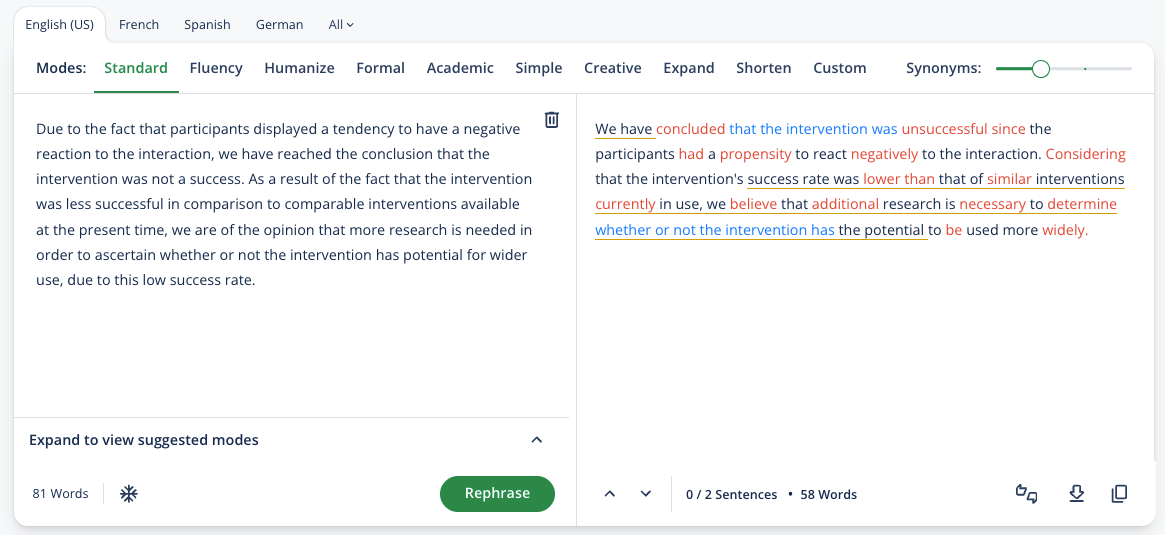
QuillBot earns the top position because it is the most reliable and controllable humanizer in long-form content workflows. It does not aggressively distort meaning and offers multiple rewriting modes that allow you to balance clarity and creativity.
It performs particularly well on articles, guides, and educational content where preserving intent matters. While it is not marketed primarily as an AI detection bypass tool, its outputs tend to read naturally when used with restraint.
QuillBot works best when you already have a solid draft and want to improve flow without losing precision.
Undetectable AI
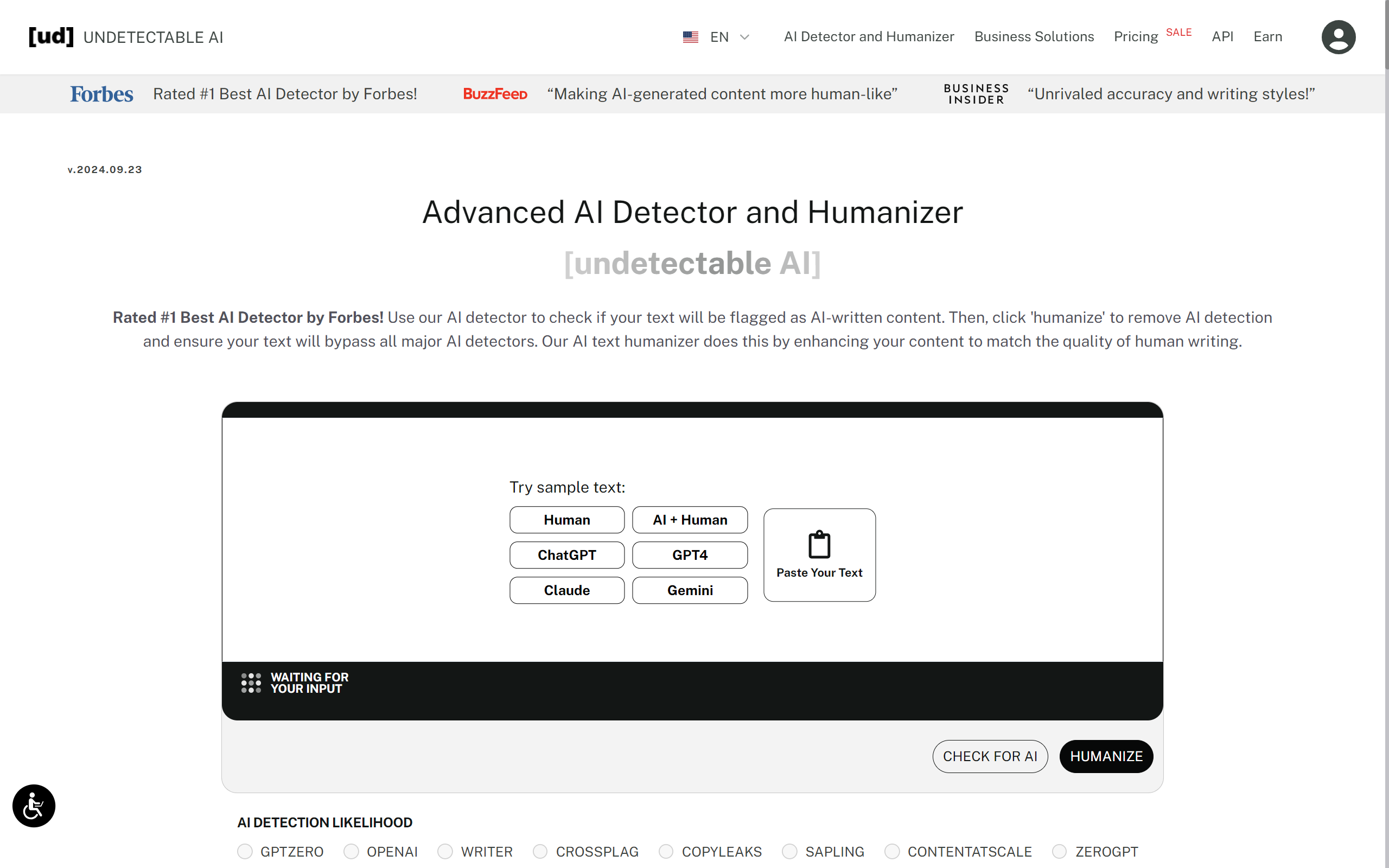
Undetectable AI is built with AI detection in mind. It actively reshapes text to reduce detectable AI patterns and provides detection previews as part of the workflow.
This tool is effective for high-volume content operations where speed matters. The trade-off is that technical nuance can sometimes be flattened if you apply aggressive rewriting.
It is best suited for marketing content, SEO articles, and large-scale publishing environments where detection sensitivity is a concern.
HIX.AI
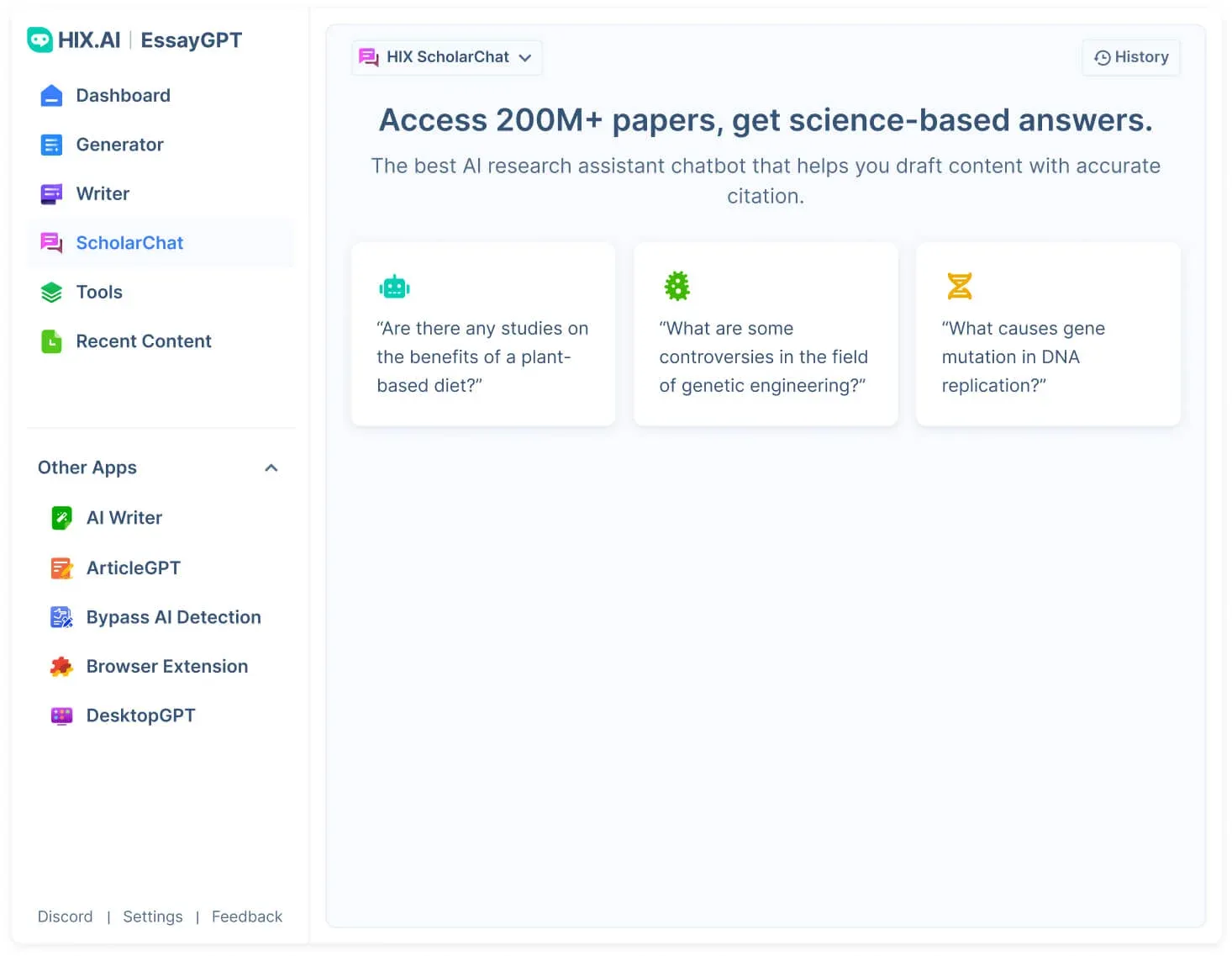
HIX.AI sits between a full writing suite and a dedicated humanizer. Its humanization module benefits from broader context awareness, especially when used alongside its other tools.
It performs well for teams that manage multiple content formats and want consistency across blog posts, emails, and social content. Results depend heavily on how precisely you configure tone and rewriting depth.
This is a good option for content teams rather than solo writers.
Wordtune
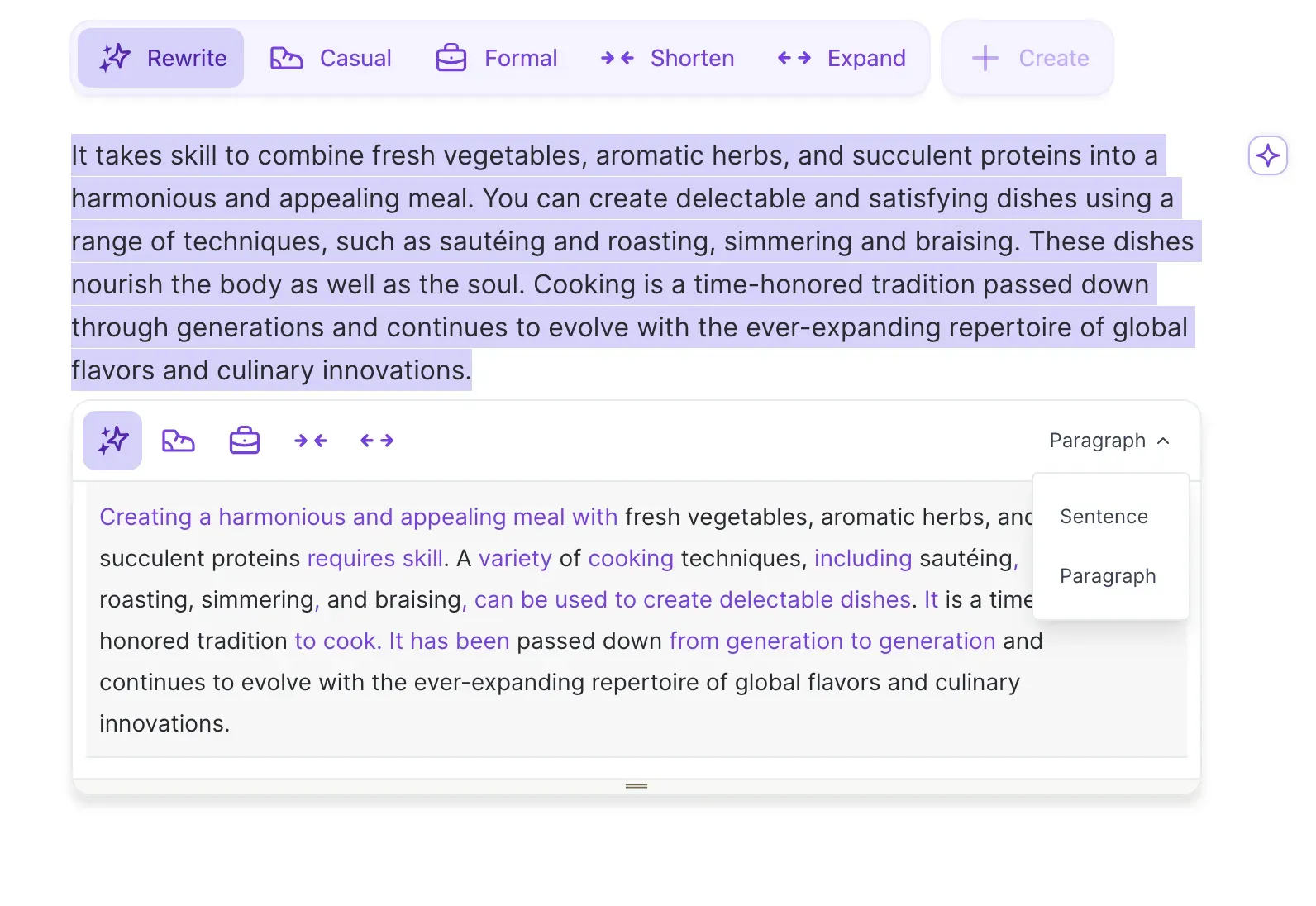
Wordtune focuses on clarity and readability rather than detection avoidance. It works inline and suggests alternative phrasings sentence by sentence.
It is particularly effective for business writing, sales communication, and executive-facing content. It does not radically restructure text, which makes it safer but also less transformative.
Wordtune is best viewed as an editorial assistant, not a full humanization engine.
StealthWriter
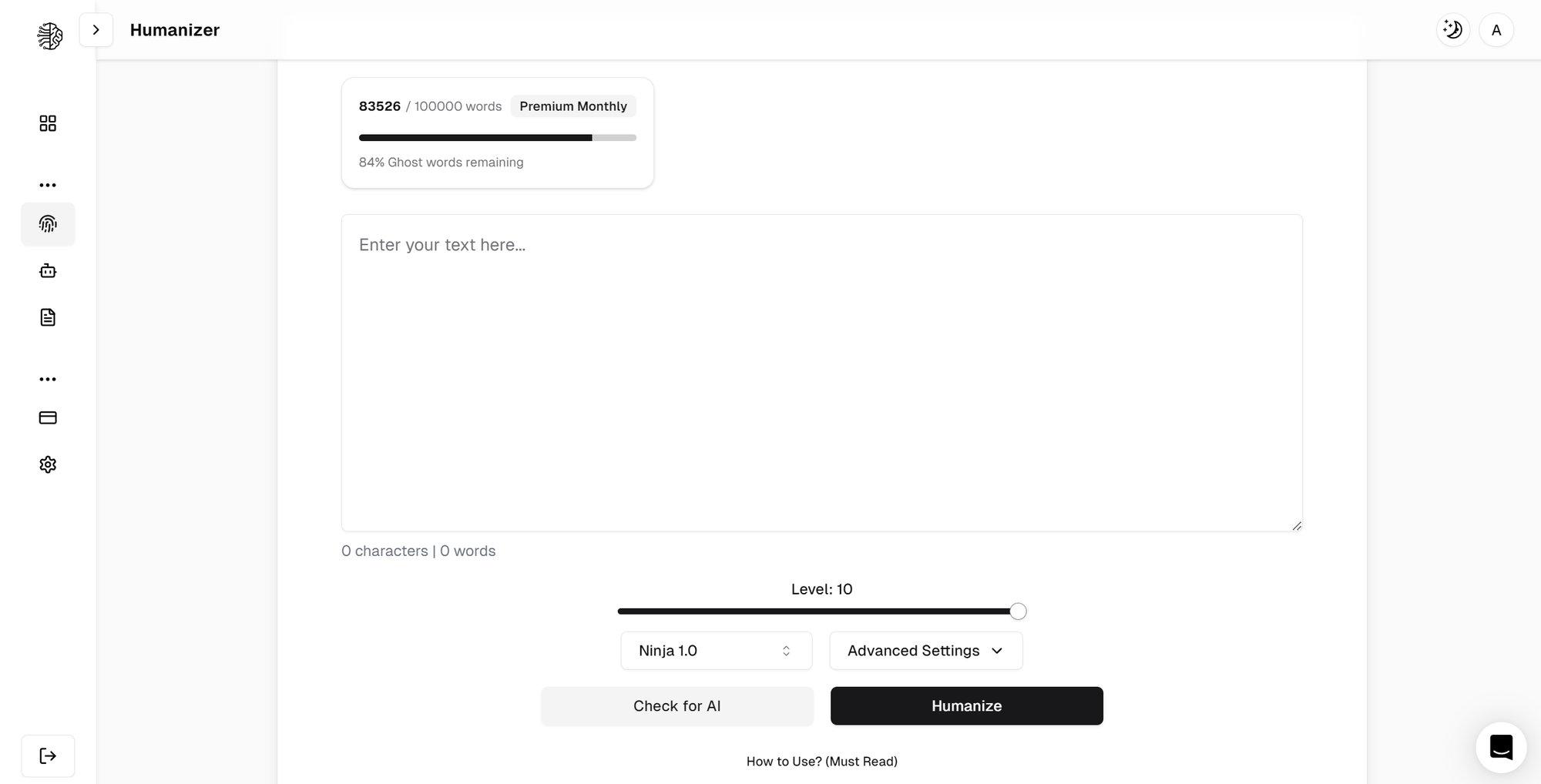
StealthWriter is aggressively optimized for making AI content indistinguishable from human writing. It introduces strong variation and multiple rewrite passes.
The downside is semantic drift. If you are not careful, meaning can shift subtly. This tool requires human review after processing.
It fits agencies and publishers who prioritize scale and detection resistance over precision.
How to Use AI Humanizers Without Ruining Your Content
Start with structure. Do not humanize a raw AI draft. First, shape the narrative, add your own insights, and remove generic filler.
Apply humanization once. Multiple passes through different tools usually degrade clarity rather than improve it.
Define your brand voice. Humanizers introduce variation. Without a style guide, your content will drift.
Most importantly, always review the output. AI humanizers are not editors. They do not understand your business, your audience, or your positioning.
Content Marketing Ideas Where AI Humanizers Add Real Value
AI humanizers work best in repurposing workflows. You can take a long-form article and reshape it into multiple formats without sounding repetitive.
They are also effective for localization. The same core message can be adapted for different regions, platforms, or audience maturity levels while preserving intent.
For agencies, humanization can be positioned as a quality assurance layer. Many clients already generate AI content internally but struggle with consistency and credibility. This gap is an opportunity.
Used strategically, AI humanizers support scale without sacrificing tone or trust.
Final Perspective
AI humanizers are valuable when applied deliberately. They improve flow, reduce mechanical phrasing, and help AI-assisted content meet professional standards.
The teams that win with AI in 2026 are not the ones with the most tools. They are the ones with the clearest content architecture and the discipline to use tools where they actually add value.