
AI and Robots in Alzheimer’s Support: What French Trials Are Exploring
Trials in France are exploring whether AI and robotic technologies can support people with Alzheimer’s through more engaging, personalised interactions.
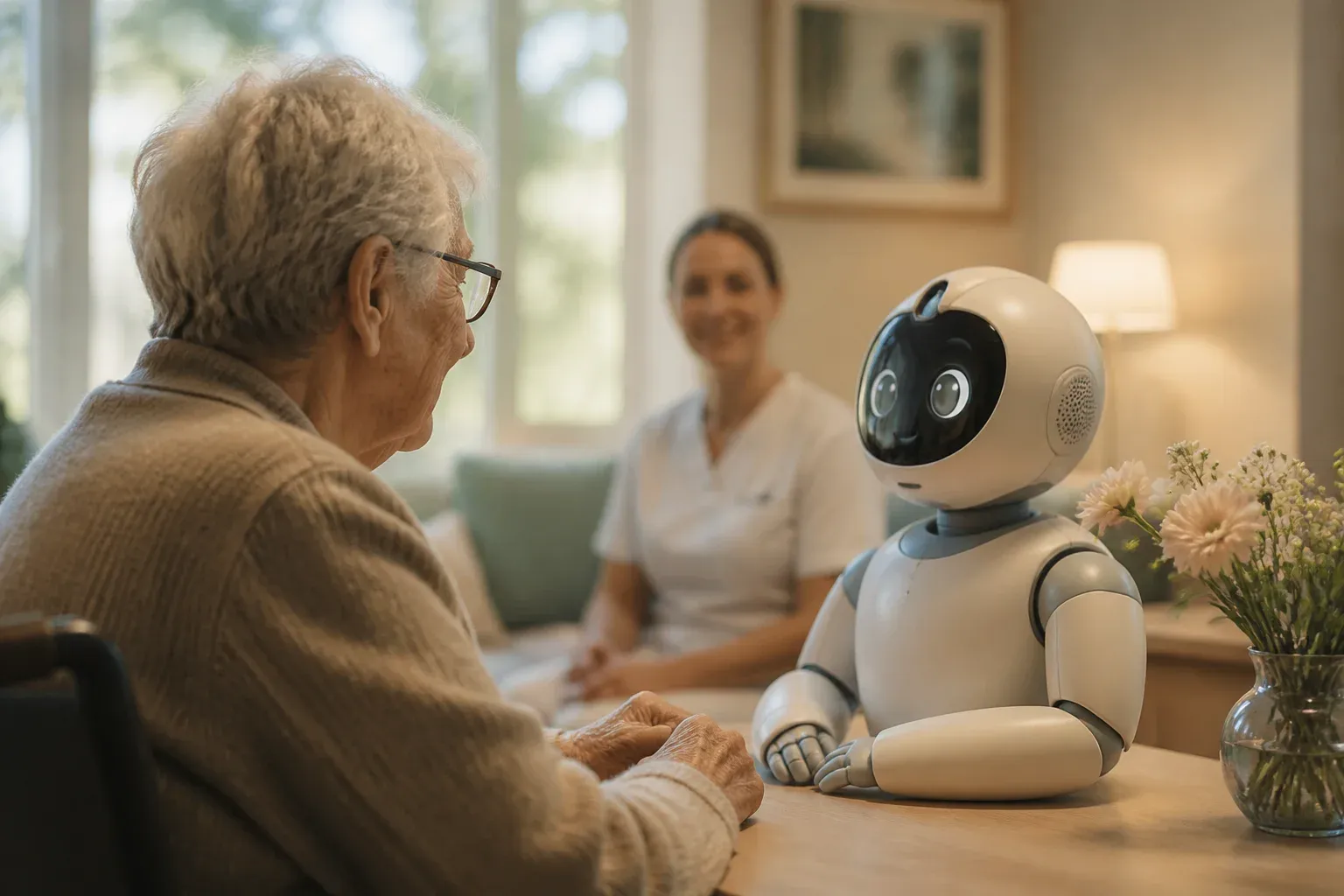
Trials in France are exploring how AI and robots could support people with Alzheimer’s, including through conversation, cognitive stimulation, personalised interactions and companionship. The available material describes an early care-support use case, not a replacement for professional carers or a proven clinical outcome. Its practical value will depend on how safely and usefully these technologies fit into real care routines.
For home-care providers, clinics and technology teams, the important question is not whether a machine can hold a conversation in isolation. It is whether it can support a defined activity without adding work, confusing responsibilities or creating unacceptable risks around sensitive information. The French trials may help clarify where conversational and robotic tools can be helpful, and where human judgement must remain central.
What the trials are exploring
The supplied information identifies four potential forms of support for people with Alzheimer’s:
- Encouraging conversation
- Cognitive stimulation
- Personalised interactions
- Companionship
These functions are related but should not be treated as interchangeable. A conversational interaction may encourage engagement, while cognitive stimulation implies a more purposeful activity. Personalisation could make an interaction more relevant to an individual, but the available material does not explain how that personalisation is produced, what information it uses or how it is assessed. Likewise, companionship describes a possible supportive role, not evidence that a system can meet all of a person’s social or care needs.
The distinction matters for deployment. A provider considering this category of technology should define the precise problem it wants to address, such as helping structure an activity or encouraging engagement at a planned time. Broad promises about “AI companionship” make it harder to evaluate results and easier to blur the boundary between a support tool and human care.
Supportive technology, not a substitute for care
The material does not state that AI or robots can replace carers, clinicians or family members. It presents them as technologies that could support people with Alzheimer’s. That is an important boundary for any pilot: a tool can be tested as an addition to a care process, while responsibility for care decisions and escalation remains with people.
This approach also creates a clearer evaluation standard. Teams can ask whether the technology helps a person participate in a conversation or activity, whether staff can use it without disruption, and whether the experience is appropriate for the individual. Those are more useful questions than assuming that a general-purpose AI interaction will work equally well for every person.
How care providers can assess a pilot
The available information does not name the technologies, trial operators, results, timelines or deployment requirements. Providers should therefore avoid treating the French trials as proof that a particular product is ready for use. Instead, they can use the stated support functions as a starting point for a tightly scoped assessment.
A practical pilot should establish:
- the specific interaction or activity the technology is intended to support;
- which staff member remains responsible for oversight and follow-up;
- what information, if any, the system receives or records;
- how the tool fits alongside existing caregiver and clinical documentation workflows; and
- what outcome would justify continuing, changing or stopping the trial.
Privacy and safety need to be considered from the outset because Alzheimer’s support can involve highly sensitive personal circumstances. The supplied material does not specify the data practices, safeguards or regulatory status of the French trials. Any organisation considering a similar deployment should seek appropriate specialist advice on its own obligations, confirm what data a tool handles, and establish clear boundaries for use before introducing it into care settings.
Integration should follow the care workflow
Technology integration is only useful when it supports the people doing the work. If a conversational AI or robot is used in a home-care or clinic setting, staff need a simple way to understand when it should be used, when an interaction needs human attention and whether anything should be recorded in existing systems. Connecting a pilot to electronic medical record systems or caregiver tools may be relevant, but only if the provider has a defined reason to exchange information and can do so appropriately.
Care providers considering conversational AI or companion robots need a pilot grounded in real workflows, not a technology demonstration. Scalevise can help map suitable use cases, define staff handoffs, assess integration needs and set measurable success criteria before resources are committed. A focused plan can test whether a tool can reduce avoidable administrative effort while keeping carers responsible for care decisions. Discuss an AI adoption plan with Scalevise.
What to watch next
The most useful next information from these trials would be evidence about how participants experience the technology, how care teams use it, and which support functions deliver practical value. Details on the systems involved, safeguards, implementation approach and measured outcomes would also be necessary before drawing wider conclusions about adoption in home care or clinical settings.
Frequently Asked Questions
What are the French trials exploring?
The supplied material says trials in France are exploring whether AI and robots can support people with Alzheimer’s through conversation, cognitive stimulation, personalised interactions and companionship.
Can AI and robots replace carers for people with Alzheimer’s?
The supplied material does not say they can. It describes supportive functions, so claims of replacing carers or clinicians would go beyond the available information.
What should a care provider define before piloting this technology?
A provider should define the intended use, staff oversight, information handling, workflow fit and criteria for judging whether the pilot should continue.
Are results from the French trials available in the supplied material?
No. The supplied material does not provide trial results, named technologies, vendors, timelines or detailed implementation requirements.
Conclusion
The French trials point to a focused possibility: AI and robots may help support conversation, stimulation, personalised interaction and companionship for people with Alzheimer’s. That possibility needs to be tested in the context of real care, with clear human oversight, careful handling of sensitive information and an honest evaluation of whether the technology improves the experience or workflow it was introduced to support.