
AI Statistics 2026: Usage, Workforce Adoption, Job Impact & Market Shift Explained
AI adoption in 2026 is rapidly scaling, with 67% of companies using AI and clear pressure emerging on entry-level roles in knowledge work, signaling a structural shift in the labor market.
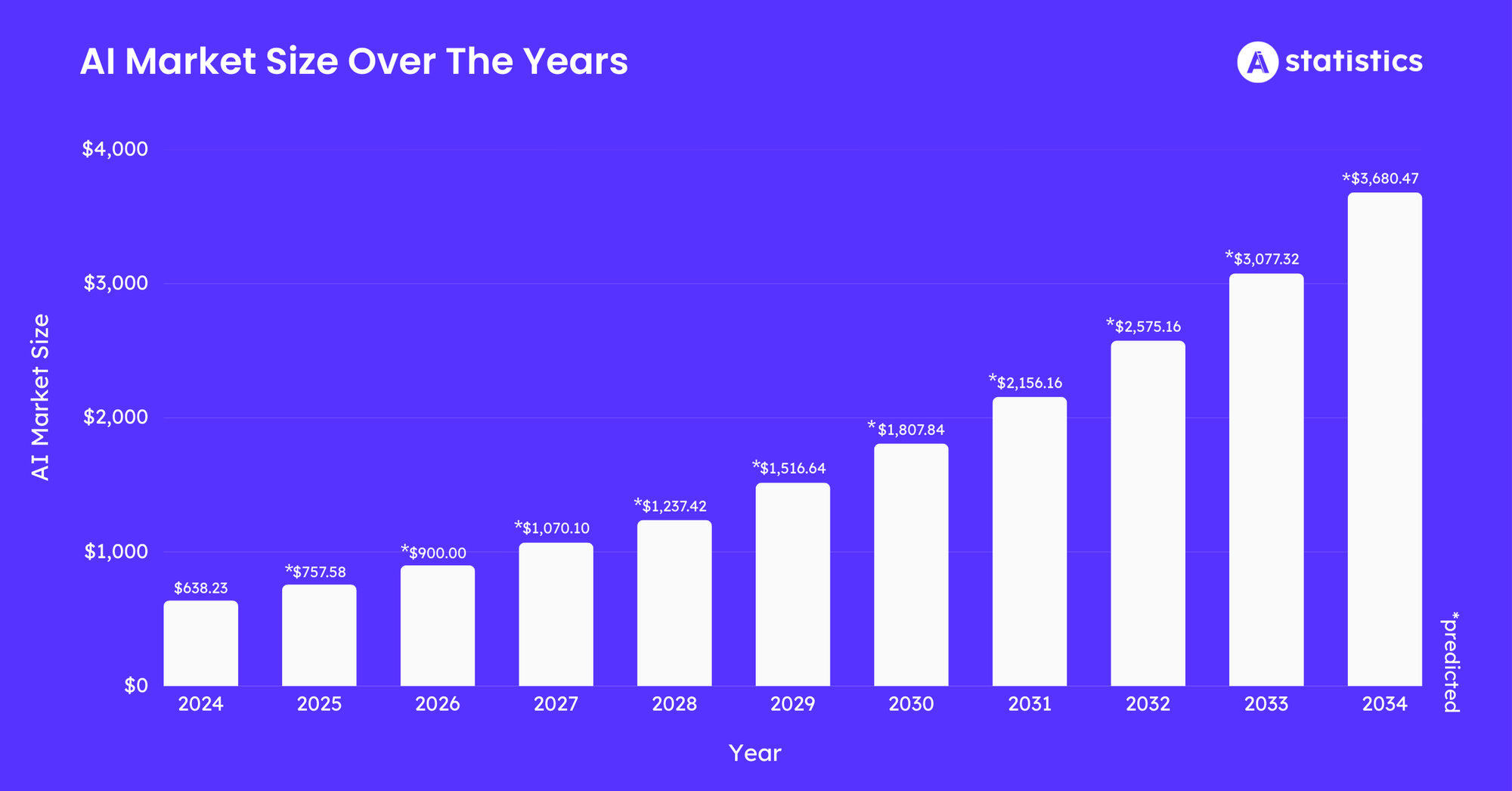
AI is moving from experimentation to operational dependency. The 2026 data shows a clear pattern: adoption is accelerating fast, but labor market disruption is still structural rather than explosive. The real shift is not mass unemployment, it’s a redistribution of entry-level work and task ownership inside organizations.
Below is a structured breakdown of the most recent first-half 2026 figures.
AI adoption is entering mainstream territory
The most important signal in 2026 is penetration speed across both private and professional usage:
- Private AI usage increased from 47% (Dec 2024) to 65% (Feb 2026)
- Workplace AI usage rose from 26% to 41% in the same period
- Around 67% of companies now report using AI in some form
- 12% of employees use AI daily
- 26% use AI multiple times per week
- Still, 49% of workers report no AI usage at work at all
The conclusion is straightforward: adoption is high at the organizational level, but uneven at the individual execution layer.
This indicates a classic “management-led adoption gap”—tools are implemented faster than workforce behavior changes.
Sector-level divergence is becoming sharper
AI usage is not distributed evenly. The 2026 data shows a clear split between knowledge-intensive sectors and operational industries:
- Technology: 77% adoption
- Finance: 64%
- Higher education: 63%
- Retail: 33%
- Manufacturing: 41%
Two structural insights stand out:
- Knowledge work leads adoption, because output is text-, analysis-, and decision-driven
- Physical industries lag, due to lower immediate automation surface area
This gap is likely to widen before it converges.
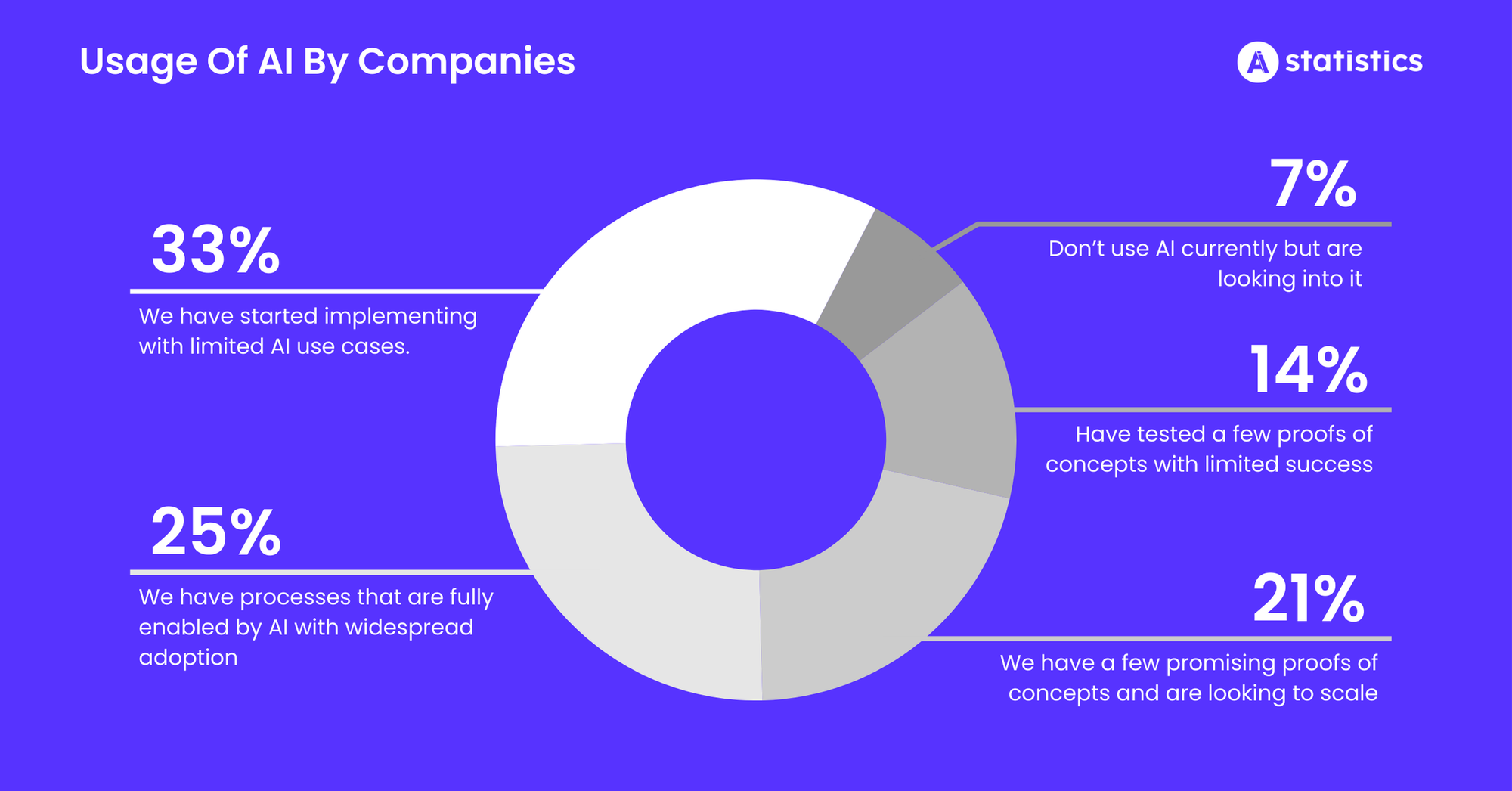
Organizational hierarchy matters more than sector
AI usage also varies significantly by role:
- Executives & leadership: 69% usage
- Operational employees: 40% usage
This suggests AI is currently a top-down productivity amplifier rather than a bottom-up workforce transformation tool.
In practice, this creates a risk: leadership assumes adoption is higher than it actually is on the ground.
Labor market effects: no mass displacement, but clear pipeline pressure
The most sensitive question—job displacement—shows a more nuanced picture in early 2026.
Current evidence does not show large-scale unemployment caused by AI. However, structural friction is emerging in entry-level hiring.
Key signals:
- Starter vacancies in knowledge-heavy roles declined by 30% to 40%+
- Young workforce entry (ages 22–25) at AI-intensive firms dropped 6% to 20% vs 2022
- Strongest impact areas:
- Legal services
- Administration
- Marketing
- Financial services
- Other knowledge work functions
The mechanism is not job destruction, but task compression:
junior tasks are increasingly absorbed by AI systems or redistributed to more senior staff.
What this actually means (business reality check)
If you strip away noise, the 2026 landscape is defined by three realities:
- AI is now operational, not experimental
Companies are scaling usage faster than workforce alignment. - Entry-level roles are the first pressure point
Not because jobs disappear, but because the “training layer” is shrinking. - Productivity gains are unevenly distributed
Leadership benefits first; execution layers adapt later.
This creates a short-term structural imbalance inside organizations: higher output expectations without proportional workforce recalibration.
Forward outlook: where this is heading
Based on the current trajectory, three developments are likely:
- Continued increase in corporate AI penetration (>70–80% in many sectors within 12–18 months)
- Further compression of junior/entry-level roles in knowledge industries
- Gradual normalization of AI as default workflow infrastructure, not a tool
The key strategic question for companies is no longer whether to adopt AI, but how to redesign workforce layers around it.
Bottom line
AI in 2026 is not a job-killer in the traditional sense. It is a structure rewriter.
Organizations that treat it as a productivity layer will see incremental gains. Organizations that treat it as a workforce redesign lever will fundamentally reshape their cost structure and talent model.
The gap between those two approaches is where competitive advantage is being created right now.