
Study Finds AI Wildlife Videos Can Distort Public Understanding of Nature
New research warns that realistic AI-generated wildlife images and videos can create false impressions of animal behavior and weaken conservation messaging.
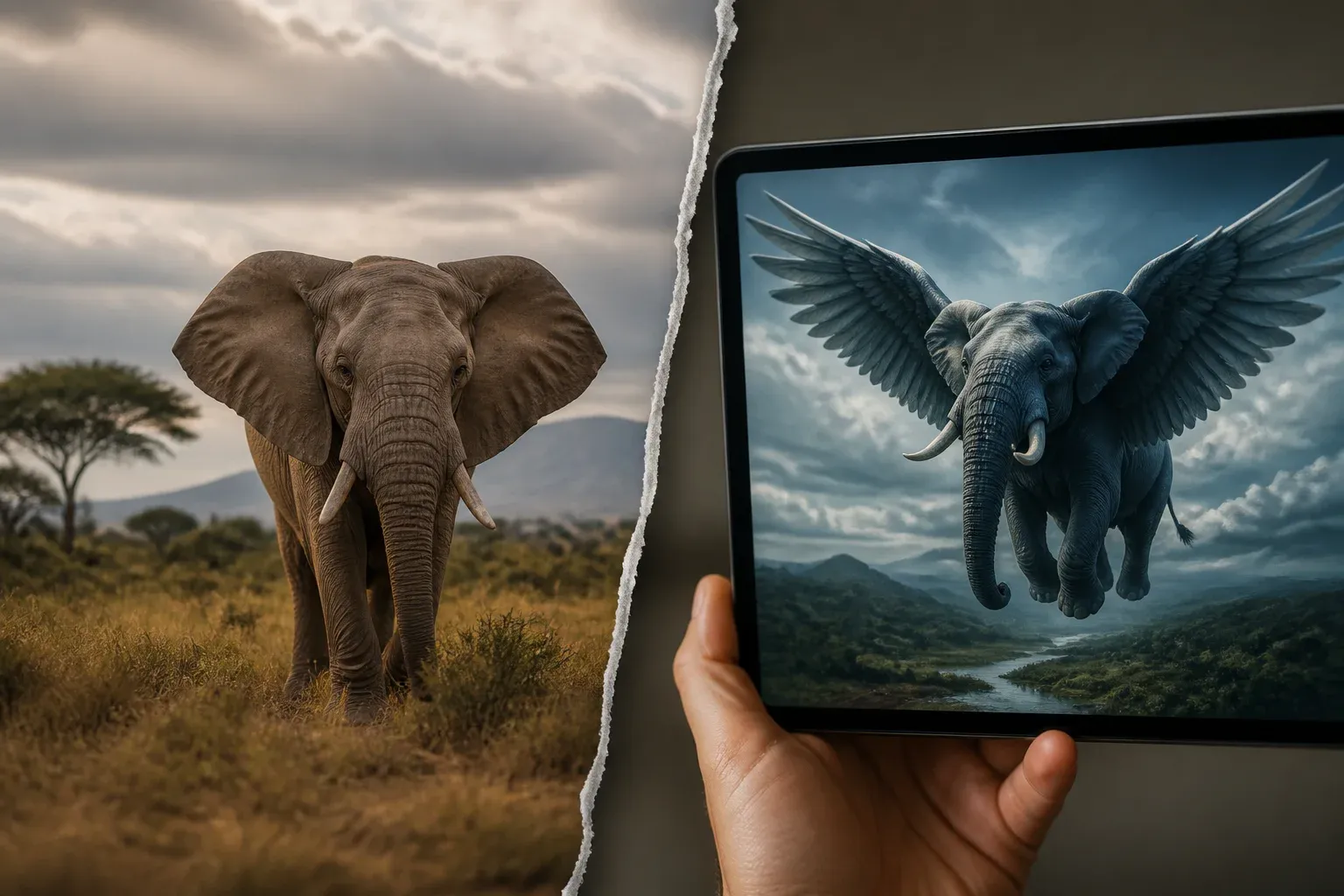
A peer-reviewed study in Conservation Biology warns that increasingly realistic AI-generated wildlife images and videos can distort how audiences understand animals, their behavior, and the natural world. The concern is not simply that synthetic content exists. It is that fabricated scenes can look credible enough to reshape public expectations of wildlife, creating a potential problem for conservation education and engagement.
The study, "Threats to conservation from artificial-intelligence-generated wildlife images and videos," was published on September 3, 2025. Its authors examine how fabricated animal media circulating on social platforms can present highly improbable situations as if they were real, from leopards appearing in backyards to animals given human-like motivations and behavior. The researchers argue that these portrayals can widen the gap between public perception and ecological reality. The findings are detailed in the Conservation Biology study.
For conservation, the stakes extend beyond an isolated misleading clip. Public support for species protection, habitat conservation, and responsible encounters with animals depends in part on accurate knowledge. When compelling synthetic media repeatedly substitutes spectacle for reality, it can influence what people believe wildlife is like and how they expect it to behave.
Why synthetic wildlife media creates a conservation risk
The authors' qualitative analysis focuses on AI-generated images and videos that depict scenarios unlikely to occur in nature. Such material can be engaging precisely because it compresses wildlife into emotionally immediate, dramatic, or anthropomorphic narratives. But an appealing story about an animal is not necessarily an accurate representation of its ecology.
The study identifies a central challenge: realism can make misinformation harder to recognize. Viewers may not have the species knowledge needed to spot incorrect behavior, implausible settings, or altered physical details. On social media, where content can circulate quickly and without useful context, the distinction between a creative fabrication and authentic wildlife documentation can become especially unclear.
That confusion matters because wildlife media often performs an educational role, intentionally or otherwise. People use videos and images to learn about species they will never encounter directly. If AI-made depictions become part of that information environment without clear disclosure, audiences may absorb false impressions about animal behavior, habitats, and human-wildlife interactions.
The study's implications reach several groups:
- Conservation organizations may need to account for synthetic misinformation in public education and outreach.
- Educators may need to include AI-generated nature content in media-literacy teaching.
- Platforms and publishers face decisions about disclosures, provenance signals, and how misleading material is handled.
- Audiences need practical ways to judge whether compelling wildlife content represents a real event.
The research does not argue that all AI-generated animal imagery is inherently harmful. Its focus is the risk created when realistic synthetic material gives viewers a misleading understanding of wildlife and biodiversity.
Labeling, literacy, and provenance are the proposed response
The paper calls for strategies that reduce the likelihood that fabricated wildlife media will be taken as documentary evidence. Its proposed approaches combine education with technical and governance measures, rather than treating detection as a complete solution on its own.
Media literacy education is a core recommendation. Teaching people to question extraordinary animal footage, examine its context, and recognize common signs of synthetic media could help readers and viewers make more informed judgments. The authors also suggest integrating these issues into curricula and public-awareness campaigns, connecting AI literacy with environmental literacy.
The study also highlights labeling and disclosure of AI-generated content. Clear disclosures can help preserve the distinction between authentic wildlife records and created scenes. That distinction is important for anyone using media to inform public understanding, including conservation communicators, educators, publishers, and platforms.
A third element is stronger content provenance and detection tools. Provenance mechanisms could provide information about how content was created or altered, while detection tools may help identify synthetic material. However, the study frames the problem as one requiring broader mitigation strategies because AI media can be extremely realistic and difficult to assess reliably.
For organizations, the practical question is how these measures work together. A label has limited value if viewers do not understand why it matters. Detection has limits if a piece of content has already spread widely. Education is more effective when people have recognizable signals and trustworthy sources to consult. The research therefore points toward a layered response that joins communication practice, technology, and policy.
The study also raises a broader governance issue for platforms and institutions that use visual media. Wildlife images are often treated as evidence, whether in public education, news coverage, advocacy, or casual online discussion. As synthetic content becomes more convincing, organizations may need clearer standards for sourcing, disclosure, and verification before presenting animal media as real.
For conservation communicators, this does not mean abandoning visually engaging storytelling. It means protecting the credibility of authentic footage and ensuring that audiences can distinguish documented encounters from generated entertainment. The stronger that distinction is, the less likely synthetic spectacle is to displace informed engagement with real ecosystems.
For conservation organizations, educators, and platforms, AI-generated media is now a trust and governance issue as well as a communications challenge. Scalevise helps teams assess AI risks, define practical disclosure and provenance requirements, and translate them into usable internal processes. An AI consultancy conversation with Scalevise can identify where misleading synthetic content could affect training, public engagement, or publishing decisions. Request a consultation to develop an AI governance plan.
Frequently Asked Questions
What did the Conservation Biology study find about AI wildlife videos?
The study found that AI-generated wildlife images and videos can create misleading impressions of animal behavior and ecological reality. The authors warn that highly realistic fabricated content may distort public knowledge of wildlife and biodiversity.
Why can AI-generated animal content affect conservation?
The authors argue that inaccurate depictions can widen the gap between people and the natural world. If audiences learn from implausible synthetic scenes, their understanding and engagement with real wildlife may be affected.
What examples of misleading wildlife content does the study discuss?
The study discusses AI-made scenarios such as leopards in backyards and anthropomorphized animal behavior. The authors describe these examples as highly unlikely in nature and potentially misleading when presented without clear context.
What solutions do the researchers propose?
The researchers propose media-literacy education, labels or disclosures for AI-generated content, and improved content provenance and detection tools. They also suggest incorporating these issues into curricula and public-awareness campaigns.
Can labels and detection tools solve the problem on their own?
The study presents labeling, provenance, detection, and education as complementary measures. Because AI-generated content can be extremely realistic, the authors emphasize the need for broader strategies to mitigate misinformation.
Conclusion
The Conservation Biology research establishes AI-generated wildlife media as a credible conservation communication concern. Realistic fabricated scenes can be persuasive even when they misrepresent animals and ecosystems. Clearer disclosures, stronger provenance practices, and media literacy can help protect the value of authentic wildlife knowledge while synthetic media becomes a more common part of the online information environment.