
AI Workflow Automation for Organizations: HR, Sales, Marketing and Customer Support
Discover practical examples of AI workflow automation across HR, sales, marketing and customer support. Learn how organizations streamline processes and reduce repetitive work.
AI workflow automation is transforming how organizations operate. Many companies still rely on manual coordination between systems, spreadsheets and email threads to manage daily processes. This creates inefficiencies, slows down operations and increases the risk of human error.
By combining workflow automation platforms with artificial intelligence, organizations can streamline operations and introduce intelligent decision making into their processes. Instead of employees manually moving data between systems, automation platforms orchestrate tasks automatically while AI helps interpret information, generate insights and assist with communication.
A connected organization where repetitive work disappears and teams focus on strategic growth.
Table of Contents
- What It Means for Modern Businesses
- Human Resources
- Sales Operations
- Marketing Workflows
- Customer Support Systems
- Building an Implementation Strategy
- The Future of Intelligent Workflows
- Frequently Asked Questions
What AI Workflow Automation Means for Modern Businesses
Traditional automation focuses on predefined rules. Data moves from one system to another when a trigger occurs. AI powered workflows add an additional layer of intelligence. Systems can now interpret content, classify information and generate responses.
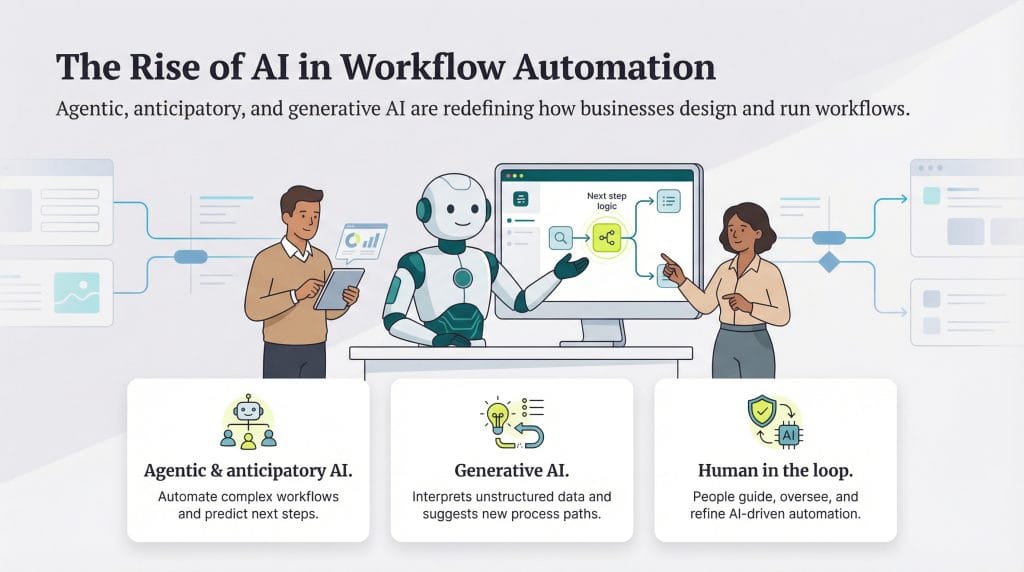
This means workflows can perform actions such as analyzing customer messages, generating summaries, extracting data from documents or recommending next steps in a process.
Companies typically build these systems using integration platforms that connect internal tools such as CRM systems, helpdesk software, marketing platforms and databases. AI models are then integrated into the workflow to process text, documents or structured data.
This combination enables organizations to automate complex operational processes while maintaining flexibility.
AI Workflow Automation in Human Resources
Human resources departments often manage many administrative tasks that require coordination between different systems. Recruitment, onboarding and internal support processes are common areas where automation can deliver significant efficiency gains.
AI powered workflows can streamline the recruitment process by automatically analyzing incoming job applications. Resumes can be parsed and structured so recruiters receive organized candidate data rather than reviewing unstructured documents.
During employee onboarding, multiple tasks can be triggered automatically once a contract is signed. Internal accounts can be created, access permissions assigned and welcome communication sent without manual coordination.
Examples of HR workflows that benefit from AI automation include:
- Screening and categorizing job applications based on predefined hiring criteria
- Generating onboarding documentation and employee welcome packages
- Creating employee accounts across internal systems automatically
- Providing internal HR assistance through AI powered chat interfaces
- Analyzing employee feedback surveys to identify trends and concerns
This approach reduces administrative workload while ensuring HR teams remain focused on strategic people management.
AI Workflow Automation in Sales Operations
Sales teams often lose valuable time managing administrative tasks. Updating CRM records, qualifying leads and documenting meeting notes are necessary but time consuming activities.
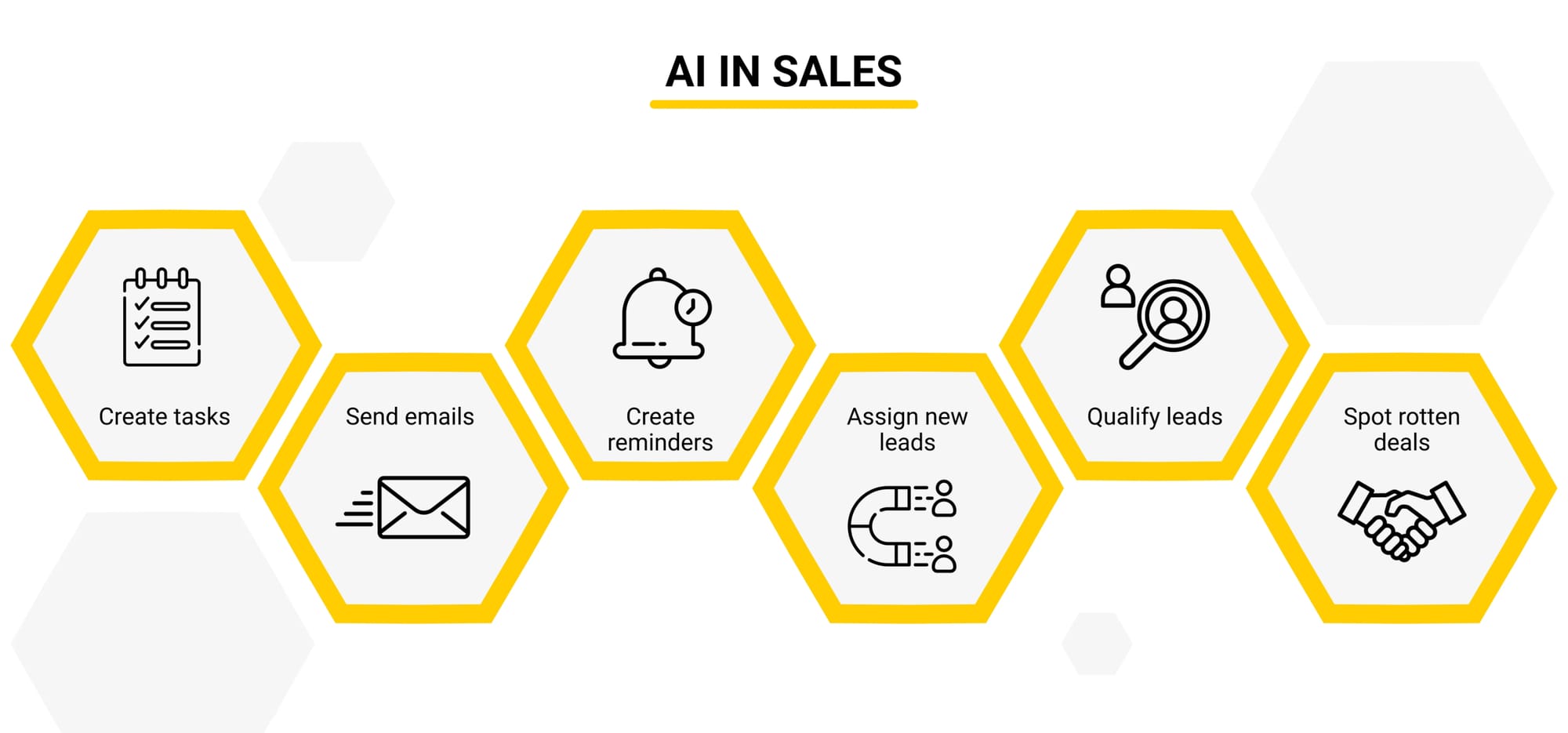
AI workflow automation allows sales teams to focus on relationship building and deal closing rather than managing operational data.
When new leads enter the pipeline through website forms or marketing campaigns, workflows can immediately analyze the information provided. AI systems can assess lead quality, categorize prospects and assign them to the appropriate sales representatives.
Communication can also be automated. AI systems can generate personalized follow up messages based on CRM data and previous interactions.
Typical AI enabled sales workflows include:
- Automatically qualifying and categorizing new leads based on company data
- Assigning leads to the appropriate sales representative
- Generating personalized outreach emails using customer information
- Summarizing sales calls and storing insights inside the CRM system
- Detecting high intent prospects based on behavioral signals
These automated processes ensure sales pipelines remain organized and actionable while reducing administrative overhead.
AI Workflow Automation in Marketing
Marketing teams operate across multiple platforms including email marketing tools, analytics systems, advertising platforms and content management systems. Managing campaigns and analyzing performance can quickly become complex.
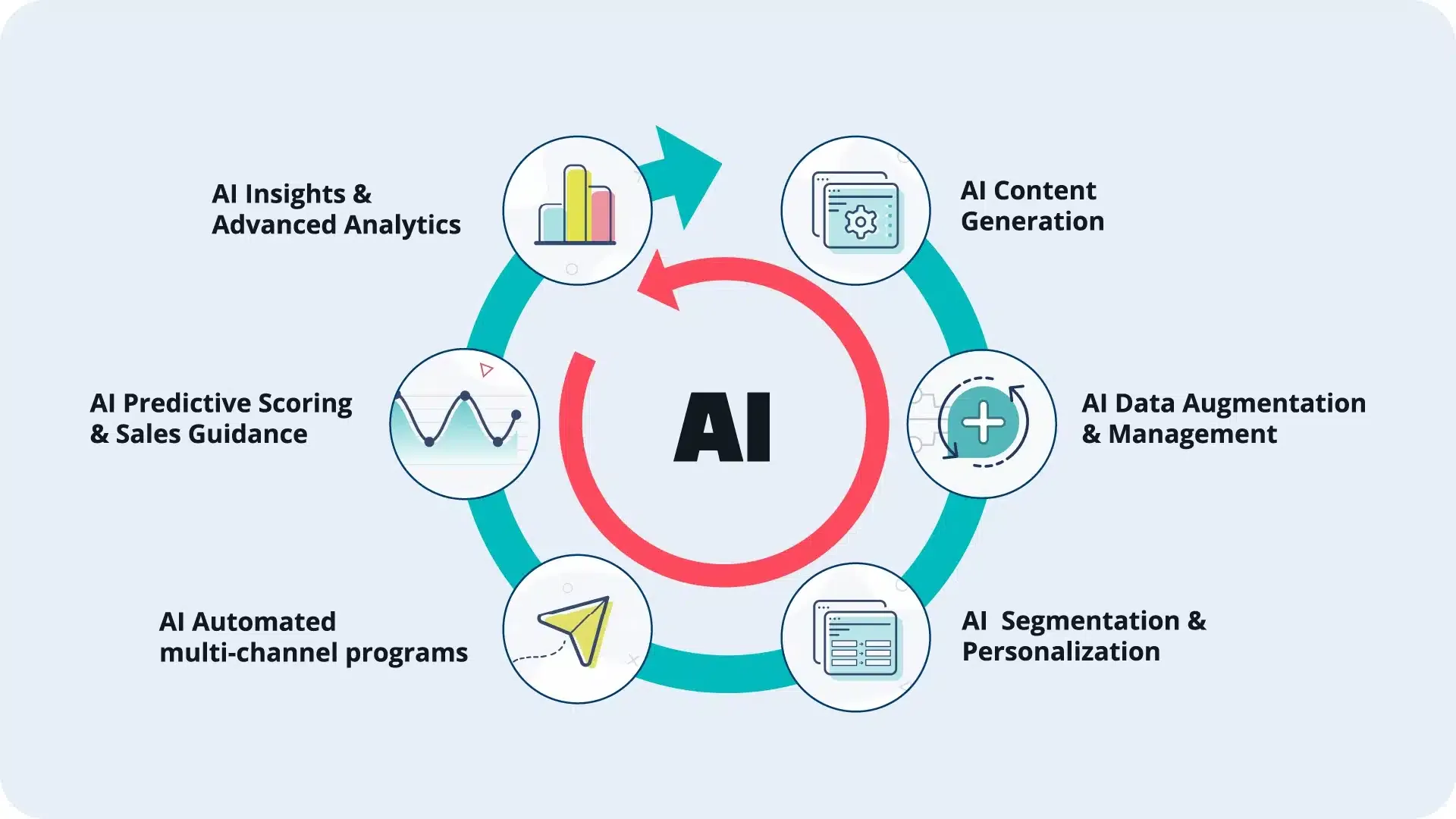
AI driven automation helps marketing teams coordinate these activities more efficiently while improving personalization.
Content production is one area where AI can significantly accelerate workflows. AI systems can assist with generating content outlines, suggesting campaign messaging and creating first drafts of marketing materials.
Lead nurturing is another area where automation proves valuable. When prospects interact with marketing campaigns, workflows can trigger personalized follow up communication that adapts to user behavior.
Examples of marketing workflows enhanced by AI include:
- Automatically segmenting leads based on behavior and demographics
- Generating marketing content drafts or campaign messaging
- Triggering personalized follow up sequences after lead interactions
- Analyzing campaign performance and generating strategic insights
- Identifying high value prospects through engagement analysis
These capabilities allow marketing teams to scale their output without increasing operational complexity.
AI Workflow Automation in Customer Support
Customer support teams often face high ticket volumes and repetitive requests. AI powered workflows help organizations respond faster while maintaining consistent service quality.
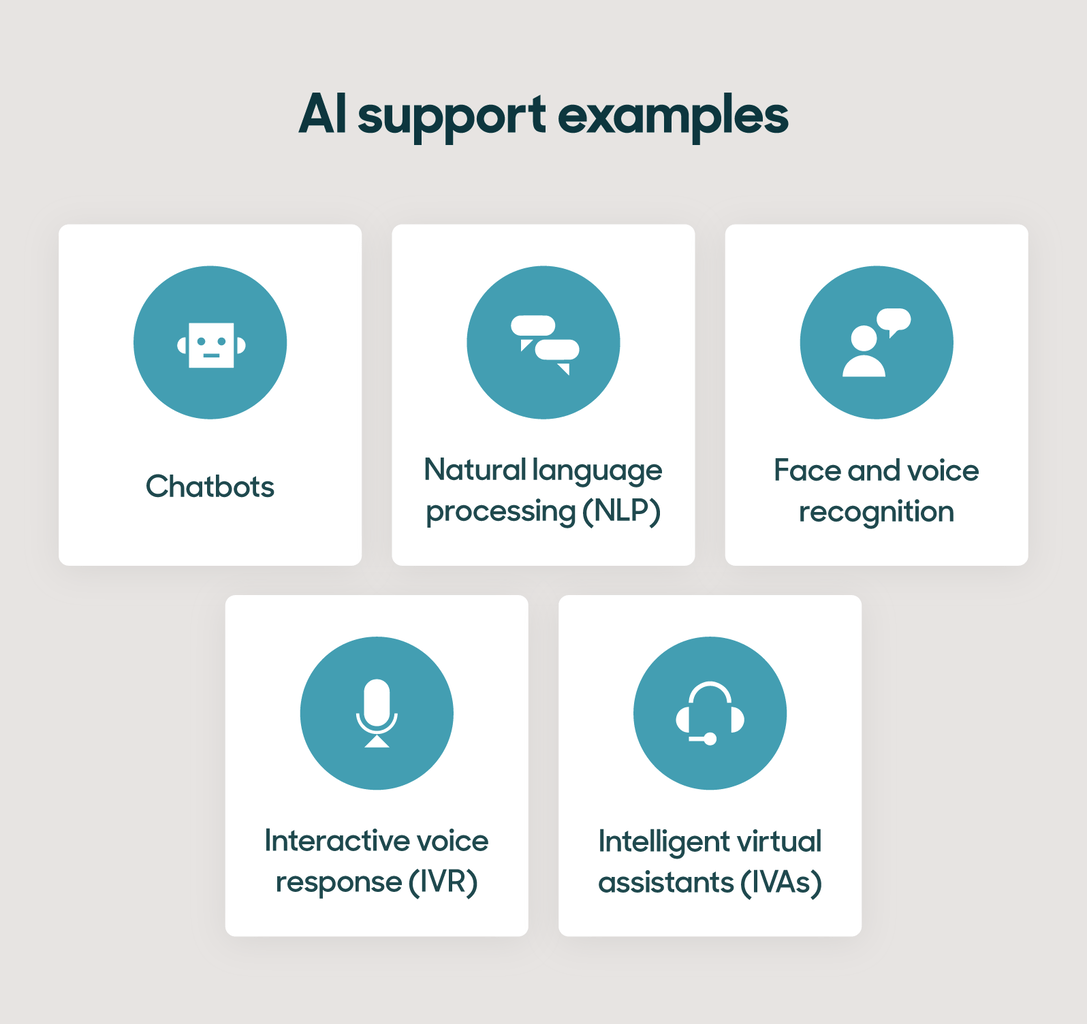
Incoming support requests can be automatically categorized using AI models that analyze the message content. Urgent issues can be prioritized while simple requests can be resolved automatically.
Knowledge bases can also be integrated into support workflows. AI systems can retrieve relevant documentation and generate responses based on internal knowledge sources.
Examples of support automation workflows include:
- Categorizing and prioritizing incoming support tickets automatically
- Routing requests to the appropriate support team or specialist
- Generating suggested responses using internal documentation
- Summarizing customer conversations for support agents
- Identifying recurring issues through ticket analysis
This approach allows support teams to handle larger ticket volumes without sacrificing customer experience.
Building an Effective AI Automation Strategy
Successful automation initiatives require more than simply installing new tools. Organizations need to approach workflow automation strategically.
The first step is identifying processes that are repetitive and time consuming. Administrative tasks that require frequent manual coordination are often strong candidates for automation.
Next, businesses should map how information flows between their existing systems. Integration platforms allow companies to connect tools and create unified workflows that move data automatically.
AI capabilities can then be layered on top of these workflows to introduce intelligent decision making. Tasks such as document analysis, text classification and content generation are common starting points.
Organizations that approach automation incrementally tend to see the best results. Starting with a small number of workflows allows teams to learn how automation works before expanding into larger operational areas.
The Future of Intelligent Business Workflows
AI workflow automation is becoming a foundational component of modern digital operations. As AI capabilities continue to improve, workflows will become increasingly autonomous and adaptive.
Systems will not only execute predefined processes but also interpret data, identify patterns and recommend actions in real time.
Organizations that invest early in automation infrastructure will gain significant operational advantages. They will be able to scale faster, reduce operational costs and deliver better customer experiences.
For many companies the next phase of digital transformation will revolve around building intelligent workflows that connect systems, data and decision making into a unified operational framework.
Frequently Asked Questions
What is AI workflow automation
AI workflow automation combines process automation with artificial intelligence. It allows businesses to automate repetitive tasks while enabling systems to interpret data, classify information and generate responses.
Which business departments benefit most from automation
Departments such as HR, sales, marketing and customer support often benefit the most because they handle repetitive administrative tasks and large volumes of data.
Do companies need developers to implement automation
Many automation platforms offer visual workflow builders that reduce the need for traditional programming. However, complex automation strategies often benefit from technical expertise to ensure systems integrate properly.
What tools are typically used for AI workflow automation
Businesses often combine integration platforms with AI models and existing software tools such as CRM systems, marketing platforms, databases and helpdesk systems.
How can Scalevise help with this
Scalevise helps businesses turn complex digital challenges into scalable solutions. Whether you're facing compliance, automation, integration, or innovation hurdles, our team delivers custom strategies and implementations that work.