
Destination Earth Is Building a Digital Twin to Simulate Climate Scenarios
Destination Earth says its digital twin of the Earth will support monitoring, simulations and scenario testing for complex environmental challenges.
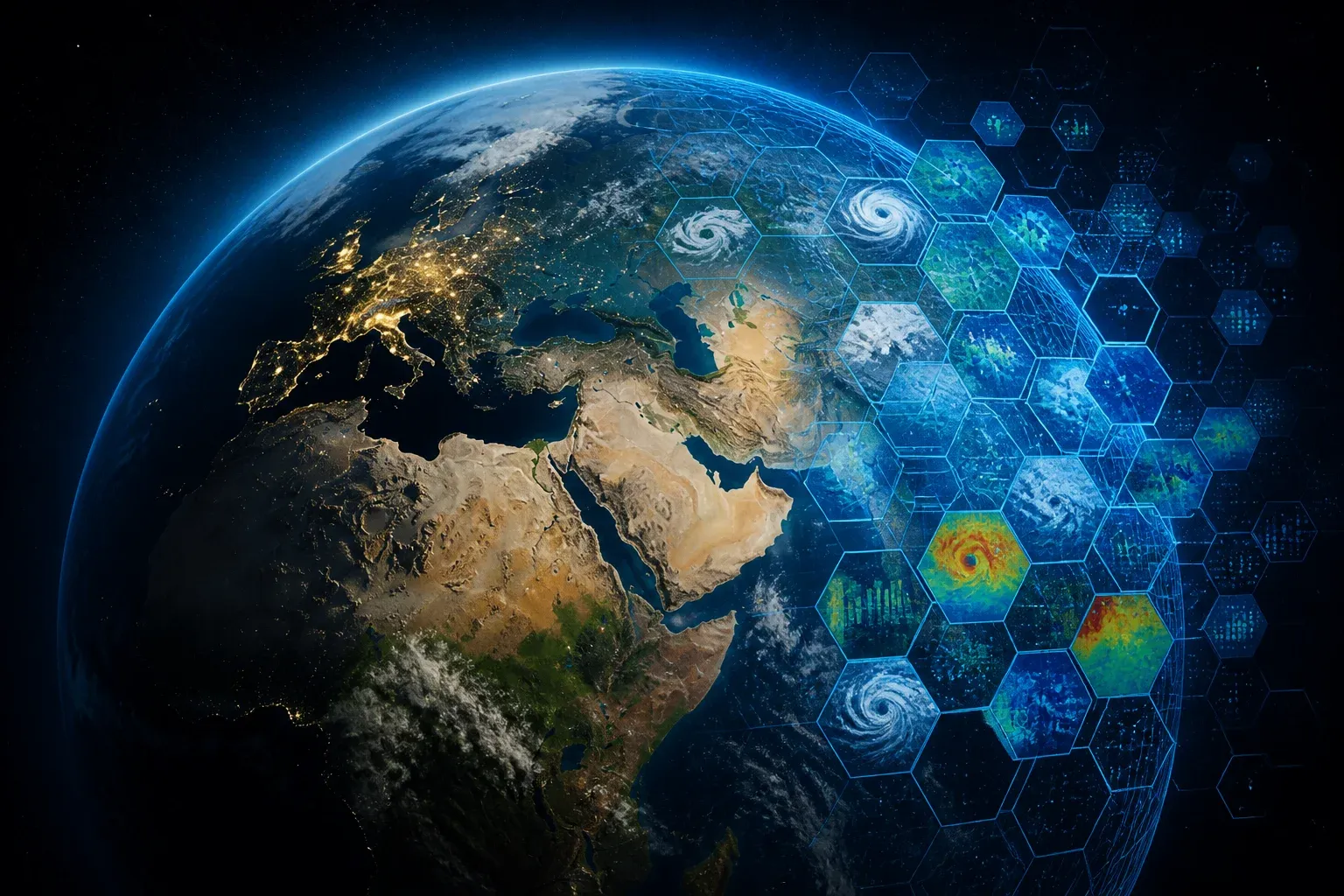
Destination Earth is building what it describes as a highly accurate digital twin of the Earth. Its stated purpose is to monitor developments, simulate how they may evolve, address complex environmental challenges and test scenarios. The project points to a practical use of digital-twin technology: creating a computational representation of a real-world system so people can explore possible conditions before acting.
Climate-related disruption can affect operations, supply routes, sites, customers and planning assumptions. A system designed to model environmental developments could therefore become relevant to organizations that need clearer, scenario-based information when assessing exposure to changing conditions. The available announcement establishes the project's broad ambition, but does not provide technical specifications, a delivery timeline, access details or defined commercial use cases.
What Destination Earth says it is building
A digital twin is generally a digital representation used to observe or simulate a physical system. In this case, the physical system is the Earth. Destination Earth presents the initiative as a way to better prepare for climate change by combining monitoring with simulation and scenario testing.
The announcement identifies four connected aims:
- Monitor developments across the Earth.
- Simulate changes in environmental conditions.
- Tackle complex environmental challenges using the resulting information.
- Test scenarios before decisions are made in the real world.
Those aims matter because monitoring alone describes what has happened or is happening. Simulation and scenario testing add a forward-looking component, allowing users to examine possible developments rather than relying only on past conditions.
Why scenario testing matters for operations
For businesses, the relevant idea is not that a digital twin can remove climate risk. It is that better environmental modelling may help inform planning where conditions can affect day-to-day activity. Examples could include reviewing how changing conditions might influence a location, service delivery or operational continuity. The announcement does not confirm any specific business workflow, data output or user access model, so these are potential applications of the underlying approach rather than confirmed Destination Earth features.
The project also illustrates a wider operational lesson. Decisions involving physical conditions are often made from fragmented information and historical assumptions. A digital-twin approach seeks to connect observation with simulation, making it possible to compare scenarios in a structured way. Its practical value will depend on the accuracy, accessibility and relevance of the information provided for a particular decision.
Organizations considering climate-related planning should separate three questions:
- Which environmental conditions could materially affect their operations?
- What data is needed to assess those conditions reliably?
- Which decisions would change if scenario-based insight were available?
Answering those questions can prevent technology from becoming an abstract research exercise. It keeps the focus on specific decisions, such as prioritizing site resilience, reviewing dependencies or preparing contingency plans.
For businesses exploring where data, automation and AI can improve operational planning, Scalevise can help turn broad opportunities into practical priorities, identify suitable workflows and assess implementation needs. A focused AI strategy and implementation consultation can clarify which decisions deserve better data, what systems need to connect and where an investment can create measurable value. Request a consultation to map the most practical next step.
Frequently Asked Questions
What is Destination Earth building?
Destination Earth says it is building a highly accurate digital twin of the Earth to monitor developments, simulate changes, address environmental challenges and test scenarios.
What is a digital twin in this context?
In this context, a digital twin is a digital representation of the Earth intended to support monitoring and simulations of its developments.
Can businesses use Destination Earth today?
The supplied announcement does not state availability, access requirements or specific business use cases.
What does scenario testing mean for climate planning?
Scenario testing means examining possible developments before acting. It can support planning by helping decision-makers consider how different conditions may affect relevant operations.
Conclusion
Destination Earth presents its digital twin as a tool for monitoring the planet, simulating developments and testing responses to environmental challenges. Its significance lies in the combination of observation and scenario-based modelling. The announcement leaves key implementation details open, but it underscores why organizations with exposure to changing physical conditions should connect climate planning to concrete operational decisions.