
EU Chips Act Grants First-of-a-Kind Status to Four Semiconductor Projects
The European Commission has formally recognized four semiconductor facilities under the EU Chips Act, including projects in Austria, Germany and Italy.
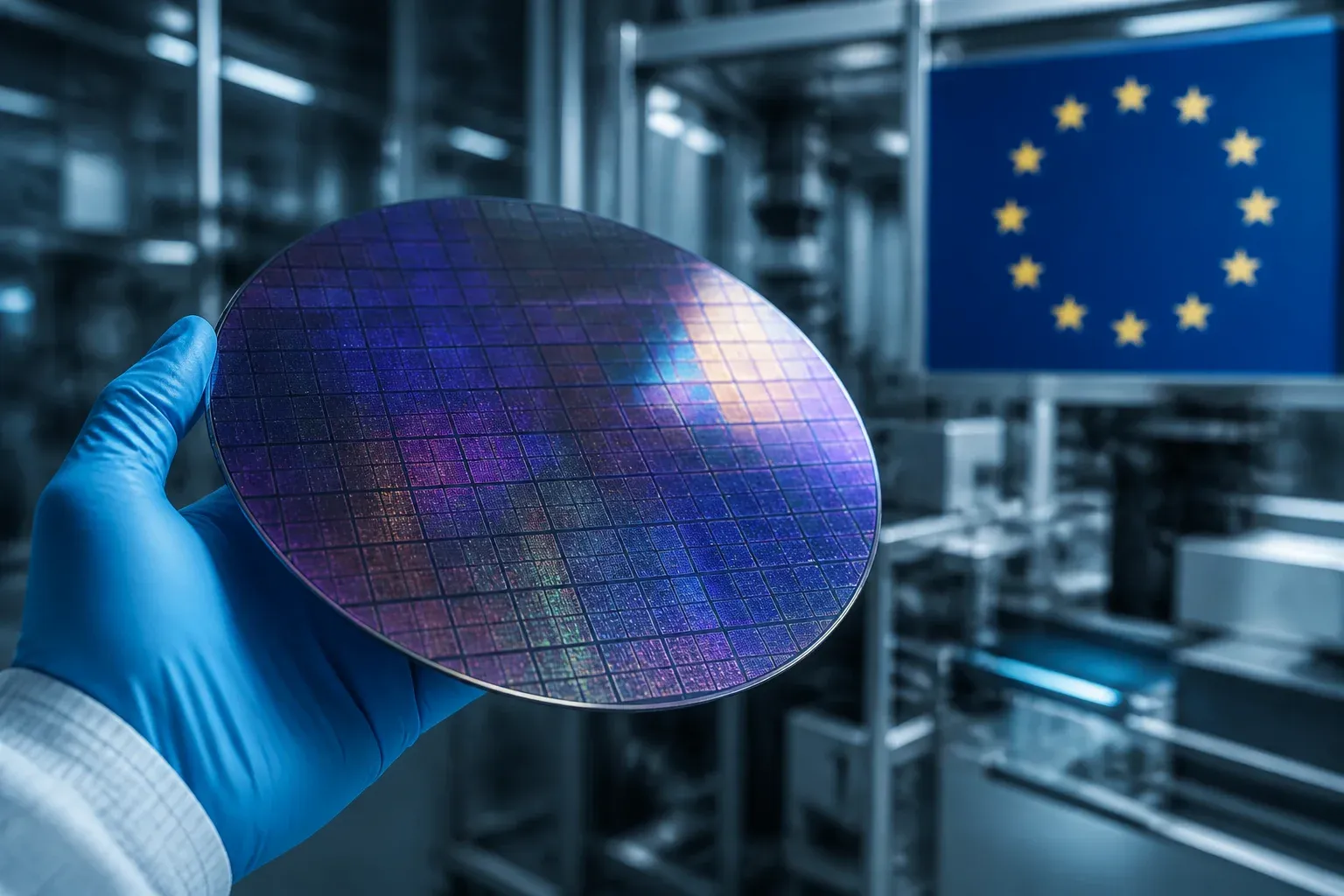
The European Commission has formally granted first-of-a-kind status to four semiconductor projects under the EU Chips Act, a concrete step toward expanding chip manufacturing capacity within the Union. The decisions cover facilities in Austria, Germany and Italy, including an open foundry project intended to serve external customers. For companies reliant on chips for products, equipment or industrial systems, the milestone matters because it is designed to make European supply chains more capable and resilient over time.
The European Commission's Chips Act milestone announcement was published on 13 October 2025 and updated on 23 October 2025. It confirms that four projects have received one of two designations under the Act: Integrated Production Facility (IPF) or Open EU Foundry (OEF).
IPFs are vertically integrated facilities that bring together several semiconductor production stages. OEFs are first-of-a-kind facilities that reserve at least part of their production capacity for external customers. That external-access requirement is significant: it links the policy objective of increasing European capacity with a potential route for more companies to source manufacturing services within the EU.
The four projects and what their status means
The four recognized facilities span several important parts of the semiconductor market, from automotive-grade manufacturing and power devices to silicon carbide processing and advanced wafer production.
| Project | Location | Status | Stated manufacturing focus | Timing or capacity cited |
|---|---|---|---|---|
| AMS-OSRAM OS4EU | Austria | IPF | Front-end manufacturing for automotive-grade processes | Not cited in the supplied Commission summary |
| ESMC | Germany | OEF | 300mm wafer production using FinFET technology and supply-chain integration | Up to around 480,000 wafers per year by 2029 |
| Infineon MEGAFAB-DD | Germany | IPF | Power and analog or mixed-signal devices across two technology families | Planned opening around 2026 |
| STMicroelectronics Catania Campus | Italy | IPF | Silicon carbide processing on an 8-inch platform | Not cited in the supplied Commission summary |
ESMC, the European Semiconductor Manufacturing Company, is a consortium involving TSMC, Bosch, Infineon and NXP. Its OEF status distinguishes it from the three IPF projects because an OEF must make part of its capacity available to external customers. The facility's target of up to roughly 480,000 300mm wafers annually by 2029 provides the clearest capacity benchmark in the Commission material.
The other three projects illustrate that the Chips Act is not focused on a single chip category. Infineon's Dresden facility is directed at power and analog or mixed-signal semiconductors. AMS-OSRAM's Austrian project targets front-end automotive-grade processes. STMicroelectronics' Catania Campus is focused on silicon carbide, a material used in power electronics. Together, these projects support a broader European manufacturing and materials ecosystem rather than a single attempt to replicate every segment of global chip production.
The Commission presents the decisions as part of the Chips Act's second pillar, which is intended to help streamline permits and provide priority access to piloting and production capabilities. The supplied material does not provide funding amounts for the four recognitions. The news is the formal granting of IPF and OEF status, not a newly stated funding package.
Why the milestone matters for supply chains
Europe's semiconductor strategy is explicitly concerned with reducing dependencies on non-EU supply chains. The four designations are meaningful because they move that objective from policy ambition toward named manufacturing projects with defined roles.
For businesses, the immediate effect should not be overstated. Formal status does not guarantee lower component prices, immediate availability, or access to every chip type. Semiconductor supply chains are global, and the listed projects have different production scopes and timelines. ESMC's cited capacity target is for 2029, while Infineon's Dresden opening is planned around 2026.
Still, the facilities could gradually reshape vendor options and procurement conversations in several ways:
- More regional manufacturing capacity could reduce exposure to some cross-border supply disruptions over the longer term.
- Open foundry capacity at ESMC may create an additional European production option for external customers that need relevant process technologies.
- Investment across power, automotive, analog and silicon carbide technologies supports sectors that depend on specialized chips, rather than only leading-edge logic manufacturing.
- Proximity to European design and advanced-materials ecosystems may strengthen collaboration between manufacturers, suppliers and technology developers.
For managers buying electronics, building connected products or operating industrial equipment, the practical response is to track whether their existing suppliers and component roadmaps intersect with these technology areas. Companies with long-lived products may find it especially useful to ask distributors and manufacturers about regional sourcing options, qualification timelines and alternatives for critical parts. The recognition itself is not a procurement solution, but it is a relevant signal that Europe is building more manufacturing pathways in strategically important segments.
The policy context also includes the Chips for Europe initiative, which emphasizes access to pilot lines. That matters because semiconductor resilience is not solely a question of high-volume fabrication. Design, prototyping, materials, manufacturing processes and customer access all influence whether new capacity becomes useful to the wider market.
For technology-dependent businesses, supply-chain changes often expose a wider operational issue: disconnected product, procurement and planning data can make it difficult to assess exposure before a component shortage becomes urgent. Scalevise can help translate those operational questions into a practical technology roadmap through AI consultancy for business process improvement, helping teams identify where better data flows and automation can improve decision-making. Request a consultation.
Frequently Asked Questions
What did the European Commission approve under the EU Chips Act?
The Commission granted IPF or OEF first-of-a-kind status to four semiconductor projects: AMS-OSRAM OS4EU, ESMC, Infineon MEGAFAB-DD and STMicroelectronics Catania Campus.
What is the difference between an IPF and an OEF?
An IPF is a vertically integrated facility that combines multiple stages of semiconductor production. An OEF is a first-of-a-kind facility that dedicates at least part of its capacity to external customers.
Which project will operate as an Open EU Foundry?
ESMC in Germany received OEF status. The TSMC, Bosch, Infineon and NXP consortium targets 300mm wafer production using FinFET technology.
Will these projects reduce chip prices or shortages immediately?
The formal recognitions do not guarantee immediate price reductions or component availability. The projects have different scopes and timelines, with ESMC targeting up to around 480,000 wafers per year by 2029.
Conclusion
The EU's recognition of four first-of-a-kind semiconductor facilities is a tangible Chips Act milestone, spanning foundry access, automotive processes, power devices and silicon carbide manufacturing. Its commercial impact will develop over years rather than overnight, but the decisions establish a clearer foundation for more European production capacity and potentially broader supply-chain options.