
EU Orders Google to Share Search Data With Rivals and AI Chatbots by 2027
European Commission DMA measures will require Alphabet to provide eligible search rivals and AI chatbots with anonymised Google Search data under privacy and FRAND safeguards.
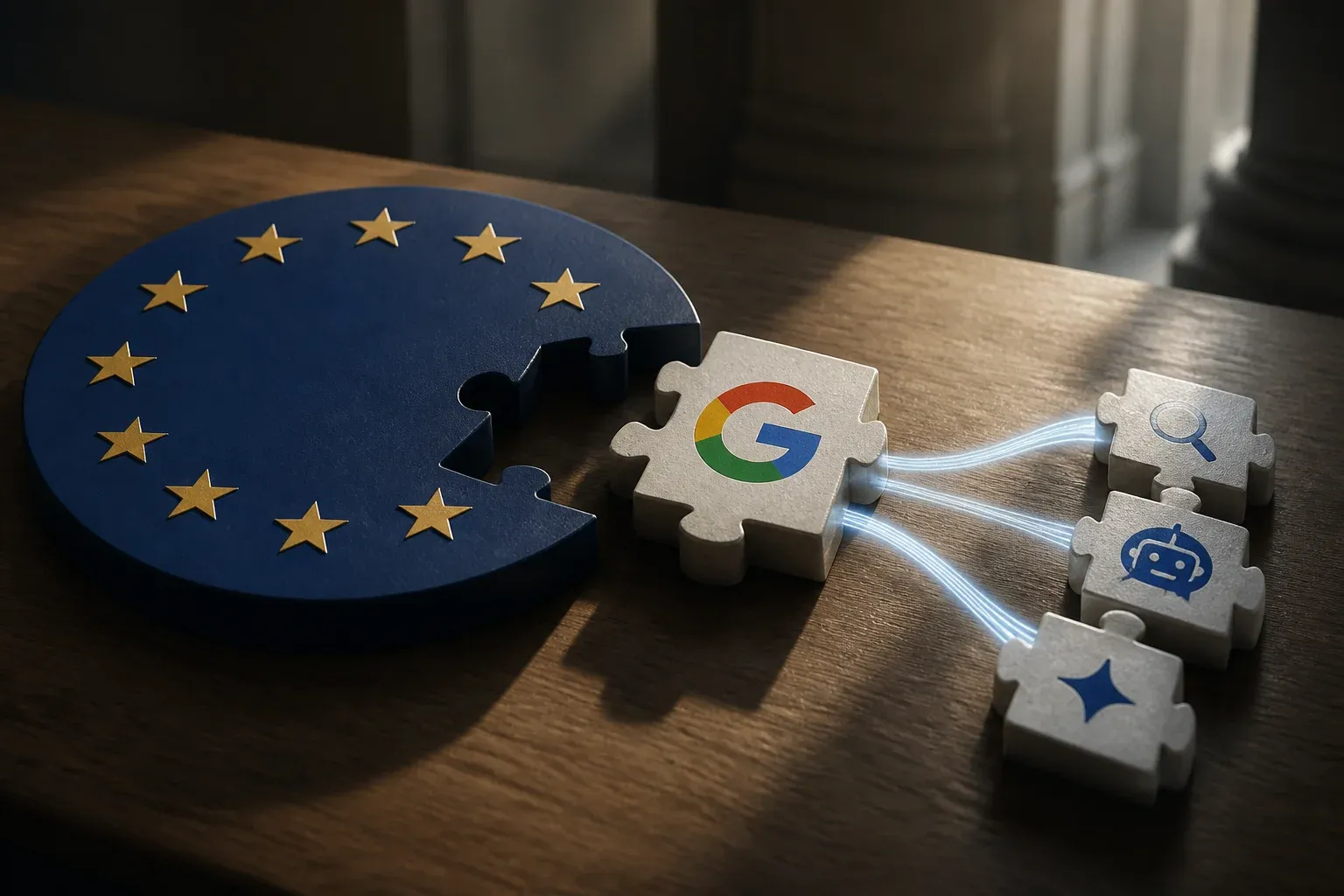
The European Commission has adopted binding Digital Markets Act measures requiring Alphabet to share anonymised Google Search data with eligible competing search engines and AI chatbots that offer search functionality. The framework is intended to begin actual data sharing in January 2027, creating a regulated route for qualifying services to use information that has long been central to Google Search's competitive position.
The decision is significant because it explicitly places AI chatbots with search features among the potential recipients. Rather than treating search competition solely as a contest between traditional search engines, the Commission's measures recognise that AI services can retrieve, organise and present web information in ways that compete with established search products. The obligations are paired with privacy, eligibility and use restrictions, so access is not an unrestricted release of Google's underlying user data.
The measures conclude specification proceedings the Commission opened on 27 January 2026 under Article 6(11) of the DMA. The European Commission's Alphabet specification proceedings on sharing Google Search data set out the scope of the obligation, the safeguards for recipients and the process for establishing prices.
What Google will have to share, and who can receive it
The required dataset covers information connected to how Google Search operates and how people interact with its results. It includes ranking, queries, clicks and views, along with relevant metadata such as language and device type. The measures also cover displayed URLs and result positioning. Taken together, those categories can help an eligible recipient understand search demand, result visibility and user engagement across the EU.
The Commission requires anonymisation and privacy safeguards around that information. It also sets limits on use and provides for independent verification. Those elements matter because search queries and interaction patterns can be sensitive even when a data-sharing regime is designed to remove direct identifiers. The policy objective is to provide data that can support competition without exposing end-user information.
Eligibility is not automatic. The framework is directed at credible new entrants and established online search engines with a presence in the EU. AI chatbots with search functionality are expressly included as eligible recipients, subject to the measures' conditions. The Commission will also use an independent-audit regime to support compliance with the rules.
| Recipient category | Status under the measures | Relevant role of the shared data |
|---|---|---|
| Eligible third-party online search engines | May qualify if they meet the beneficiary criteria, including credible entrants or established services with EU presence | Supports competition with Google Search using data on queries, rankings, results and engagement |
| AI chatbots with search functionality | Explicitly included as eligible recipients, subject to the framework's conditions | Can use the data to develop and optimise search-enabled services |
The Commission has also required a transparent FRAND pricing framework. FRAND terms are intended to be fair, reasonable and non-discriminatory. Here, the framework is designed to let Google recover incremental costs rather than turn access into a barrier that only the largest competitors can absorb. Pricing must be finalised within six months of the measures' adoption, ahead of the planned January 2027 operational start.
Why the ruling matters for search and AI competition
Search quality depends on more than a model's ability to generate fluent answers. Services that compete for search use need to understand what people look for, which results appear, how rankings change and how users engage with results. Google's scale has historically given it a substantial data advantage in that area. The DMA measures attempt to reduce that imbalance for qualifying competitors in the EU.
For AI chatbots, the change could be particularly important where a service combines conversational answers with search functionality. The measures do not promise that every chatbot will receive data, nor do they dictate how an eligible recipient must build its product. They do, however, make AI search services an explicit part of the competition framework instead of leaving them outside a rule aimed at conventional search engines.
The practical impact will depend on implementation. Several parts of the framework will shape whether access is usable in practice:
- The final pricing model and whether its incremental-cost approach keeps participation accessible to eligible services.
- The technical and governance processes used to deliver data while maintaining anonymisation and usage limitations.
- The interpretation and application of eligibility criteria for new entrants, established search engines and search-enabled AI chatbots.
- Independent audit and verification arrangements that test whether the safeguards and obligations are being followed.
This is therefore a data-governance decision as much as a competition decision. Recipients may gain access to valuable search signals, but they will need controls for permitted use, privacy compliance and auditability. Google, meanwhile, must establish a system that meets the DMA obligation while applying the required protections to end users.
The Commission's July 2026 package also includes a separate Android interoperability decision intended to give rival AI assistants enhanced access to Android features. Broader Android-related changes are anticipated to begin around July 2027. That decision is distinct from the Google Search data-sharing regime, but the two measures point in the same strategic direction: limiting gatekeeper advantages where access to platform capabilities or data can affect competition among search and AI services.
For businesses building search-enabled AI products, the immediate task is not to assume access will be available. It is to assess whether their service could meet the EU framework's eligibility and governance expectations once implementation details are finalised. Organizations evaluating compliant AI search workflows and data-governance controls can work with Scalevise on AI architecture, automation and implementation.
Frequently Asked Questions
When must Google begin sharing Search data under the EU DMA measures?
The measures cite January 2027 as the target start for actual sharing of anonymised Google Search data with eligible recipients. Pricing must be finalised within six months of adoption.
Can AI chatbots receive Google Search data?
Yes. The Commission explicitly includes AI chatbots with search functionality among eligible recipients, subject to the framework's eligibility, privacy and use conditions.
What Google Search data is covered by the framework?
The measures cover ranking, queries, clicks, views, displayed URLs and result positioning, plus metadata including language and device type. The data is subject to anonymisation requirements and safeguards.
Will every search engine or AI chatbot receive access?
No. Beneficiaries must meet the specified eligibility criteria. The measures refer to credible new entrants and established online search engines with an EU presence, while AI chatbots must offer search functionality and comply with the applicable conditions.
Is the Google Search data-sharing decision the same as the Android AI assistant decision?
No. The Commission issued a separate Android interoperability decision for rival AI assistants. It is part of the same broader DMA package but has a different subject and anticipated timeline.
Conclusion
The EU's DMA measures make search data a more direct part of competition policy for both search engines and AI services. By requiring anonymised, safeguarded access for eligible rivals from January 2027, the Commission is seeking to give alternative search products and search-enabled chatbots a clearer route to compete while keeping privacy, pricing and independent oversight at the centre of implementation.