
EU Updates Teacher Guidelines for Digital Literacy and AI-Driven Disinformation
The European Commission has refreshed its guidance for teachers tackling disinformation, adding classroom resources and new context on generative AI, influencers and prebunking.
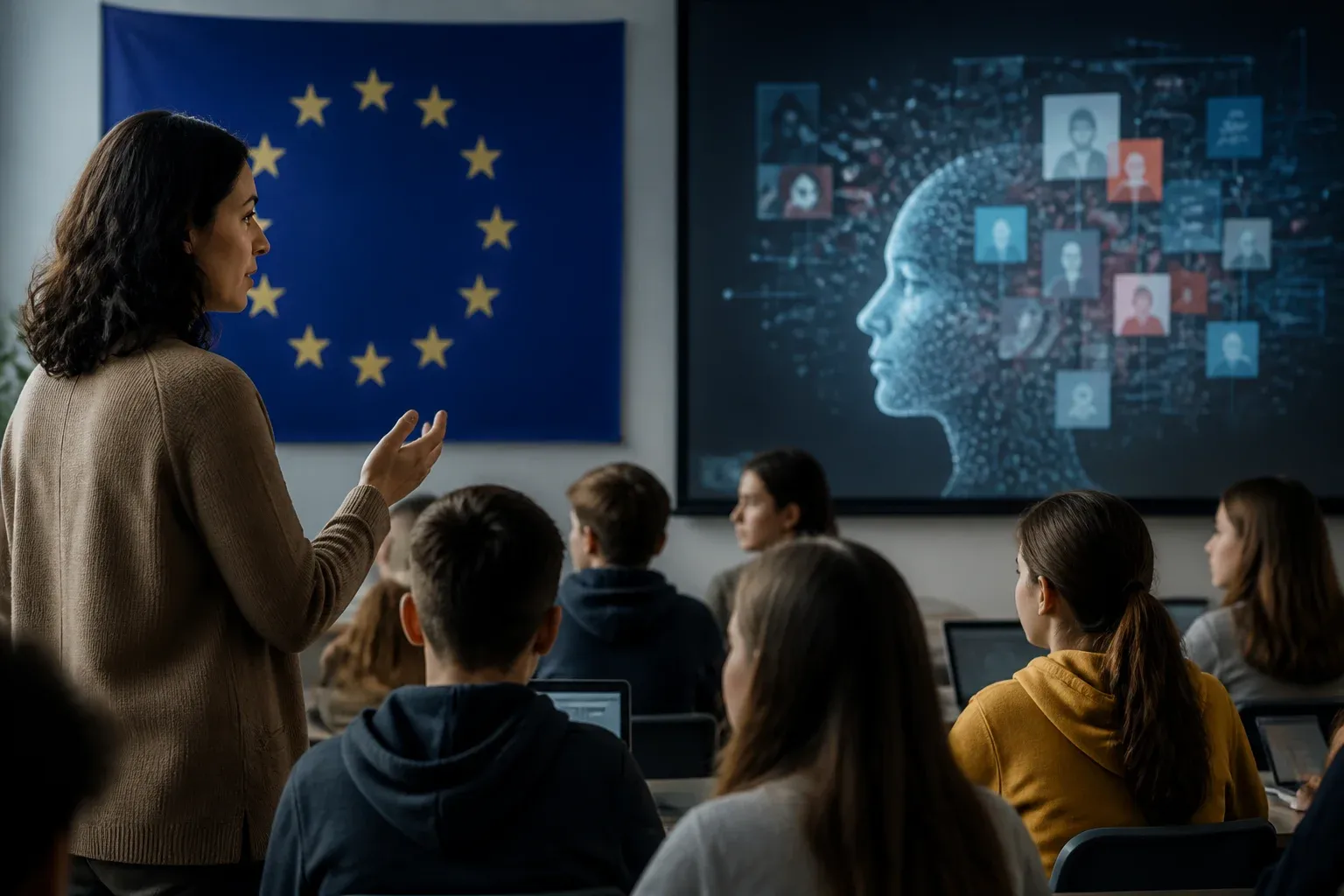
The European Commission has updated its guidelines for teachers and educators on tackling disinformation and promoting digital literacy, extending the guidance to address generative AI, influencer dynamics and prebunking. The refresh gives schools and education professionals new materials for helping young people assess online information and build resilience against misleading content.
The revised guidance sits within the EU's Digital Education Action Plan (2021-2027). According to the European Commission publication record for the updated guidelines, the Directorate-General for Education, Youth, Sport and Culture released the updated publication on 4 June 2026.
The update matters because the information environment facing pupils has changed substantially since the original guidance was issued. Generative AI can now be relevant to how online content is created, altered and spread. At the same time, social-media reliance and influencer-led information dynamics have become more prominent considerations for digital literacy education. The Commission's revised material positions educators and schools as part of the response, rather than treating disinformation solely as a platform or policy problem.
What the updated EU guidance adds
The updated guidelines are one element of a wider package of digital education and online-safety work. European Commission press materials published on 5 March 2026 described four sets of guidelines, comprising two new sets and two updates. The digital literacy and disinformation guidance was among the updated materials, with explicit attention to generative AI and contemporary online dynamics.
A Better Internet for Kids summary published on 10 March 2026 identified several practical and policy-oriented additions. These include:
- Lesson plans and an updated glossary to support classroom use.
- Consideration of generative AI's impact on disinformation.
- Coverage of social-media reliance and the role of influencers in shaping information exposure.
- Prebunking approaches, which aim to prepare people to recognize misleading techniques before encountering them.
- Recommendations relevant to policy and school leadership, alongside resources connected to cyberbullying.
The emphasis on prebunking is particularly notable. Rather than limiting instruction to checking an individual claim after it appears, this approach can help learners identify common patterns used to mislead audiences. The verified materials do not prescribe a single teaching method or technology. They instead expand the framework and resources educators can use when adapting digital literacy education to their setting.
| Area | Original guidance context | 2026 update |
|---|---|---|
| Policy framework | Issued as part of the Digital Education Action Plan (2021-2027) | Refreshed within the same Digital Education Action Plan framework |
| Teaching resources | Guidance for teachers and educators on disinformation and digital literacy | Additional lesson plans and an updated glossary |
| Information environment | Focus on tackling disinformation and promoting digital literacy | Explicit consideration of generative AI, social-media reliance and influencers |
| Institutional role | Teacher and educator guidance | Policy and school-leader recommendations, plus related cyberbullying resources |
For schools, the change is less about a new compliance obligation than a clearer, more current reference point for curriculum planning, staff development and online-safety discussions. The supplied materials describe guidance and resources, not binding requirements for education providers or technology vendors. That distinction is important for edtech companies and school leaders evaluating what the publication means in practice.
For education technology providers, the strongest practical implication is the need to understand the instructional context in which their products may be used. Tools that support research, media literacy, classroom collaboration or AI-assisted learning can be assessed against questions raised by the guidelines: whether students can evaluate information critically, whether AI-related risks are explained clearly, and whether educator oversight is supported. The update does not establish product certification criteria or vendor-specific rules, but it makes these issues more central to the digital education conversation.
Generative AI also complicates a familiar educational challenge. Digital literacy is not only about locating a reliable source or identifying a false headline. It increasingly involves understanding how content may be generated, adapted or amplified, and how social signals can affect perceived credibility. The Commission's decision to include AI-generated and AI-related content in the revised guidance recognizes that these questions now belong in discussions of disinformation prevention.
For education providers planning AI adoption, governance should connect technology choices with staff capability and learner protection. Scalevise helps organizations translate emerging AI risks into practical governance, implementation and training priorities through AI consultancy for education-focused transformation. A structured review can identify where AI tools, classroom workflows and digital-literacy objectives need clearer controls before problems become embedded in practice. Request a consultation to discuss an AI education governance plan.
Frequently Asked Questions
What did the EU update in its digital literacy guidance?
The European Commission updated its guidelines for teachers and educators on tackling disinformation and promoting digital literacy. The revised materials include lesson plans, an updated glossary, generative AI considerations, prebunking, influencer dynamics and school-leadership recommendations.
When was the updated guidance published?
The EU Publications Office lists the updated publication with a release date of 4 June 2026. Commission press materials discussed the wider guidelines package on 5 March 2026, and Better Internet for Kids summarized the update on 10 March 2026.
How does generative AI feature in the revised guidelines?
The update explicitly addresses the impact of generative AI on disinformation. It places AI-generated and AI-related content within the broader task of helping learners critically assess online information.
Are the EU guidelines binding rules for schools or edtech vendors?
The verified materials describe guidance, resources and recommendations for teachers, educators and school leadership. They do not establish binding compliance requirements or product certification rules for schools or edtech vendors.
Conclusion
The 2026 revision modernizes the EU's digital literacy and disinformation guidance for an education environment shaped by generative AI and rapidly changing online information dynamics. By combining updated classroom resources with attention to prebunking, influencers and school leadership, the Commission gives educators a more current framework for building learners' critical digital skills.