
Europe’s First Five-Car Autonomous Race at Imola Shows the Demands of Real-Time AI
Five teams raced identical driverless cars at Imola in A2RL’s first international event outside Abu Dhabi, offering a demanding test of autonomous racing systems.
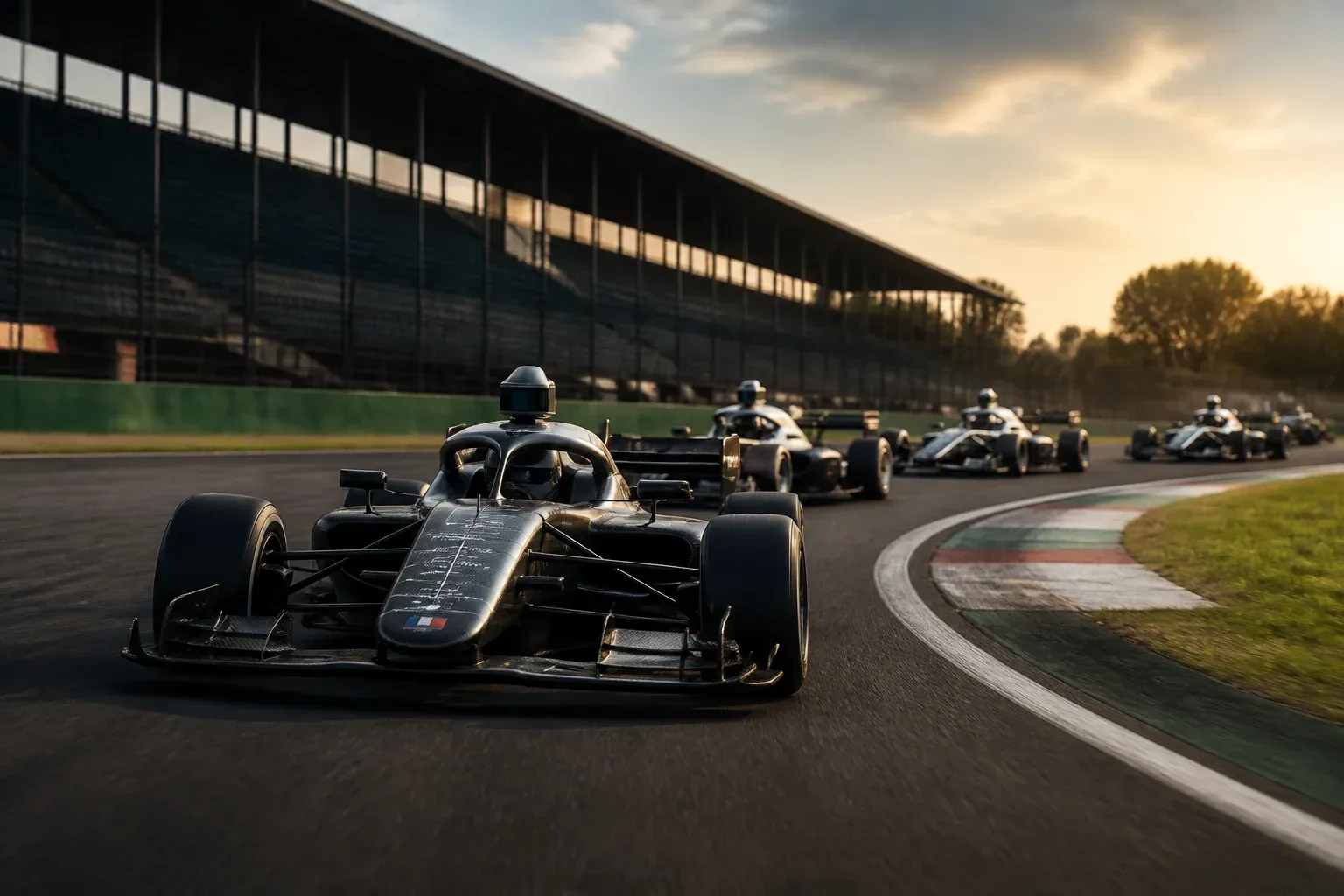
Europe’s first five-car autonomous race took place at Italy’s Imola Circuit on September 5, 2026, bringing wheel-to-wheel driverless competition to the ACI Racing Weekend. Organized by the Abu Dhabi Autonomous Racing League, known as A2RL, the 12-lap event put five teams and their autonomous driving software into the same race environment. Kinetiz of the UAE won the contest, ahead of Constructor Racing of Germany and Italy’s PoliMOVE.
The result matters because autonomous racing is not simply a test of whether a vehicle can complete a track alone. Cars must perceive their surroundings, plan manoeuvres and make decisions in real time while sharing limited space with other vehicles. In this race, each team used identical EAV-25 hardware, placing greater emphasis on how each team’s software performed under the same baseline conditions.
A2RL’s official Imola race report describes the event as the league’s first international race outside Abu Dhabi. The format provided a high-pressure setting for autonomous-racing AI, including perception, planning and real-time decision-making.
What happened in the Imola autonomous race
Five teams entered fully autonomous racecars: Kinetiz, Constructor Racing, PoliMOVE, Unimore and TUM. Kinetiz finished first after a race that also demonstrated why multi-vehicle autonomy is difficult to perfect. Unimore recorded the fastest lap, 1:40, before a technical issue stopped its car. PoliMOVE then collided with Unimore, ending the race with Kinetiz leading.
| Team | Country | Race outcome |
|---|---|---|
| Kinetiz | UAE | 1st place |
| Constructor Racing | Germany | 2nd place |
| PoliMOVE | Italy | 3rd place, collided with Unimore |
| Unimore | Italy | 4th place, fastest lap of 1:40 before a technical issue |
| TUM | Germany | 5th place |
The common EAV-25 platform is important context for interpreting the results. It does not remove every variable in racing, but it means the competitors were not each presenting a different vehicle architecture as the central story. The event instead highlighted the challenge of turning data from an autonomous vehicle’s perception systems into safe, fast actions when conditions change quickly.
Why multi-car autonomy is a tougher benchmark
A solo autonomous run can focus on route following and track limits. A multi-car race adds moving competitors, overtaking decisions, proximity management and the possibility that another vehicle will behave unexpectedly. The collision and Unimore’s technical issue show that a competitive autonomous race remains a demanding operational test, rather than a demonstration of a finished, universally applicable driving system.
For A2RL, the Imola event extends a wider program that includes race formats, testing and simulation efforts. Racing offers a controlled but intense environment in which teams can test the speed and reliability of their decision-making systems. It is a useful benchmark for progress in autonomous driving research, but it should not be treated as evidence that the same software is ready for public-road or commercial fleet deployment.
What the event can and cannot tell businesses
The most practical lesson is about the engineering pattern behind autonomy: systems must turn live sensor inputs into actions quickly enough for the task at hand. That pattern is relevant well beyond motorsport. Robots, inspection systems and automated industrial equipment similarly depend on perception, decision logic and reliable execution in changing physical environments.
However, Imola does not establish that autonomous technology is immediately ready for ordinary business operations. A racetrack is a defined environment, and the supplied race results do not provide evidence about deployment costs, commercial availability, safety performance outside the circuit, or integration with fleet-management and manufacturing software.
The event does underline several questions that matter when companies evaluate physical automation:
- How quickly must a system respond when conditions change?
- What inputs must it interpret before taking action?
- What happens when a technical issue occurs or the system encounters an unexpected event?
- Which parts of a process need human oversight rather than full automation?
For teams building automation around existing operations, those questions are often more useful than headline claims about autonomy. The strongest projects start with a clearly bounded workflow, define the decisions software can safely handle and connect the resulting process to the tools people already use.
Autonomous racing also illustrates the value of testing before operational rollout. The Imola race involved a fixed number of laps, a shared hardware platform and identifiable results. Business automation is different, but the principle carries over: evaluate systems in a defined environment, observe failure modes and expand only when the process performs reliably.
Businesses considering AI-driven automation can benefit from translating ambitious technology demonstrations into specific workflow opportunities. Scalevise’s AI workflow automation service helps teams identify repetitive processes, connect AI to existing tools and design practical human oversight where it is needed. That approach can reduce manual work without assuming that every decision should be autonomous. Discuss an AI automation project with Scalevise to identify the workflow where action can create the clearest operational value.
What to watch next from A2RL
A2RL’s first race outside Abu Dhabi establishes an international milestone for its autonomous-racing program. The next meaningful indicators will be whether future events continue to test multi-car competition, how reliably teams can manage race incidents and whether the program publishes further evidence from its testing and simulation work.
The Imola result also creates a clearer competitive reference point. Kinetiz won the race, while Unimore’s fastest lap suggests that outright pace and race completion can be separate challenges. In autonomous systems, performance depends not only on speed but also on consistency when technical disruptions and interactions with other vehicles occur.
Frequently Asked Questions
What was Europe’s first five-car autonomous race?
It was a 12-lap race for fully autonomous racecars held at Imola Circuit on September 5, 2026, during the ACI Racing Weekend. A2RL organized the event.
Which team won the A2RL race at Imola?
Kinetiz from the UAE won. Constructor Racing finished second, PoliMOVE third, Unimore fourth and TUM fifth.
Did all teams use the same autonomous racecar hardware?
Yes. The five teams used identical EAV-25 hardware, making their autonomous driving software a central point of comparison.
What does the Imola race prove about commercial autonomous vehicles?
It demonstrates progress in autonomous-racing perception, planning and real-time decision-making. It does not establish readiness for public-road driving, commercial fleets or other business deployments.
Conclusion
A2RL’s Imola race was a significant multi-car test of autonomous racing systems, with Kinetiz taking the win in a contest that also exposed the operational difficulty of technical issues and vehicle interactions. For businesses, its clearest value is as a reminder that useful autonomy depends on fast decisions, bounded testing and reliable handling of exceptions. Those principles apply to practical automation projects even when the application is far removed from a racetrack.