
Google Gemini 4 Argon Brings Multi-Agent Blender Workflows to Antigravity
Google has rolled out Gemini 4 Argon across its API, Gemini and Antigravity platforms, demonstrating multi-agent Blender workflows for interactive 3D production.
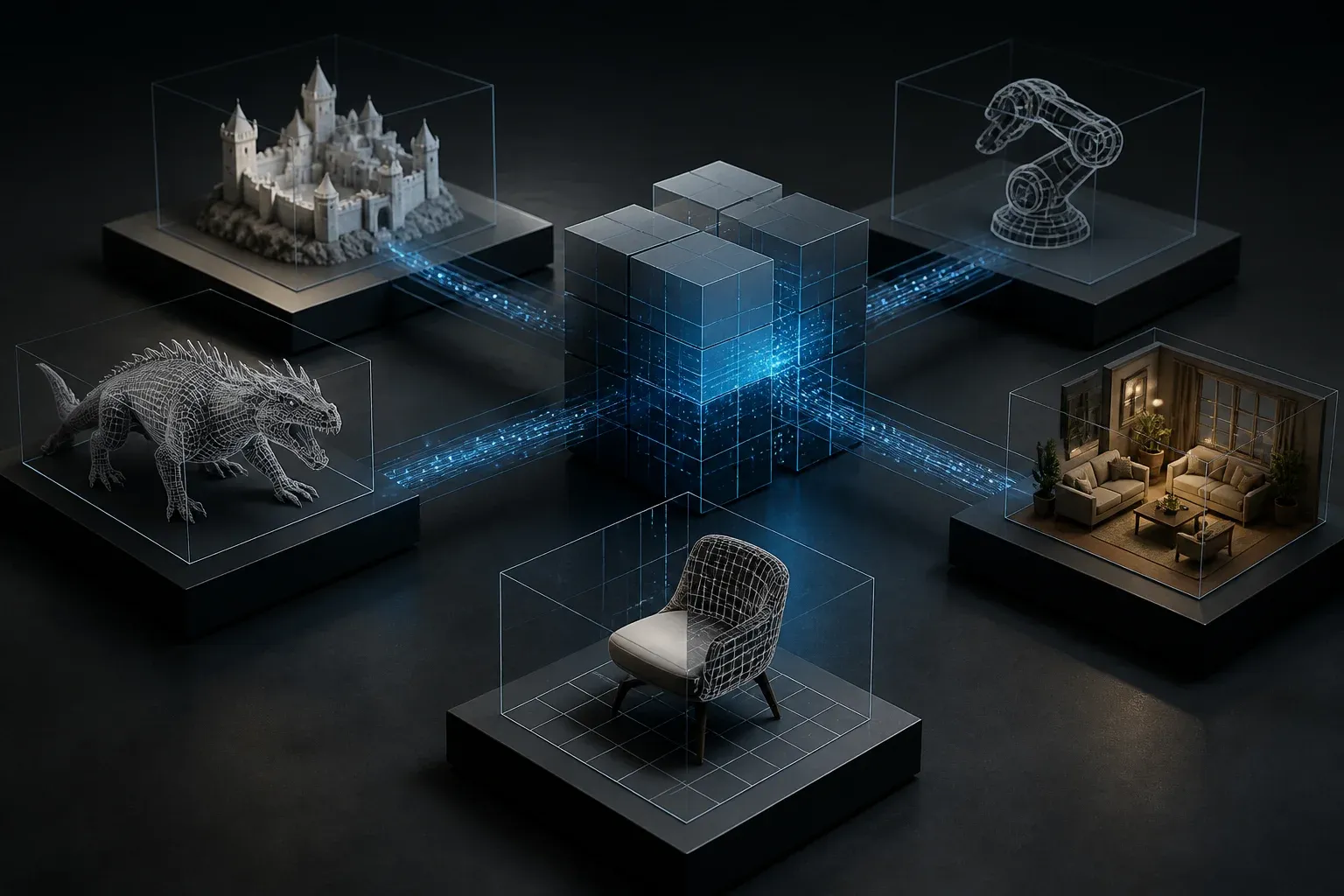
Google has rolled out Gemini 4 Argon, a model positioned for complex, multi-step work across the Gemini API, Gemini experiences and Google Antigravity. Its most notable demonstration is not simply generating an image or a block of code. Argon can coordinate Blender-backed, multi-agent workflows to construct and refine 3D scenes, animations and interactive prototypes. A reported playable Wizard Chess project illustrates the potential, but the more consequential news is the broader availability of an AI-assisted 3D production workflow.
According to Google’s official Gemini 4 Argon announcement, the model is globally available through AI Studio and the Gemini platform API, Google Antigravity for Google AI Ultra subscribers, and the Gemini app and AI Mode in Search for Ultra and Pro subscribers. That makes Argon a product capability that teams can evaluate through multiple routes, rather than a one-off technology demonstration.
From prompts to coordinated 3D production
The central capability is agent-based orchestration. Google’s Antigravity material describes Argon working through multi-agent loops and Blender MCP-assisted workflows to create complex 3D visualizations. In practice, that means an AI system can help turn a broad request into a chain of work: building a scene, generating or refining assets, applying scripts, and iterating on the result.
The reported Wizard Chess demo shows what that can look like when those pieces are combined. Industry coverage describes a chess-like interactive prototype built in Antigravity with 3D assets, physics and animation loops. It should be understood as an example of the workflow’s potential, not as a separately released Google game or a guarantee that every prompt will yield a production-ready interactive experience.
Google’s official examples focus on Blender-based scene construction and iterative agent workflows. They also reference browser-oriented pipelines based on Three.js. Together, those examples suggest a route from an initial concept to a visual prototype that can be rendered or experienced interactively, with less manual context switching between ideation, scripting and 3D tooling.
| Access route | What Google says is available | Relevant access detail |
|---|---|---|
| Gemini API | Gemini 4 Argon through AI Studio and the Gemini platform | Introductory pricing is $2 per million input tokens and $10 per million output tokens, with a 1 million unified input-output token limit. |
| Google Antigravity | Argon for complex agent-based and Blender-backed workflows | Available to Google AI Ultra subscribers. |
| Gemini app and AI Mode in Search | Gemini 4 Argon access in Google consumer experiences | Available to Ultra and Pro subscribers. |
Why the Blender connection matters
Blender is a capable 3D creation suite, but its workflows can involve modeling, materials, lighting, animation, scripting and rendering. The value of Argon inside Antigravity is not that it replaces every specialist decision. It is that the model can participate in a connected loop around those tasks, using MCP-assisted interactions to help build and revise a scene.
For a small product, marketing or learning team, the practical opportunity is faster iteration. A team may be able to test an interactive product concept, create a visual explanation of a complex process, or develop a teaching scene without treating every revision as a separate handoff. The reported capability is particularly relevant where an early prototype needs to communicate motion, spatial relationships or user interaction more clearly than slides or static mockups can.
That does not remove the need for review. A playable prototype is different from a finished application, and generated 3D work still needs testing for visual quality, performance, interaction design and suitability for its intended audience. Teams should also validate the output in the actual rendering or browser environment they plan to use.
A practical evaluation path for smaller teams
The strongest near-term use case is likely concept validation rather than full replacement of a 3D production pipeline. Teams can define a limited scenario, such as an animated product explainer, a training visualization or a simple game mechanic, then assess whether Argon and Antigravity shorten the path to a usable prototype.
A disciplined evaluation can focus on three questions:
- Workflow fit: Can the team describe the scene, assets and interactions clearly enough for iterative agent work to be useful?
- Human review: Who will check the Blender scene, scripts, visual output and interactive behavior before it is shown externally?
- Access and cost: Is an AI Ultra subscription, Pro access, or API usage the appropriate route for the work being tested?
Mac users have a relevant route into this workflow. Google documents Antigravity as a cross-platform desktop application and CLI, with Mac support in its broader ecosystem. The Gemini app on Mac is therefore part of the practical context for teams that want to explore Argon without moving their creative work to a different operating system.
The API also creates a separate option for developers that want to connect Argon to an existing application or custom workflow. Its disclosed introductory token pricing gives teams a measurable starting point for experiments, although total cost will depend on actual usage. The 1 million unified input-output token limit may be useful for workflows that need to retain substantial context, but it does not by itself determine the quality or operational cost of a 3D project.
For companies that want AI to work with creative tools and internal systems, the technical connection matters as much as the model. Scalevise can help map the workflow, connect tools and establish reliable controls through an MCP setup for AI and business-tool integrations. That can reduce manual handoffs and turn an isolated prototype into a repeatable process with clear human review points. Discuss an MCP integration project with Scalevise today.
Frequently Asked Questions
What is Gemini 4 Argon?
Gemini 4 Argon is Google’s globally available model for complex workflows. Google offers it through the Gemini API, Antigravity, the Gemini app and AI Mode in Search, subject to the relevant access tier.
Can Gemini 4 Argon work with Blender?
Google’s Antigravity materials describe Blender MCP-assisted scene construction and multi-agent loops that generate and refine 3D assets and visualizations. The capability is demonstrated within Antigravity workflows.
Is the Wizard Chess project a Google product?
No. The playable Wizard Chess project has been reported as a demonstration built with Argon in Antigravity. Google’s official materials emphasize the underlying 3D, Blender and multi-agent capabilities rather than a standalone game release.
How much does the Gemini 4 Argon API cost?
Google lists introductory API pricing of $2 per million input tokens and $10 per million output tokens. The Gemini API has a 1 million unified input-output token limit for Argon.
Conclusion
Gemini 4 Argon’s rollout makes Google’s Blender-backed, multi-agent 3D workflow available through more than a single demonstration. The Wizard Chess prototype is a useful illustration, but the larger development is the prospect of moving from an idea to an interactive visual prototype through coordinated AI-assisted work. Teams should begin with bounded experiments, retain human review and choose access routes that match their creative and technical needs.