
Gemini 4 Argon Video Understanding and Canvas Audio Tools: What Is Documented
Gemini 4 Argon is available through Google's developer and app channels with multimodal capabilities, while Gemini Canvas includes a Music Synthesizer. The proposed webcam-to-synth workflow remains more specific than current documentation.
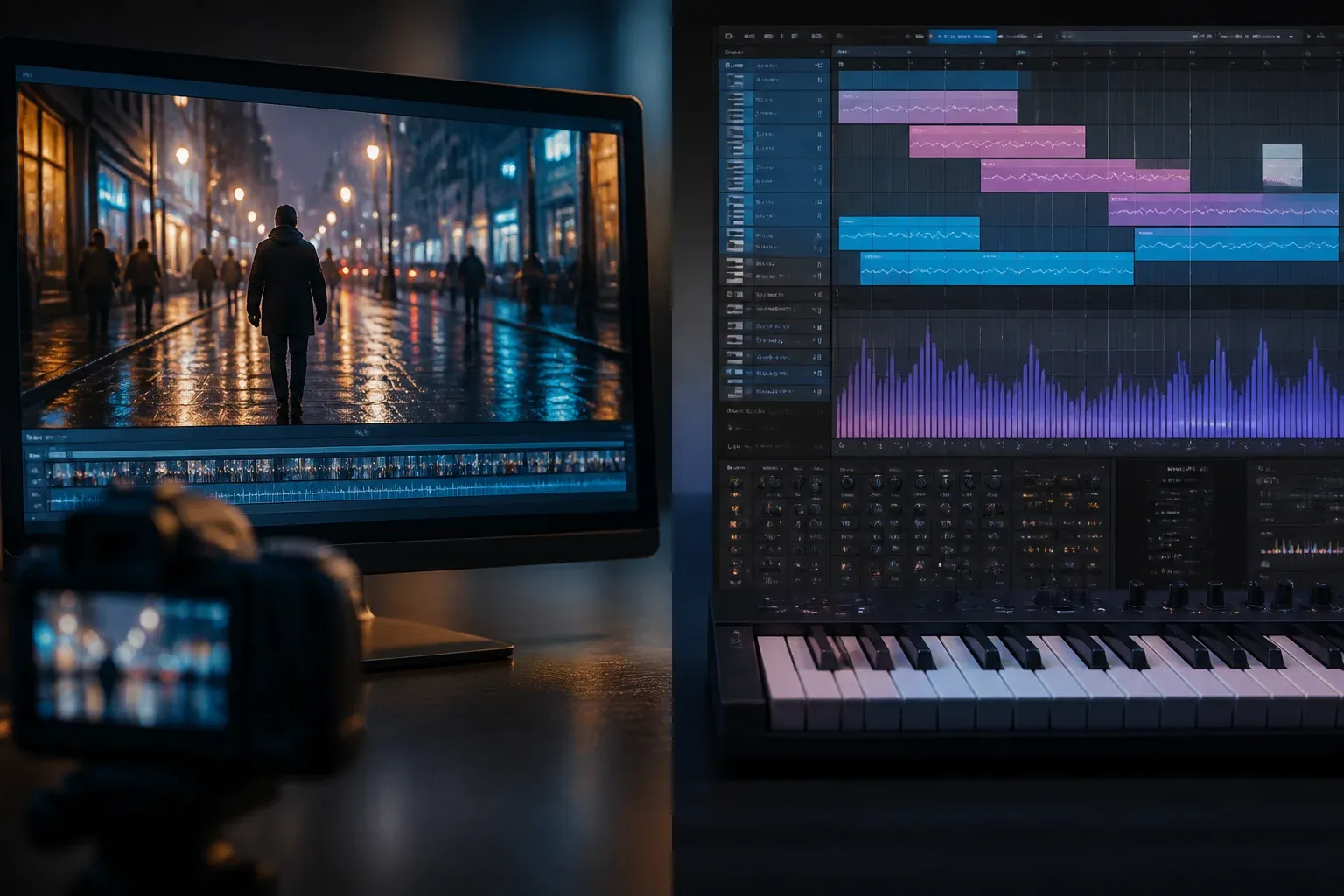
Google has rolled out Gemini 4 Argon, a multimodal model that can work with text, images, audio and video, alongside a Canvas environment that includes a built-in Music Synthesizer. Together, those documented capabilities create an interesting path for interactive multimedia prototypes and AI-assisted content workflows. However, a specific real-time feature that turns a live webcam feed into a playable synthesizer has not been described in Google's first-party product documentation.
The more substantive development is Argon's broader availability and its role in video-aware, long-context workflows. According to Google's official Gemini 4 Argon announcement, the model is available globally through the Gemini API, Google AI Studio, Google Antigravity and selected Gemini app options. Google positions Argon for complex work across areas including coding, finance, legal, cybersecurity and science.
For businesses, the key question is not whether an experimental camera-controlled instrument is already a packaged feature. It is whether Argon's documented video understanding and Canvas audio tools can support practical creative, marketing or product-prototyping workflows. The answer may be yes, but teams should validate the exact input, latency and integration requirements before committing to a use case.
What Gemini 4 Argon and Canvas officially provide
Google describes Gemini 4 Argon as a frontier model for high-stakes, long-horizon tasks. Its multimodal input support means developers can provide video alongside other material, while its API has a stated 1 million input-output token window. That combination is relevant when a workflow needs to interpret lengthy footage, connect it with supporting files and generate a structured output or application response.
Google also highlights agentic video understanding and demonstrations involving multimedia pipelines, including video tooling and audio mixing. These examples support the model's use in complex video-related processes. They do not, on their own, establish a dedicated live camera-to-instrument feature with defined controls, hardware requirements or streaming performance.
Canvas is the complementary environment in this picture. Google's Canvas materials describe a place to generate apps, games and audio assets, including a Music Synthesizer. That makes Canvas a plausible environment for creating audio-centric interactive experiences. What remains unclear is whether its synthesizer can currently accept a live webcam feed as a direct control signal without additional development.
| Capability | Gemini 4 Argon | Gemini Canvas |
|---|---|---|
| Documented role | Multimodal model for complex reasoning and agentic workflows | Environment for creating apps, games and audio assets |
| Video relevance | Supports video input and agentic video understanding | Can support interactive app creation, but direct live-camera mapping is not specifically documented |
| Audio relevance | Shown in multimedia workflows that include audio mixing | Includes a built-in Music Synthesizer |
| Access described by Google | Gemini API, Google AI Studio, Google Antigravity and select Gemini app options | Available as part of the Gemini Canvas experience |
Availability and pricing
Google says Argon is rolling out globally for developers, enterprises and selected user tiers through its listed channels. For the public API access path, Google lists an introductory price of $2 per million input tokens and $10 per million output tokens. The launch material also notes a price change after November 30, 2026, without the supplied research specifying the later rates.
Token prices are only one part of the cost picture for a video-based workflow. Businesses considering video analysis should establish how much footage they expect to process, what outputs they need and whether the workflow requires repeated model calls. Real-time or near-real-time experiences can also have requirements that are different from analyzing recorded video.
Practical opportunities and limits for multimedia workflows
A sensible starting point is to treat Argon and Canvas as components for multimedia prototyping, rather than assume a fully defined video-to-synthesis product exists. A team could explore a workflow in which a model interprets video context, a Canvas app provides the interactive layer and audio assets help create the resulting experience.
Potential uses supported by this broader capability set include:
- Creating interactive marketing demos that combine video-aware prompts with generated app and audio elements.
- Prototyping video-led learning or product experiences where visuals trigger structured responses or content changes.
- Building internal creative workflows that pair video understanding with audio generation or mixing tasks.
- Testing richer campaign assets in Canvas before investing in a custom application.
These are opportunities for experimentation, not guarantees that every workflow will work out of the box. A live, playable camera experience introduces practical questions that Google's current materials do not answer: latency, supported camera inputs, how video signals would be translated into musical controls, browser or device requirements, and the level of custom engineering needed.
That distinction matters for planning. Teams can evaluate Argon now for documented multimodal and video-understanding tasks, while treating direct webcam-controlled synthesis as a capability to test or monitor for clearer product support. This avoids designing a campaign, training activity or customer experience around behavior that has not yet been specified as a user-facing feature.
For businesses looking to turn emerging multimodal capabilities into useful operations, Scalevise can assess the workflow, identify where video and audio AI add value, and define a manageable proof of concept. A practical AI implementation plan can help separate documented platform functions from custom build requirements, estimate likely usage patterns and connect the work to existing content processes. Request an AI consultancy to evaluate the right next step.
Frequently Asked Questions
What is Gemini 4 Argon?
Gemini 4 Argon is Google's multimodal model for complex, long-horizon work. Google says it supports text, image, audio and video inputs and offers a 1 million input-output token window through the API.
Can Gemini 4 Argon turn a webcam feed into a playable synthesizer?
Google's reviewed first-party materials support Argon's video understanding and Canvas's Music Synthesizer, but do not specifically document a real-time webcam-to-synthesizer feature. That workflow should be treated as a possible implementation or experiment rather than a confirmed packaged capability.
Where is Gemini 4 Argon available?
Google says Argon is available globally through the Gemini API, Google AI Studio, Google Antigravity and selected Gemini app options.
What is Gemini 4 Argon's API pricing?
Google lists introductory public API pricing of $2 per million input tokens and $10 per million output tokens. Its launch material notes a price change after November 30, 2026, but the supplied research does not specify the later price.
Conclusion
Gemini 4 Argon gives developers a documented foundation for multimodal, video-aware workflows, while Canvas provides built-in tools for generating interactive apps and audio assets. The most credible near-term opportunity is to test those capabilities in focused multimedia prototypes. A direct live webcam-to-synthesizer experience remains a more specific possibility than Google's current documentation confirms.