
Gemini in Waymo Brings a Rider-Facing In-Car Assistant to Ojai Robotaxis
Waymo has introduced a beta Gemini assistant for riders in its Ojai robotaxi experience. The assistant handles cabin requests, ride questions and general knowledge, not driving.
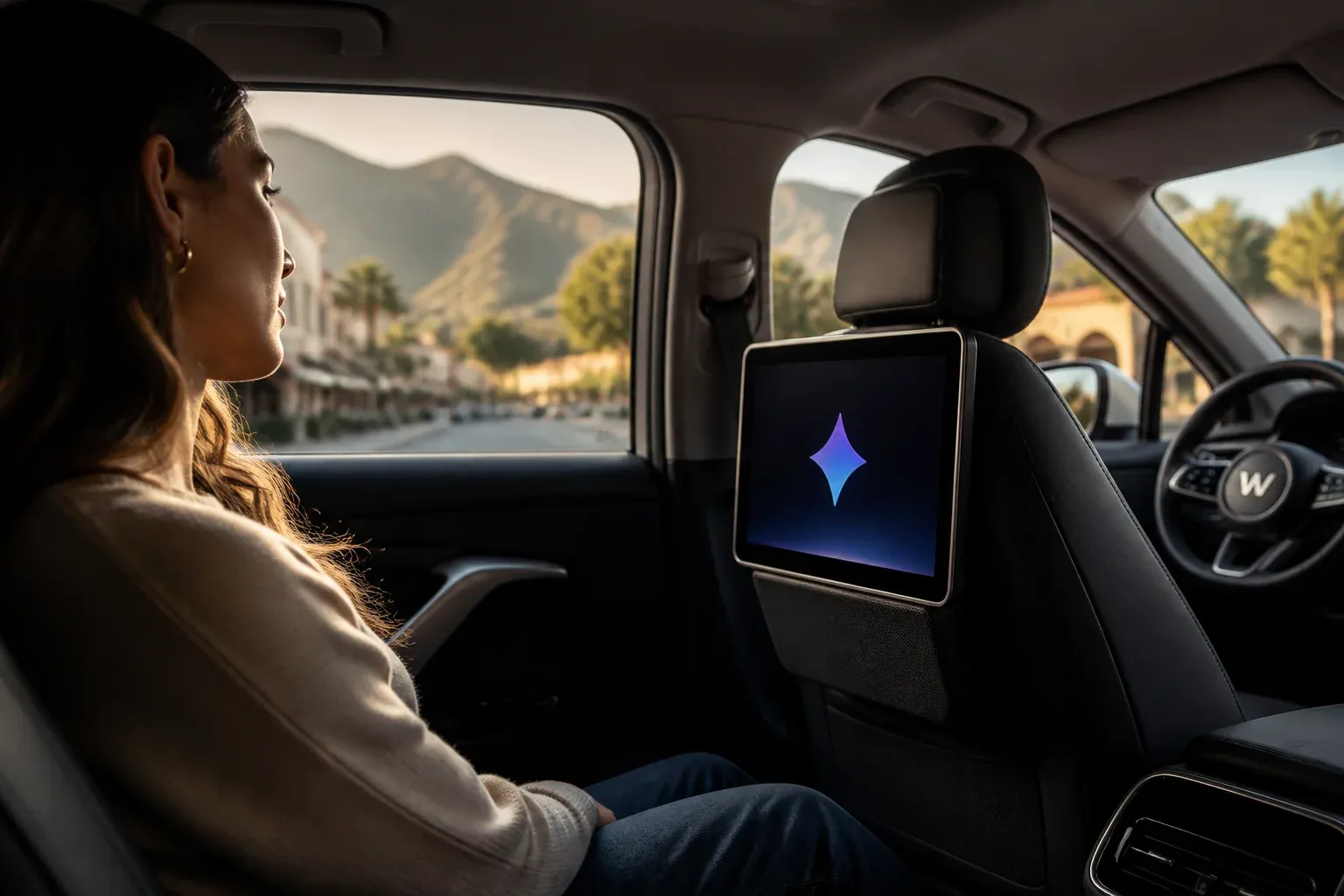
Waymo has launched Gemini in Waymo, a beta in-car conversational assistant for riders using its Ojai robotaxi experience. Accessed through a Gemini icon on the cabin screen, the feature lets riders use natural language and voice to adjust parts of the cabin, ask about their journey and get information about nearby places or broader topics.
The important boundary is clear: Gemini is a rider-facing assistant, not part of the autonomous driving system. Waymo Driver continues to control the vehicle, while Gemini operates separately and does not influence driving decisions. For riders, the integration turns the cabin display into a more conversational interface. For the wider automotive market, it is a concrete example of generative AI being deployed inside a commercial mobility service without being assigned responsibility for vehicle control.
Waymo describes the feature in its official Gemini in Waymo announcement. The company says Gemini stays inactive until a rider chooses to engage it. It does not access real-time driving data unless the rider explicitly asks for information related to the ride.
What Gemini in Waymo can do today
Gemini in Waymo is designed around requests that are useful during a trip, rather than around autonomous navigation. A rider can tap or press the Gemini icon and speak to the assistant. The initial beta supports interactions such as:
- Cabin-control requests, including asking to set the air conditioning to a specified temperature.
- Ride-related questions, such as seeking information about the current journey.
- Information about surroundings, including questions about local sites.
- General knowledge queries through a hands-free conversational interface.
This scope matters because it places Gemini in the passenger experience layer. The assistant can make a ride feel more responsive without creating confusion about which system is responsible for safety-critical driving functions.
| Area | Gemini in Waymo | Waymo Driver |
|---|---|---|
| Primary role | Rider-facing conversational assistance | Vehicle control |
| How riders use it | Tap or press the Gemini icon, then use natural language | Not presented as a rider conversational interface |
| Driving decisions | Does not influence them | Handles them |
| Ride data access | Only when a rider explicitly requests ride-related information | Used for autonomous vehicle operation |
Waymo's July announcement and a Google update in August frame the integration as part of a broader Ojai cabin experience. The company has also signaled ongoing work on its tri-screen interface and features such as Calm Mode. However, the confirmed Gemini capability remains focused on in-cabin interaction, not new autonomous driving functionality.
Why the separation from vehicle control matters
In-car AI can mean very different things. A conversational system that answers questions or adjusts climate settings has a different operational role from software that drives a vehicle. Waymo's separation of Gemini from Waymo Driver makes that distinction explicit.
The approach also shapes the privacy model described by Waymo. Gemini is not persistently active while a rider is in the vehicle. Instead, the rider initiates an interaction. The company further states that Gemini does not access real-time driving data by default. That limits the assistant's stated role to the information or control request a rider makes, rather than positioning it as an always-on observer of a trip.
For businesses that provide transport, hospitality or other customer-facing services, the practical lesson is not that a general-purpose AI assistant can immediately be connected to operational systems. It is that useful conversational interfaces can start with narrow, clearly defined tasks. Giving customers a simple voice route to information or environmental controls may reduce friction, provided the underlying system has clear access boundaries and the capability is reliable in the setting where it is used.
The announcement does not establish developer access, an API for automotive applications, broader deployment beyond Ojai, or a pricing change. It also does not describe Gemini as a fleet-management tool or a system for automating business workflows. Those areas remain open questions as Waymo develops the beta.
For companies assessing how they appear when customers ask AI assistants about products, locations or services, conversational interfaces make accurate AI-readable information increasingly important. Scalevise can help identify gaps in how your business is represented across AI-generated answers with its AI Visibility and GEO Checker, helping you prioritize practical improvements that strengthen discoverability and customer confidence. Start an AI Visibility scan.
Frequently Asked Questions
What is Gemini in Waymo?
Gemini in Waymo is a beta conversational AI assistant available through the in-cabin screen in Waymo's Ojai robotaxi experience. Riders can use it for cabin controls, journey information, local questions and general knowledge.
Does Gemini in Waymo drive the vehicle?
No. Waymo says Gemini operates independently from Waymo Driver. Gemini does not influence driving decisions, while Waymo Driver handles vehicle control.
How do riders activate Gemini in Waymo?
Riders activate it by tapping or pressing the Gemini icon on the in-cabin screen, then using natural language or voice to make a request.
Is Gemini in Waymo always listening or using driving data?
Waymo says Gemini remains inactive until a rider engages it. It does not access real-time driving data unless the rider explicitly asks for ride-related information.
Is Gemini in Waymo broadly available or priced separately?
The announced deployment is a beta within the Ojai experience. Waymo has not described broader availability, a separate price, developer access or an automotive API in the official information provided.
Conclusion
Gemini in Waymo is a confirmed expansion of Google's AI assistant into a live robotaxi cabin, with a deliberately limited role. By keeping conversational help separate from vehicle control and making interactions rider-initiated, Waymo is focusing the beta on a more useful and controlled passenger experience. Its future scale, commercial model and developer opportunities have not yet been announced.