
Google's Gemini 3.6 Flash adds context-aware tools and a photographic texture extractor
Google confirms Gemini 3.6 Flash, which adds context-aware creative tooling and a photographic texture extractor in the Gemini App. This article explains the confirmed features, likely implications for design workflows, and what remains uncertain about API access and pricing.
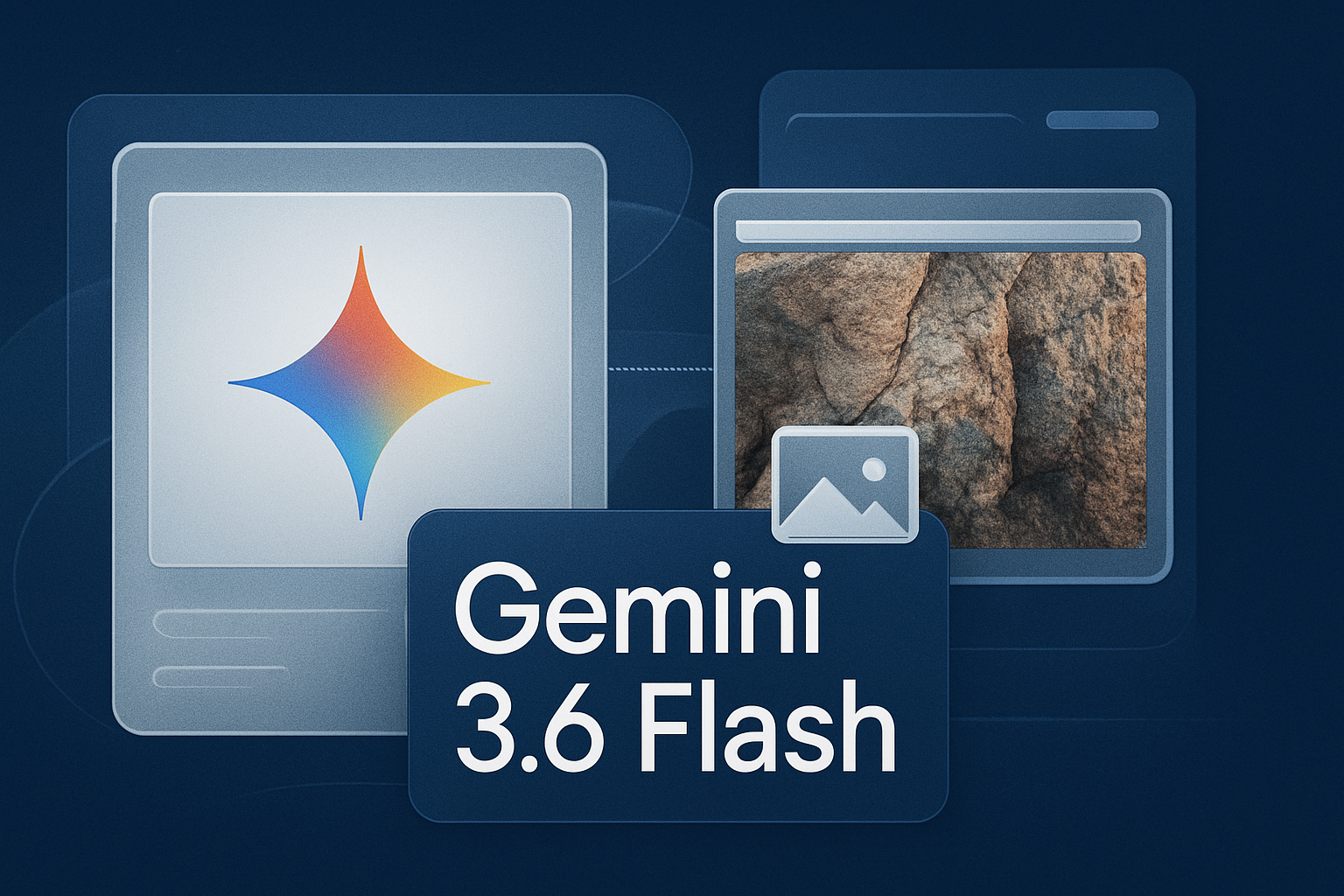
Google has confirmed Gemini 3.6 Flash, a new iteration of its Gemini family that emphasizes context-aware creative capabilities and includes a photographic texture extractor inside the Gemini App. Google's official post explicitly describes a "photographic texture extractor for 3D workflows" and also highlights improvements in efficiency and pricing. This article summarizes what is confirmed, explains how designers and developers might use the new features, and outlines what remains unknown.
What Gemini 3.6 Flash introduces
Photographic texture extractor for 3D workflows
Google's announcement confirms a photographic texture extractor built into the Gemini App. According to the company, the tool can extract natural textures from photos of a user's environment, convert those captures into usable prints and design elements, and export them for direct use in creative workflows and 3D pipelines. That capability is presented as part of the Gemini App experience rather than as a separately specified API endpoint in the official post.
Context-aware creative tools
Gemini 3.6 Flash is described as better at understanding contextual information quickly, enabling users to create bespoke creative tools. Google's wording indicates the model can interpret scene or design context and assist in automating element generation (for example, generating prints or design elements that align with extracted textures). These context-aware capabilities are framed as features that help users build custom creative tools and accelerate design iterations.
Efficiency and pricing improvements
Google's post also references improved efficiency and pricing for Gemini 3.6 Flash compared with prior configurations. The announcement characterizes these as platform-level improvements; the company did not publish detailed pricing tiers or numerical efficiency benchmarks in the confirmed message, so specifics on cost or performance metrics are not available in the official material.
Implications for designers, developers, and integrations
Design workflows and 3D pipelines
For designers and 3D artists, an in-app photographic texture extractor could reduce friction in moving from environment capture to usable texture assets. Confirmed features suggest the tool will let creators capture textures on-device or from photos, process them into print-ready or mesh-texture formats, and export them for use in tools such as 3D editors or design suites. That workflow can shorten iteration cycles where physical references or real-world materials need to be integrated into digital projects.
API exposure, availability, and rollout
Google's confirmation specifically references the Gemini App implementation. The official post did not confirm whether the photographic texture extractor or the new context-aware Flash capabilities will be immediately exposed through Google APIs or included in third-party developer toolkits. Organizations should not assume API parity with the Gemini App until Google publishes explicit API documentation or release notes that confirm endpoints, SDKs, or pricing. Similarly, Google noted improvements in pricing but provided no granular public pricing announcements in the confirmed post.
What remains unknown
The company confirmed the existence of Gemini 3.6 Flash and the photographic texture extractor inside the Gemini App, and it signaled efficiency and pricing improvements. What remains unconfirmed in the official material includes exact rollout timelines, geographical availability, whether the texture-extraction features will be available via public APIs, and the concrete pricing structure for developers or enterprise customers. Any further claims about API changes or specific platform integrations should therefore be treated as speculative until Google publishes supporting documentation.
Organizations evaluating how to integrate Gemini 3.6 Flash into creative pipelines can work with Scalevise on AI architecture, automation, and API integration to assess readiness and map implementation options.
Frequently Asked Questions
What is Gemini 3.6 Flash? Gemini 3.6 Flash is the version of Google's Gemini family confirmed by Google's official post. It focuses on faster context-aware creative capabilities and includes a photographic texture extractor in the Gemini App.
Does Gemini 3.6 Flash include a texture extractor? Yes. Google's announcement explicitly mentions a "photographic texture extractor for 3D workflows" in the Gemini App that can pull natural textures from photos and export them for design and 3D use.
Is the texture extractor available via the Gemini API? Google's post confirms the feature in the Gemini App but does not confirm API access. Google has not published official API documentation in the confirmed material, so API availability remains unconfirmed.
Will Gemini 3.6 Flash change pricing for developers? The official post references improvements in efficiency and pricing, but it does not include detailed pricing tables or specific numbers. Developers and procurement teams should wait for Google to publish formal pricing details.
How should studios and tool makers plan for this feature? Plan conservatively: evaluate internal use cases for in-app texture capture, prototype with the Gemini App where possible, and monitor Google's developer documentation for API announcements. For integration planning, consider engaging technical partners to map ingestion/export pipelines and automation around texture assets.