
Google Gemini Shopping Push Signals a More Connected AI Commerce Experience
Google's Gemini shopping direction points toward more connected product discovery, comparison and purchasing workflows across its AI and commerce surfaces.
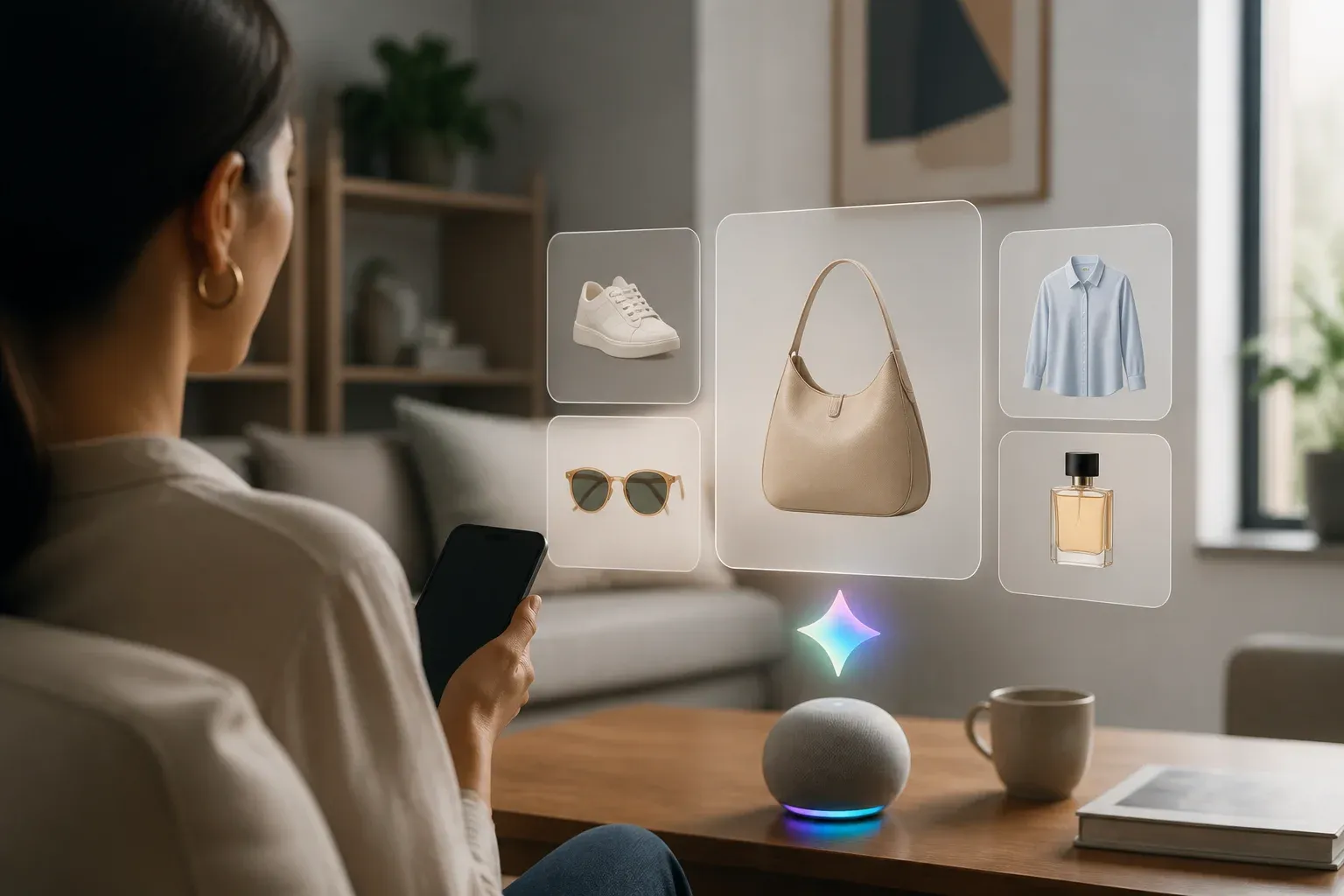
Google Google Gemini appears to be moving further into shopping assistance, with a promotional demo suggesting that users may be able to research purchases, compare products and browse from a camera image inside Gemini. The broader story is more substantial than any single demonstration: Google is building shopping capabilities across Gemini, AI Mode and its Shopping Graph, potentially making AI-assisted product discovery a more connected part of the buying journey.
Google's I/O 2026 collection describes a direction that includes agentic shopping experiences, Universal Cart and continued expansion of Gemini shopping features. The available materials indicate an evolving, cross-service approach rather than a fully defined new Gemini shopping product. Exact details of the capability set highlighted in the promotional demo, including its availability, supported markets and merchant requirements, remain unclear.
For retailers and ecommerce teams, the important signal is that product discovery may increasingly happen in conversational AI interfaces, not only through conventional search results and category pages. That raises the value of accurate product information, clear comparisons and dependable shopping data wherever Google can connect a shopper's intent with a product listing.
What Google's Gemini shopping direction suggests
Google's shopping strategy brings together several pieces of its existing ecosystem. Gemini can help users work through questions and options conversationally, while AI Mode is being extended for shopping experiences. Google's Shopping Graph is the product information layer that supports product discovery across Google surfaces.
The I/O materials also highlight Universal Cart, described as an intelligent cart that can pull items from Search, Gemini, YouTube and Gmail. If and when such workflows reach more users, they could reduce the friction between discovering an item in one Google service and returning to it elsewhere. Google also describes buy-enabled interfaces, including Buy buttons on eligible product listings, as part of its expanding shopping experiences.
The practical implication is not that every purchase will move to Gemini. It is that consumers may encounter product recommendations and purchase paths through a wider mix of AI-assisted touchpoints. A retailer that relies only on a conventional search listing may have less control over how its products are understood when a shopper asks for comparisons, alternatives or buying guidance.
| Google shopping component | Role described in the available research | Potential relevance for merchants |
|---|---|---|
| Gemini | Conversational shopping assistance and an expanding set of shopping features. | Shoppers may use natural-language questions to research options and make decisions. |
| AI Mode | Shopping extensions, including Buy buttons on eligible product listings. | Product listings may become part of AI-led discovery and purchase journeys. |
| Shopping Graph | Google's product information foundation for shopping experiences across surfaces. | Accurate product data becomes important for how items can be surfaced and compared. |
| Universal Cart | An intelligent cart concept spanning Search, Gemini, YouTube and Gmail. | It points to a more connected path from product discovery to purchase. |
Camera-based browsing is a notable, but still limited, signal
The promotional material specifically references browsing with a camera image. Visual product discovery could be useful when a shopper wants to identify an item, find similar products or start research from something seen in the physical world. However, the supplied research does not establish how this Gemini experience works, which devices support it, or whether it will be broadly available.
Businesses should therefore avoid treating camera-led browsing as a confirmed new sales channel with known technical requirements. It is better understood as a credible indication that Gemini's shopping experience may incorporate more visual and multimodal ways to begin a product search.
What retailers can do now
The most useful response is to strengthen the information that already supports product discovery, rather than wait for a specific Gemini feature announcement. Google's reported regional expansion of AI shopping experiences, including rollout activity in the Philippines, suggests that availability may develop unevenly by market and surface.
Teams can prepare for more AI-mediated shopping by reviewing whether their product information can answer the questions a buyer is likely to ask. Priorities include:
- Keep product attributes complete and consistent, including names, specifications, variants and availability.
- Make comparisons easier, particularly where products have meaningful differences in use case, size, compatibility or price positioning.
- Use clear product imagery and descriptions that help shoppers recognize what an item is and who it is for.
- Monitor Google shopping developments by market, since feature availability and eligibility may not arrive everywhere at the same time.
- Avoid promises based on unannounced integrations, including assumptions about direct ecommerce platform connections or merchant onboarding requirements.
This is also a useful moment to examine the quality of product pages. AI shopping experiences depend on information that can be interpreted accurately. Ambiguous titles, incomplete details and conflicting product data can make it harder for any discovery system to represent an offer clearly.
Google's direction may also change how merchants think about the customer journey. A shopper could begin with a broad question, move into a comparison, encounter a product through an AI interface and then use a buy-enabled path or another service to continue toward a purchase. The research supports that broader trajectory, but it does not confirm a universal, end-to-end Gemini checkout flow or a timetable for it.
For retailers and ecommerce teams, Gemini's shopping direction makes AI discovery a practical channel to assess now. Scalevise can use its AI Visibility GEO Checker to help identify how clearly your brand, products and core buying questions appear in AI-driven search experiences. A focused review can expose content gaps before AI-assisted product research becomes more important in your category. Start an AI Visibility scan today.
Frequently Asked Questions
What shopping features is Google adding to Gemini?
Google's materials point to expanding Gemini shopping capabilities, while a promotional demo suggests product research, comparison and camera-based browsing. The exact features, markets and availability tied to that demo are not yet specified in the supplied research.
What is Google Universal Cart?
Google describes Universal Cart as an intelligent shopping cart that can pull items from Search, Gemini, YouTube and Gmail. The available research presents it as part of Google's broader connected shopping direction.
How does AI Mode fit into Google's shopping plans?
Google is extending AI Mode for shopping and has described Buy buttons on eligible product listings. This suggests that AI Mode may connect product discovery more directly with purchase-oriented experiences.
Should ecommerce businesses change their stores for Gemini shopping now?
Businesses can improve product data, descriptions, images and comparison information now. They should not assume unannounced integrations, universal availability or specific merchant requirements until Google provides further details.
Conclusion
Google's Gemini shopping push points toward a more connected form of AI-assisted commerce across Gemini, AI Mode and the Shopping Graph. While the specific demo capabilities remain only credibly signaled, Google's official materials make the wider direction clear: product discovery, comparison and purchasing workflows are becoming more integrated across its services. Retailers can prepare by making their product information accurate, complete and easy to understand.