
Google Maps Conversational Search Could Change How Local Businesses Get Discovered
Conversational local search could make Google Maps recommendations more dependent on the details customers seek, from atmosphere to suitability for a specific occasion.
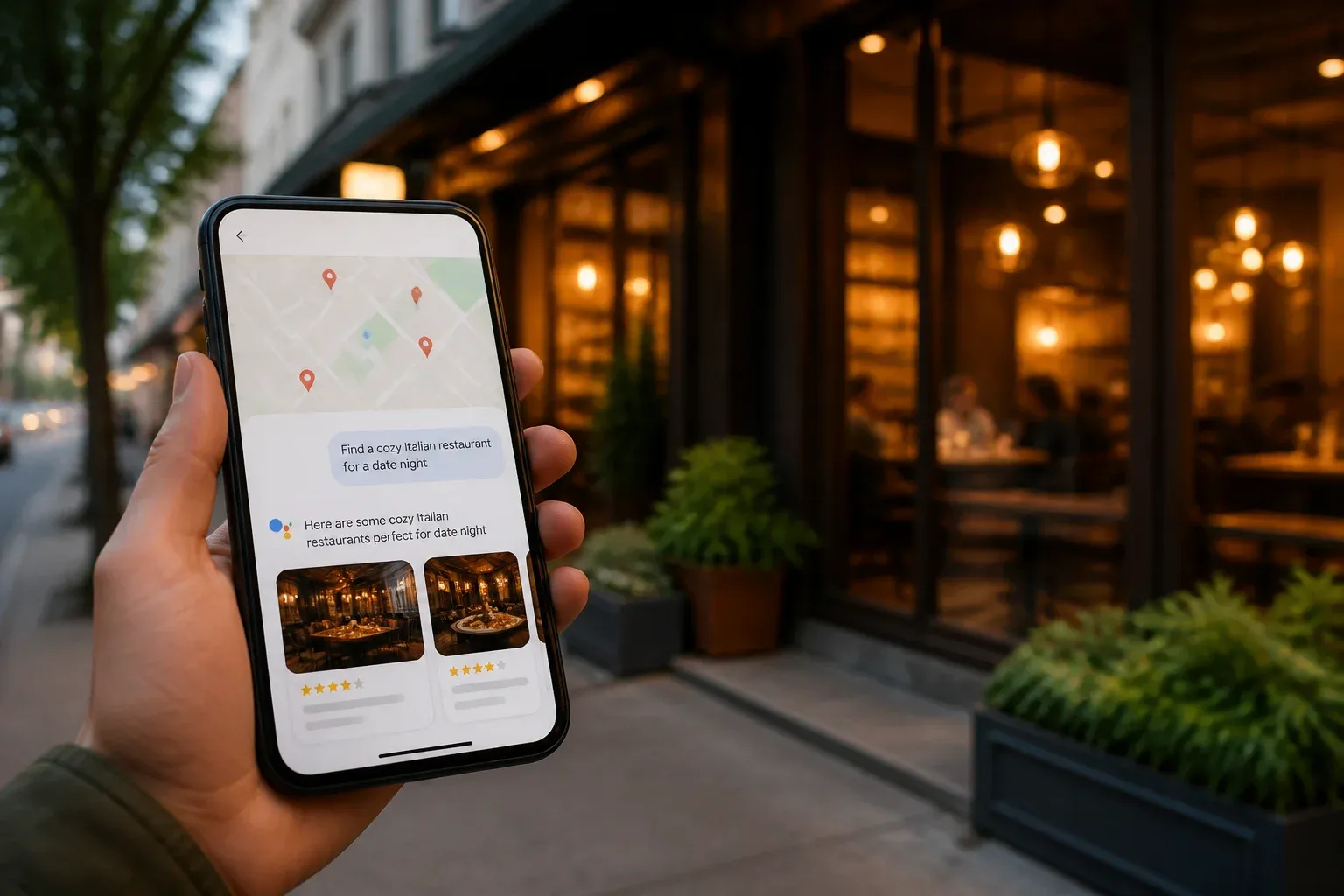
Google Maps is widely used to connect people with nearby places, but conversational search could change the type of information that matters in local discovery. Instead of searching only for a category such as “Italian restaurant nearby,” users may ask for a place that matches a specific situation, such as somewhere quiet enough for a business meeting. That shift would place greater value on how clearly a business’s listing communicates its real-world experience.
The available material points to an Ask Maps capability designed to handle natural-language local queries. It does not provide official rollout details, eligibility requirements, ranking criteria, or confirmed optimization guidance. Still, the example illustrates an important direction for local search: customers may increasingly describe what they need rather than selecting a business category and manually comparing results.
Why conversational queries matter for local discovery
Traditional local search often begins with a business type and location. Conversational local search adds contextual qualifiers, including the customer’s purpose, preferences, or constraints. A person may be looking for a venue appropriate for a client meeting, a family meal, a quick appointment, or a particular atmosphere.
For businesses, the practical implication is not that there is a proven formula for appearing in Ask Maps results. There is no such formula in the supplied information. The clearer implication is that incomplete or outdated public business information may become less useful when people ask nuanced questions.
A customer asking whether a restaurant is quiet enough for a meeting is not simply looking for Italian food. They are evaluating an experience. Similar queries could focus on accessibility, appointment availability, service type, proximity, or suitability for a task. In each case, the business information a customer encounters needs to be accurate enough to support a confident decision.
The local details likely to matter most to customers include:
- Accurate core business information, such as location, hours, contact details, and business category.
- Specific customer-facing attributes, where they are available and accurate for the business.
- Current photos and descriptions that help people understand the setting, products, or services.
- Consistent information across customer touchpoints, including the business website and local listings.
- Thoughtful customer communication, especially where common questions reveal what people need before visiting.
These are sensible local marketing fundamentals, not verified Ask Maps ranking factors. Businesses should avoid presenting them as a guarantee of recommendation visibility.
From keywords to customer situations
The most significant change in conversational local search is the move from short keywords toward situational intent. A category search can be broad. A natural-language question adds the reason behind the search.
That creates an online-to-offline marketing opportunity. When a business listing, website, and customer-facing information accurately convey what the company offers, people may be better able to decide whether it fits their immediate need. For location-based businesses, that can reduce uncertainty before a visit, call, booking, or enquiry.
It also raises the standard for accuracy. Overstating amenities, atmosphere, availability, or service options can lead to poor customer experiences if the real-world visit does not match the information that shaped the decision. The useful goal is clarity, not trying to force a listing to match every possible conversational query.
A practical checklist for local businesses
Businesses can prepare for more descriptive local queries by reviewing the information customers already use to make decisions. Start with the business profile and website, then compare the details with the real customer experience.
Ask practical questions:
- Can a first-time customer quickly understand what the business does and where it operates?
- Are hours, contact details, categories, and location information current?
- Do descriptions and images accurately represent the premises, services, and customer experience?
- Are common pre-visit questions answered clearly through the business’s existing public information?
- Do website details conflict with information shown in local listings or other customer channels?
This work supports conventional local SEO as well as future conversational discovery. It can also help teams identify gaps between their marketing message and the details customers need before they choose where to go.
Conversational local search should not be treated as a replacement for service quality, reputation, or a well-maintained web presence. It is better understood as another way people may express local intent. Businesses that maintain reliable information and communicate their offering precisely are in a stronger position to serve customers regardless of how the query is phrased.
For local businesses, conversational search makes visibility less about a single keyword and more about whether potential customers can understand the value of a visit. GEO Search Leads helps teams assess how their websites and business information appear in AI-driven discovery journeys, identify gaps that may limit qualified enquiries, and prioritize practical improvements. Get an AI search visibility audit for local businesses to turn unclear discovery signals into a focused plan for attracting better-fit customers.
Frequently Asked Questions
What is conversational local search?
Conversational local search lets people describe a need in natural language rather than relying only on short category-and-location keywords. A query may include preferences, context, or a specific use case.
What is Ask Maps?
The supplied material refers to an Ask Maps capability for answering natural-language local queries in Google Maps. It does not include official information about availability, supported locations, or how recommendations are ranked.
Can a business guarantee that it will appear in Ask Maps results?
No. The supplied material does not establish any guaranteed method, ranking criteria, or optimization requirements for appearing in Ask Maps results.
How should a local business prepare for conversational queries?
Keep business details current, make descriptions and imagery accurate, address common customer questions clearly, and ensure public information is consistent across key customer touchpoints.
Conclusion
Conversational local search could make the details behind a customer’s decision more visible in Google Maps discovery. While the available information does not confirm how Ask Maps works or how businesses are selected, the direction is clear: accurate, specific, customer-useful local information is increasingly important for turning a search into a visit, booking, or enquiry.