
How Google Review Replies Can Protect or Damage Customer Trust and Reputation
A public Google review reply is a lasting signal to prospective customers. Learn how to handle criticism constructively, use practical response templates and apply AI carefully.
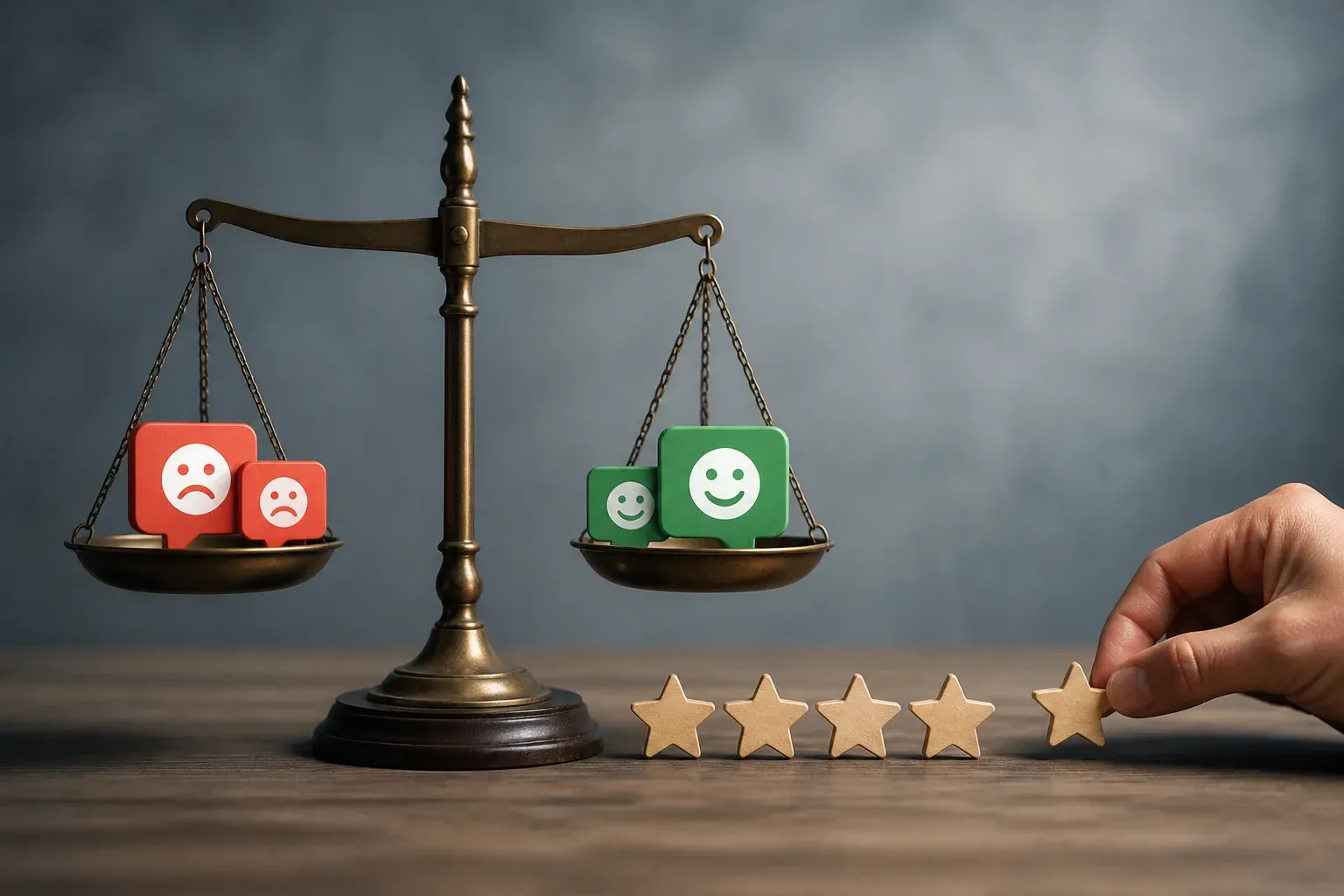
A defensive reply to a Google review can create more reputational damage than the original complaint. That is the central warning in Search Engine Land's guide to the impact of bad Google review replies, which explains that an owner response is a public record for far more people than the reviewer who wrote the complaint.
For businesses, the practical lesson is clear: a review response is not simply a customer-service exchange. It is evidence of how the company behaves when something goes wrong. Prospective customers, existing customers and people who later encounter the listing can all use that exchange to judge whether the business is accountable, respectful and safe to deal with.
The guide, authored by Miriam Ellis and updated in October 2026, draws on consumer-behavior research cited from GatherUp and BrightLocal. Its conclusion is not that every negative review must be accepted without question. Rather, timely, empathetic and solutions-focused replies can build trust, while hostile, dismissive or overly defensive responses can undermine it.
Why a public reply matters more than one review
A negative review may describe one person's experience. An owner's response shows how the business handles criticism in public. That distinction matters because readers often have incomplete information about the incident itself, but can directly assess the tone, professionalism and willingness to resolve a problem in the reply.
A strong response acknowledges the concern, takes responsibility where appropriate and gives the customer a clear route to continue the conversation. It does not require a business to admit to something untrue. It does require restraint, empathy and attention to the audience beyond the original reviewer.
| Response approach | What it signals publicly | Likely trust effect |
|---|---|---|
| Defensive, argumentative or personal | The business prioritizes winning the exchange over resolving the concern. | Can amplify the complaint and discourage prospective customers. |
| Empathetic and accountable | The business listens and treats customer concerns seriously. | Can reassure readers that problems receive a constructive response. |
| Specific and solutions-focused | The business has a practical path to address the issue. | Can turn a visible complaint into evidence of responsive service. |
The stakes can extend beyond the Google Business Profile itself. Search Engine Land notes that brand narratives may also be surfaced by AI systems, including Google AI Mode and ChatGPT. Businesses should therefore treat public review exchanges as durable reputation material, not as a disposable argument in a comments thread.
A practical process for negative reviews
The most useful response process is consistent rather than improvised. When a legitimate complaint appears, the guide recommends monitoring it, acknowledging it promptly, apologizing when appropriate, offering a concrete remedy and providing a direct contact route for follow-up.
A team can turn that guidance into a simple workflow:
- Check the facts first. Review the relevant order, appointment, message history or service record before replying.
- Acknowledge the experience. Address the specific concern without repeating sensitive details in public.
- Apologize where warranted. A clear apology can recognize the customer's experience without making unsupported claims.
- State the next step. Offer a remedy when appropriate and invite direct contact to resolve details privately.
- Document and learn. Track recurring issues so review feedback can improve the underlying customer experience.
Avoid arguing point by point, accusing the reviewer, attacking their character or exposing private information. Even when a business believes a review is unfair, an emotional public rebuttal can become the part of the exchange that readers remember.
Reply templates that retain a human tone
Templates can improve speed and consistency, but they should never replace judgment. Search Engine Land specifically cautions against generic replies that feel insincere. Use a template as a structure, then add details that show the response relates to the actual experience.
For a service problem:
We're sorry to hear that your experience did not meet expectations. We take your concern about [specific issue] seriously and would like the opportunity to look into it. Please contact us at [contact method] so we can discuss what happened and work toward a resolution.
For a delayed response or missed expectation:
Thank you for bringing this to our attention. We understand why the delay was frustrating, and we're sorry for the inconvenience. Please contact us at [contact method] with your details so we can review the situation and help resolve it.
For a review that appears inaccurate:
We're sorry to hear this was your impression. We would like to better understand the situation and review the details with you. Please contact us at [contact method] so we can discuss your experience directly.
These examples deliberately avoid debating facts in public. They acknowledge the concern and create a path to resolution. If a review violates platform policies, businesses can pursue Google reporting or removal steps while still considering whether a calm public response is appropriate.
Using AI to draft replies without sounding automated
AI-assisted writing tools can help a busy team organize a response, identify an overly defensive phrase or produce a first draft from approved guidance. They should not be allowed to publish responses without human review. The business remains responsible for the accuracy, tone and privacy of every public reply.
A sensible process is to give an AI tool only the non-sensitive facts needed for a draft, require it to preserve a respectful tone and have a staff member verify the result before posting. The final reply should be checked for three things: it reflects the actual case, it offers a realistic next step and it does not disclose personal or confidential information.
Google review replies influence how customers describe a business in public, and increasingly how its reputation may be represented in AI-driven search experiences. GEO Search Leads helps companies assess the signals that shape discoverability and trust, then turn that insight into clearer, more credible online communication. If review responses, local visibility and AI search narratives are not being managed together, the gap can become a customer-acquisition problem. Improve your AI search visibility and lead generation strategy today.
Frequently Asked Questions
Should a business respond to every negative Google review?
A business should monitor negative reviews and respond to legitimate complaints promptly. A response should be thoughtful rather than automatic, especially when the review involves privacy, disputed facts or a potential policy violation.
What should a Google review response include?
A useful response acknowledges the concern, apologizes when appropriate, offers a concrete next step or remedy and provides a way to continue the conversation directly.
What should businesses avoid in Google review replies?
Avoid arguments, personal attacks, defensive language, private customer details and generic wording that appears insincere. A public response should focus on accountability and resolution.
Can AI write Google review responses?
AI can assist with drafting, but a person should verify the facts, tone, proposed resolution and privacy implications before anything is published.
Conclusion
Google review management is a visible part of customer experience, not a back-office task. Businesses that answer criticism with empathy, specificity and a credible route to resolution give future customers evidence that they handle problems responsibly. A defensive response may protect a business's pride in the moment, but a measured one is far more likely to protect its reputation over time.