
OpenAI GPT-Rosalind Identifies a DCTN1 Cholesterol Transport Lead for Neurodegeneration
OpenAI's distributed GPT-Rosalind system connected DCTN1 disruption, cholesterol-synthesis genes and a testable question for neurodegeneration research.
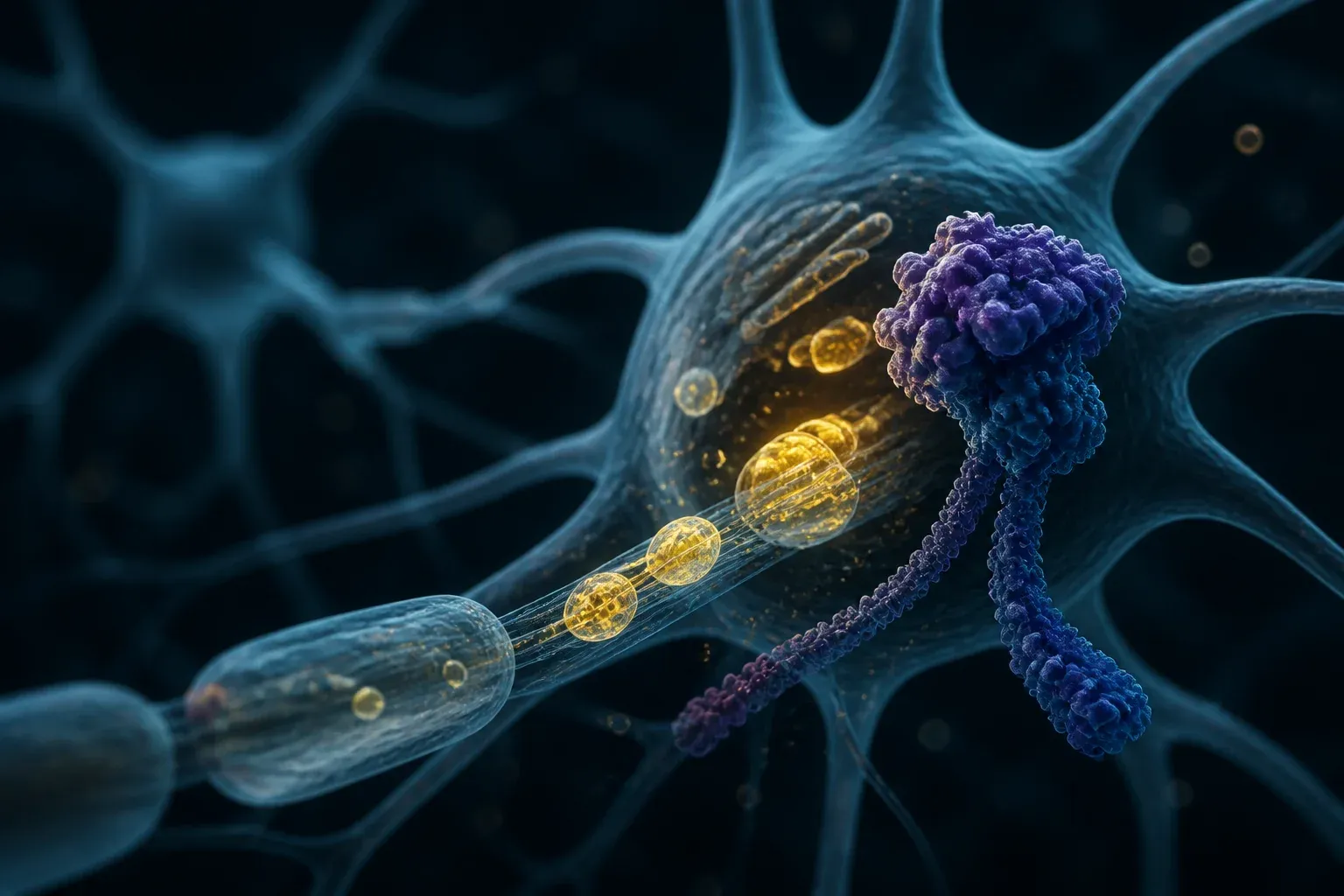
OpenAI has described how its GPT-Rosalind life sciences program generated a new, testable direction for neurodegeneration research from large-scale mouse-brain data. In a distributed setup involving thousands of AI agents, the system identified DCTN1, a gene linked to the rare neurodegenerative condition Perry syndrome, as a lead connected to changes in cholesterol-related gene activity.
The result is not a drug candidate or validated treatment. Instead, it is a hypothesis worth testing: if DCTN1 disruption contributes to abnormal cholesterol handling inside neurons, could restoring normal cholesterol distribution help protect those cells from degeneration? That distinction matters. The work demonstrates how AI can turn a vast genetic dataset into a structured experimental question, while leaving causality and therapeutic value to laboratory validation.
What GPT-Rosalind found in mouse-brain data
According to OpenAI's science-focused article on scaling AI research for complex biological data, GPT-Rosalind analyzed a whole-brain CRISPR atlas from mice through a multi-agent workflow. The agents examined the effects of disrupting genes, connected observations to scientific literature and assembled a "reasoning atlas" to summarize possible mechanisms and research priorities.
One of those leads centered on Dctn1, the mouse equivalent of human DCTN1. When Dctn1 was disrupted in the brain dataset, genes involved in cholesterol synthesis showed increased expression. The agents then connected that observation with existing literature on cholesterol regulation and transport in neurons.
Cholesterol is important to cellular function, but the relevant point in this research is not simply cholesterol production. It is how cholesterol is regulated and distributed within neurons. The literature connection raised the possibility that disturbed cholesterol homeostasis could be relevant to the degenerative process associated with DCTN1 dysfunction.
From gene disruption to a testable hypothesis
The proposed mechanism remains deliberately narrow. GPT-Rosalind did not establish that DCTN1 disruption causes neurodegeneration through cholesterol transport, nor did it show that changing cholesterol distribution protects neurons. It highlighted an association in mouse-brain data, placed it in biological context and proposed a question that experiments can now address.
That is a useful model for AI-assisted R&D. Large biological datasets can contain many statistically notable changes, but researchers still need to decide which ones deserve scarce laboratory time. A system that connects a perturbation, downstream gene-expression patterns and relevant prior literature may help teams form sharper hypotheses before moving into follow-up work.
The reasoning atlas is the practical output
OpenAI says the distributed agents produced a reasoning atlas for the research community. It brings together gene-disruption effects, literature connections and potential mechanisms, allowing researchers to explore and prioritize leads rather than treating an AI-generated conclusion as final.
| Research workflow component | Role in the DCTN1 lead | What it does not establish |
|---|---|---|
| GPT-Rosalind multi-agent analysis | Analyzed mouse-brain CRISPR data, connected Dctn1 disruption to cholesterol-synthesis gene expression and surfaced literature-based mechanisms. | That altered cholesterol transport causes degeneration or that a treatment will work. |
| Reasoning atlas and follow-up experiments | Supports exploration of the lead and prioritization of experiments to test the proposed mechanism. | Therapeutic viability until causality and intervention effects are experimentally demonstrated. |
Why this is a research lead, not a therapy
The most important limitation is also the most scientifically responsible part of the announcement. A change in expression of cholesterol-synthesis genes after Dctn1 disruption is an observation, not proof of a disease mechanism. Several questions remain: whether the effect is causal, whether it occurs in the relevant neuron types, whether it is specific to the disease process and whether altering cholesterol distribution can safely change outcomes.
Those questions require experiments designed to test the chain of reasoning. Researchers would need to establish whether DCTN1 dysfunction alters cholesterol distribution within neurons, determine whether that alteration contributes to cell degeneration and evaluate whether an intervention can restore a beneficial state. The available information does not identify a specific intervention, compound or clinical path.
For biotechnology teams, the case is a practical illustration of where AI can add value without replacing scientific judgment. The strongest use is not to declare a biological answer. It is to reduce the distance between complex data and an experiment that can disprove or support a mechanism. Human researchers remain responsible for experimental design, interpretation and deciding whether a lead is worth pursuing.
OpenAI positions this work within its broader GPT-Rosalind program, which includes the Rosalind Workbench and a partner and academic access ecosystem. The DCTN1 example suggests the program's immediate value lies in organizing biological evidence into research-ready reasoning, particularly where datasets are too large and interconnected for conventional review alone.
Large biological datasets can leave research teams with more signals than experiments they can realistically run. Scalevise helps organizations turn AI opportunities into focused, workable R&D plans by assessing data readiness, selecting practical tools and mapping human review into the workflow. If your team is evaluating AI for scientific analysis, explore our AI consultancy for practical implementation and request a consultation to define the next experiment-prioritization step.
Frequently Asked Questions
What did GPT-Rosalind identify about DCTN1?
GPT-Rosalind identified DCTN1 as a neurodegeneration research lead after finding that disrupting Dctn1 in mouse-brain data increased expression of genes involved in cholesterol synthesis. It connected that observation to literature on neuronal cholesterol regulation and transport.
Is restoring cholesterol distribution a treatment for Perry syndrome?
No. OpenAI presents restoring normal cholesterol distribution in neurons as a testable hypothesis, not a validated therapy. Follow-up experiments are needed to establish causality and therapeutic viability.
How did GPT-Rosalind generate the DCTN1 hypothesis?
A distributed system of thousands of AI agents analyzed a whole-brain mouse CRISPR atlas, summarized gene-disruption effects, cross-referenced scientific literature and proposed potential mechanisms in a reasoning atlas.
What is the GPT-Rosalind reasoning atlas?
The reasoning atlas is a research resource that summarizes observed gene-disruption effects, literature connections and possible mechanisms. OpenAI made it available to help the research community explore and prioritize experiments.
Conclusion
GPT-Rosalind's DCTN1 finding is significant because it converts a large-scale mouse-brain observation into a specific biological question about cholesterol distribution and neuronal degeneration. It does not establish a therapy, but it shows how distributed AI analysis can help researchers identify, explain and prioritize experimental leads in complex disease research.