
Google Ask Maps Brings Conversational Local Search to Business Discovery
Google's Gemini-powered Ask Maps turns location searches into conversations, creating new considerations for how businesses present information in Google Maps.
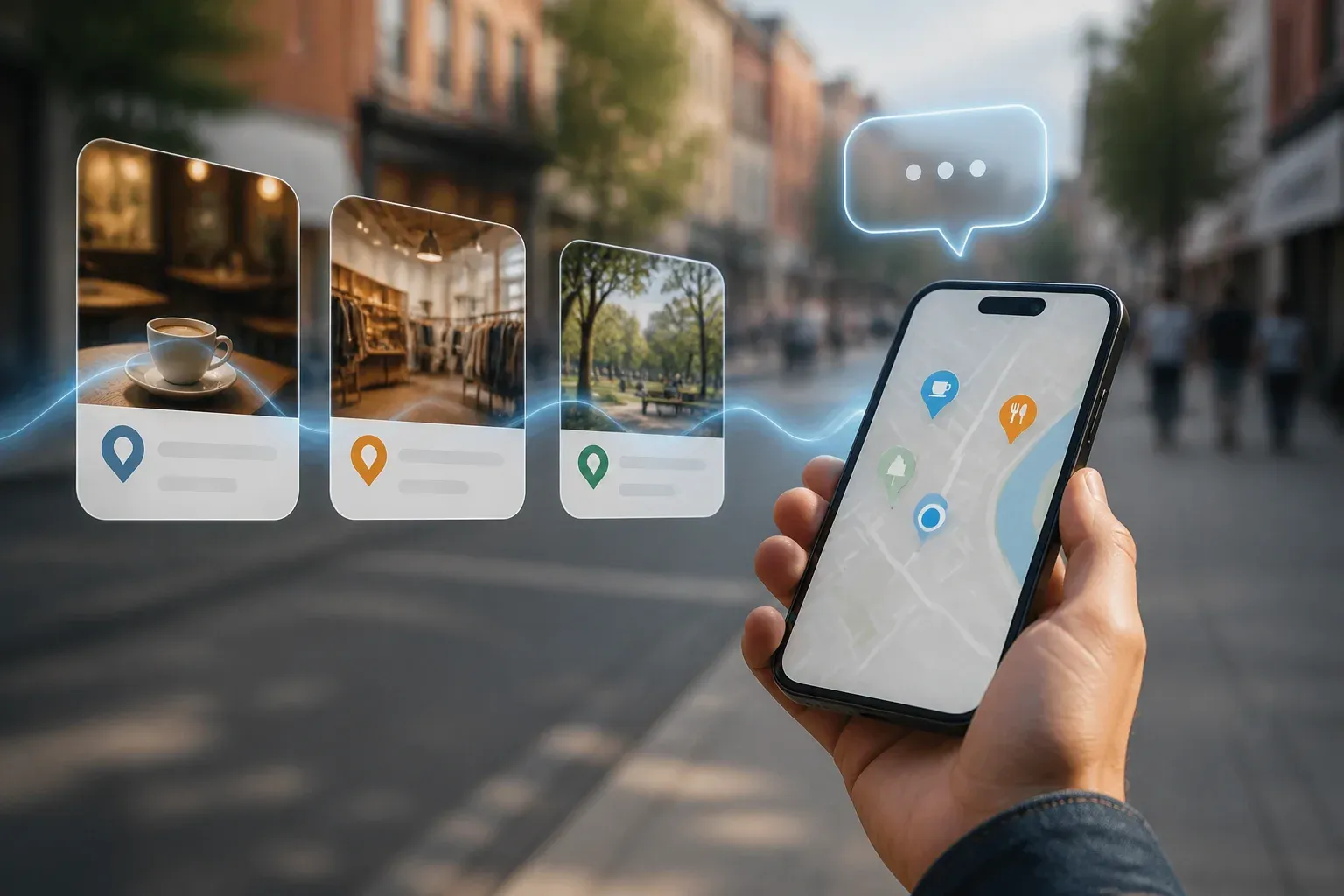
Google has launched Ask Maps, a Gemini-powered conversational search experience in Google Maps that lets people ask detailed questions about nearby places and receive recommendations directly on the map. Instead of entering a short category search, a user can ask for a venue that meets several practical needs, such as a public tennis court with lights available that evening. For businesses that depend on local discovery, the shift matters because Maps results may increasingly be shaped by the completeness, freshness and real-world relevance of location information.
In its March 12, 2026 announcement, Google said Ask Maps combines Maps data, imagery and personalization based on places a user has searched for or saved. The feature can also help users move from research to action by saving a place, starting navigation or booking a reservation. The core launch details are set out in Google's official Ask Maps and Immersive Navigation announcement.
Ask Maps initially rolled out on Android and iOS in the United States and India, with desktop access planned for later. Subsequent coverage has reported wider English-language availability in Australia, Brazil, Canada, Indonesia, Japan and Mexico, alongside coverage across more than 150 countries and territories. Those later reports also describe continued conversation history, real-time transit information, Personal Intelligence integrations such as Gmail and calendars, and more task-oriented actions including food ordering and hotel comparisons.
What Ask Maps changes in local discovery
Traditional local search commonly begins with a concise phrase such as "Italian restaurant near me." Ask Maps is designed for questions that include context, preferences and constraints. A user might seek a quiet Italian restaurant nearby for a business dinner, or ask which options are suitable for a particular occasion. Google says its responses can draw on fresh Maps information, real-world imagery and insider tips, then tailor suggestions to the user's Maps history and preferences.
That does not mean every Maps result will be replaced by an AI-generated answer. It does mean the path from local intent to a shortlist can become more conversational and more individualized. A business may be considered not only because it matches a broad category, but because the information available in Maps helps answer the specific question being asked.
| Area | Conventional Maps search | Ask Maps experience |
|---|---|---|
| Query style | Often a short place or category search | Complex, real-world questions about locations |
| Recommendation context | Location results displayed in Maps | Recommendations can use Maps data, imagery, insider tips and user preferences |
| Next steps | Users can select a place and navigate | Users can save places, navigate, book reservations and, where supported, use connected apps for actions |
| Content reliability | Business and Maps information remains central | Google flags AI-generated content as experimental and potentially mistaken |
The new experience arrives alongside Immersive Navigation, a redesigned guidance system with more visual navigation, 3D visuals, real-time updates and additional context around turns and parking. While Immersive Navigation is primarily about getting to a destination, Ask Maps affects the earlier decision: which destination a person chooses in the first place.
Why listing quality becomes more important
Google has not published a formula for how Ask Maps selects or ranks recommended businesses. It would be premature to claim that any single listing field guarantees inclusion in a conversational response. Still, Ask Maps is explicitly built to address contextual questions using Maps' information. That makes accurate, useful location details a more important practical foundation than ever.
Businesses should review whether their Maps presence gives customers enough information to make a decision. The most useful checks include:
- Keep core business details, including address, phone number, opening hours and category, accurate and current.
- Make sure descriptions, photos and other available listing information accurately represent the venue, products or services.
- Update Maps when meaningful operating details change, particularly information that could affect a visit or purchase decision.
- Monitor customer questions and recurring reasons people choose the business, since these can reveal the real-world needs a conversational query may express.
This is not a separate optimization trick for Ask Maps. It is a way of reducing ambiguity in the source information Google Maps can use. A restaurant's atmosphere, a venue's facilities or a service provider's practical availability can be central to a user's question, but businesses should only represent details they can substantiate.
Personalization raises the stakes for relevance
Ask Maps results are personalized using places people have previously searched for or saved in Maps. This means two users may not receive identical recommendations for an otherwise similar question. For local marketers, that creates a more nuanced measurement challenge: visibility may be less about holding one universal position and more about being a credible fit for several relevant situations.
The opportunity is that conversational search can surface businesses for more specific needs than a broad category query might express. The limitation is that recommendations depend on user context and Google's systems, neither of which a business fully controls. AI-generated content is also marked experimental, and Google acknowledges that it can make mistakes. Businesses should therefore treat Ask Maps as an evolving discovery channel, not as a replacement for keeping their underlying location data dependable.
Third-party connections may further change the value of a Maps recommendation. Google says Ask Maps can connect with third-party apps to carry out actions within a conversation, including ordering food, and supports hotel bookings and event discovery. As these options expand, the journey from recommendation to transaction could become shorter. Businesses should watch how booking, ordering and other connected services appear for their category and market.
For companies that rely on local demand, conversational discovery makes it more important to understand whether customers can find accurate answers about their business across Maps and AI-driven search. GEO Search Leads helps teams identify visibility gaps and improve how their sites support local AI search discovery and qualified leads, turning unclear search journeys into more actionable opportunities. Start an AI visibility scan to see where your business information may be missing, inconsistent or difficult for prospective customers to find.
Frequently Asked Questions
What is Google Ask Maps?
Google Ask Maps is a Gemini-powered conversational feature in Google Maps. It lets users ask complex questions about locations and receive personalized recommendations on a map.
Where is Ask Maps available?
Ask Maps first launched on Android and iOS in the United States and India. Subsequent coverage reported broader English-language availability, including Australia, Brazil, Canada, Indonesia, Japan and Mexico, with coverage across more than 150 countries and territories.
How does Ask Maps personalize recommendations?
Google says Ask Maps can tailor responses using places a person has searched for or saved in Google Maps, alongside Maps data, imagery and other local context.
Can businesses directly control whether Ask Maps recommends them?
Google has not published a formula that lets businesses control Ask Maps recommendations. Accurate, current and well-supported Maps information is a sensible foundation, but it does not guarantee inclusion in a response.
Is Ask Maps information always accurate?
No. Google flags AI-generated content in Ask Maps as experimental and says it may make mistakes. Users should verify important details, and businesses should keep their Maps information current.
Conclusion
Ask Maps makes Google Maps a more conversational tool for deciding where to go, eat, book or shop. Its recommendations are built around contextual questions, real-time Maps information and personal preferences, rather than simple keyword queries alone. For local businesses, the practical priority is clear: maintain accurate, useful location information and monitor how this evolving experience changes the route from discovery to action.