
How To Advertise on ChatGPT Go? What Changed and How to Prepare
ChatGPT Go will introduce advertising in a controlled way. This article explains what changed, what OpenAI has confirmed so far, and how businesses can prepare before advertising becomes available.
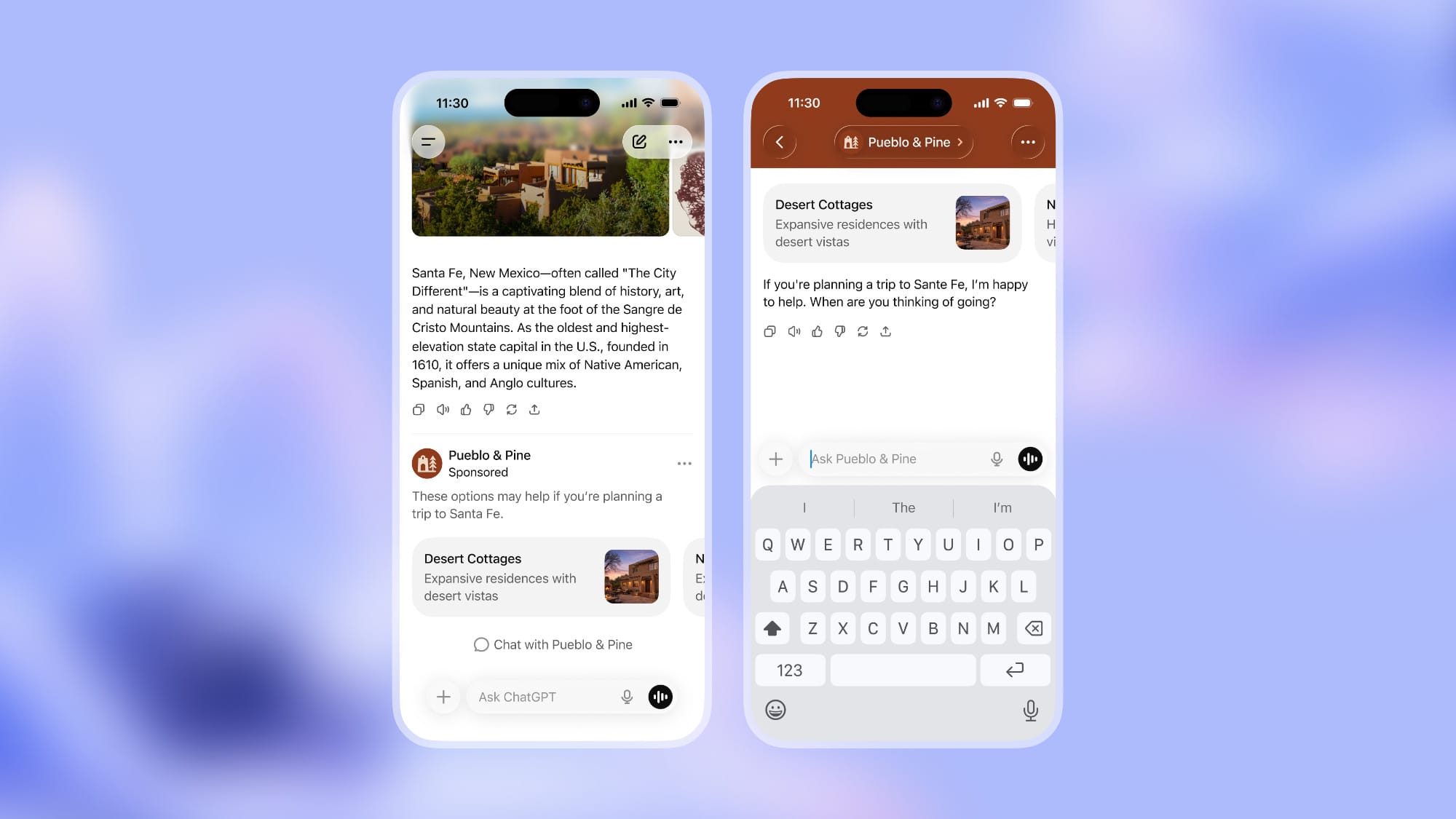
For a long time, the position around ChatGPT was unambiguous. There would be no advertisements. The value proposition was built on trust, neutrality, and a clean conversational experience. Not even that long ago, OpenAI explicitly stated that advertising had no place inside ChatGPT.
That position has now changed.
Be the First to Know When ChatGPT Advertising Opens
OpenAI has confirmed that advertising experiments are being tested inside the ChatGPT Go variant. This is not speculation, not a leak, and not a third party integration. It is a deliberate, controlled experiment initiated by OpenAI itself. While the company has not published formal documentation yet, the confirmation alone signals a structural shift in how conversational AI may be monetized.
This article explains what ChatGPT Go is, why advertising is starting there, how advertisers are likely to be selected, and what you can realistically do today to increase your chances of getting access once this channel opens.
What Is ChatGPT Go?
ChatGPT Go is positioned as a more affordable and accessible version of ChatGPT. It offers fewer advanced capabilities and tighter usage limits compared to premium tiers, but it is designed for scale.
From a monetization standpoint, this matters. If OpenAI were ever to introduce ads, it would logically start in an environment where users already accept trade offs between price and features. Introducing ads into higher tier plans would risk damaging the premium experience and user trust. ChatGPT Go creates a controlled environment where experimentation is possible without undermining the core product.
Why Advertising Inside ChatGPT Is Fundamentally Different
It is important to be direct here. Advertising inside ChatGPT will not resemble traditional digital advertising.
Conversational AI is not a feed. There is no scroll, no placement inventory, and no passive consumption. Users arrive with intent and expect direct, accurate answers. Any advertising that interrupts or distorts that experience would immediately erode trust.
Because of this, advertising inside ChatGPT Go is expected to follow three non negotiable principles.
First, context over targeting. Ads will be driven by the intent expressed in a conversation, not by user profiles, demographics, or tracking data.
Second, recommendation over interruption. Instead of banners or sponsored blocks, advertising will likely appear as clearly labeled suggestions when a tool or service genuinely fits the user’s question.
Third, scarcity by design. Inventory will be limited. This keeps quality high and avoids turning conversations into sales channels.
This makes ChatGPT advertising far closer to decision support than classic promotion.
Can You Advertise on ChatGPT Go Today?
There is currently no public way to advertise on ChatGPT Go. There is no signup page, no advertiser dashboard, no pricing structure, and no official media kit. Everything points to a closed, invite only testing phase.
This aligns with how OpenAI historically launches sensitive features. Plugins, browsing, memory, and agents all started with limited access before wider rollout. Advertising follows the same pattern, but with even higher reputational risk.
Who Is Likely to Get Access First?
While OpenAI has not published criteria, patterns from previous rollouts are clear.
Early advertisers are likely to be companies that meet most of the following conditions.
How to Prepare Before Advertising Opens
Waiting for an ads platform to launch is a reactive strategy. By the time access opens, early slots will likely be filled. Preparation needs to happen earlier.
Build AI referencable positioning
ChatGPT does not rank brands based on slogans. It understands concepts, clarity, and consistency. Products that are easy to explain and clearly differentiated are far more likely to be recommended, organically or sponsored.
Publish content that explains, not sells
High quality explainers, use cases, limitations, and trade offs matter more than landing pages. AI systems reward clarity and honesty over marketing language.
Focus on intent heavy use cases
Advertising inside ChatGPT will shine where intent is already strong. Questions about tools, platforms, integrations, architecture, and decision making are prime territory.
Avoid manipulation and growth hacks
Anything that resembles keyword stuffing, artificial amplification, or misleading claims will work against you. OpenAI has very little tolerance for reputational risk inside its core product.
What Advertising Inside ChatGPT Go May Look Like
While details are not confirmed, a realistic model would include sponsored recommendations that are clearly labeled, limited in frequency, and directly tied to the question being asked.
There will likely be fewer impressions than traditional ad platforms, but dramatically higher intent. One well placed recommendation inside a live problem solving conversation can outperform thousands of impressions elsewhere.
This is not a volume channel. It is a precision channel.
Be the First to Know When ChatGPT Advertising Opens
Stay informed about advertising access for ChatGPT Go. Get notified the moment OpenAI opens this channel publicly. No spam. Only relevant updates.
Final Perspective
Advertising inside ChatGPT Go is real, but it is not open, and it will not be mass market. This channel prioritizes relevance, trust, and clarity over budget size.
If you are waiting for a self service dashboard, you are already late. If you are building credibility, authoritative content, and AI native positioning now, you are aligned with how this ecosystem is evolving.
When ChatGPT advertising becomes publicly accessible, it will reward those who prepared deliberately, not those who reacted impulsively.