
Mistral Large 4 Brings Multimodal Inspection to Engineering Drawing Workflows
Mistral AI has unveiled Mistral Large 4, a multimodal open-weight model preview with documented capabilities for grounded document and image analysis.
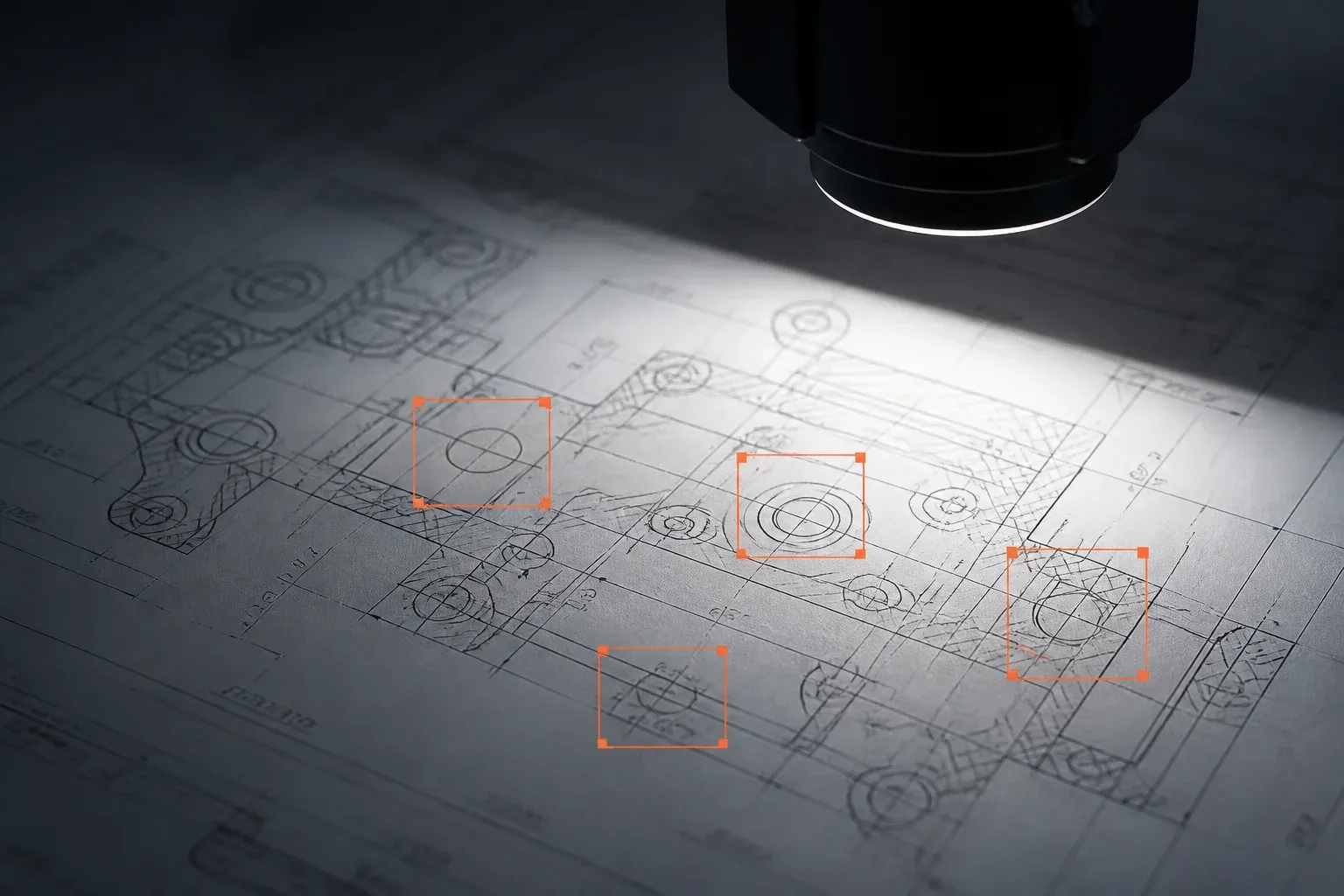
Mistral AI has unveiled Mistral Large 4 (ML4), a native multimodal model that brings document grounding, image understanding, reasoning, and agentic capabilities into one high-end open-weight model lineup. For engineering and manufacturing teams, the most practical signal is its documented ability to inspect visual material, answer questions about documents, and support bounding-box and object-detection workflows that can be applied to diagrams and drawing-based review.
Announced on October 6, 2026, ML4 is in public preview through the Mistral Studio API. Mistral says its weights are scheduled for release by the end of October 2026. The company positions the model, nicknamed Le Chonk, for workloads including manufacturing, security, and finance, while its materials point to a broader European and multi-region training and deployment footprint.
The official Mistral Large 4 model documentation describes ML4 as a mixture-of-experts model with 52 billion active parameters, 1.05 trillion total parameters, and a 1.6 billion-parameter vision encoder. Mistral also states that the model supports more than 160 languages.
What Mistral Large 4 changes for visual document work
The relevant change is not simply that ML4 can accept images. Mistral documents multimodal capabilities around document question answering and grounding, while its image-understanding cookbook shows bounding-box and object-detection workflows using ML4. Together, those capabilities create a credible technical basis for examining complex visual documents in a more targeted way.
For an engineering drawing, a useful workflow could involve providing a drawing or diagram, asking the model to locate a visual element, then using that grounded result as part of a review process. The supplied documentation supports the inspection and extraction side of this workflow. It does not establish that ML4 can independently certify a drawing's engineering correctness, replace formal quality assurance, or integrate with a particular CAD, PLM, ERP, or document-management product.
That distinction matters. “Verify” is most useful here as a workflow concept: teams can use an AI system to check whether specified information or visual elements appear in supplied material, then retain human review for decisions that require engineering judgment.
Potential applications supported by ML4's documented multimodal direction include:
- Asking questions about technical documents and diagrams.
- Locating objects or regions of interest in visual material through bounding-box workflows.
- Grounding an answer in the relevant area of a document or image.
- Working across multilingual documentation and operating contexts.
Public preview now, open weights planned next
ML4's rollout has two meaningful stages. The public preview makes the model available through the Mistral Studio API, while the planned end-of-October weight release would expand the options available to organizations evaluating open-weight deployment approaches. Mistral's materials describe a European and multi-region footprint designed for sovereignty and cross-region operation, but the supplied research does not provide implementation requirements, commercial pricing, or a detailed self-hosting configuration.
| Aspect | ML4 public preview | Planned weight release |
|---|---|---|
| Access route | Mistral Studio API | Weights slated for release by the end of October 2026 |
| Model status | Public preview | Planned next rollout stage |
| Documented model design | Native multimodal mixture-of-experts model | The same ML4 model family, with weights expected to become available |
The table is a rollout comparison, not a performance comparison. Mistral's supplied materials do not provide benchmark results or a like-for-like capability matrix against earlier Mistral models, so claims of superior accuracy over prior versions would be premature.
Why the release matters for engineering and manufacturing teams
Engineering documents tend to combine structured and visual information. Labels, callouts, dimensions, symbols, revision notes, and diagram relationships can all matter to a review task. A multimodal model with grounding tools may help teams turn some of that material into a more searchable and reviewable workflow, particularly where people currently spend time finding relevant regions before making a decision.
ML4's combination of instruction following, reasoning, agentic capabilities, and multimodal input could also make it relevant to multi-step processes. For example, a workflow could use a document question to identify a region of interest, pass that result to a human reviewer, and record the review outcome in an existing business system. That is an implementation opportunity, rather than a capability Mistral has specifically announced.
The open-weight direction is also strategically relevant. Organizations that need more control over where a model runs may want to follow Mistral's planned weight release and its stated focus on European and multi-region operation. However, a public preview is not the same as a production deployment decision. Teams should test output quality against their own drawing types, terminology, languages, and review criteria before assigning the model a consequential role.
Engineering and manufacturing teams should treat multimodal AI as a workflow design question, not just a model selection exercise. Scalevise helps businesses identify document-review tasks worth automating, assess data flows and human checks, and turn promising capabilities into workable pilots. Our practical AI implementation consultancy can map an approach that fits the tools and processes you already use, while keeping verification steps where they matter. Request an AI consultation to evaluate your inspection workflow.
Frequently Asked Questions
What is Mistral Large 4?
Mistral Large 4, or ML4, is Mistral AI's native multimodal mixture-of-experts model. Mistral lists 52 billion active parameters, 1.05 trillion total parameters, and a 1.6 billion-parameter vision encoder.
Can Mistral Large 4 inspect engineering drawings?
Mistral documents document question answering, grounding, and image-understanding workflows including bounding boxes and object detection. These capabilities can support inspection of diagrams and drawing-based material, but the supplied research does not show that ML4 can independently validate engineering correctness.
When will Mistral Large 4 weights be available?
Mistral stated that ML4 weights are slated for release by the end of October 2026. At announcement, the model was available as a public preview through the Mistral Studio API.
Does Mistral provide Mistral Large 4 pricing or integration details?
The supplied research confirms the public preview and planned weight release, but does not provide pricing or specific integrations for CAD, PLM, ERP, or other business systems.
Conclusion
Mistral Large 4 is a notable expansion of Mistral AI's open-weight multimodal lineup. Its documented grounding, document question-answering, and object-detection workflows make it relevant to visual technical-document tasks, including engineering drawing inspection. The public preview offers an early evaluation route, while the planned weight release may broaden deployment choices. Its practical value will depend on careful testing and workflow design, especially where human engineering review remains essential.