
Mistral Large 4 Brings Multimodal AI to Engineering, PDFs and Satellite Imagery
Mistral AI has introduced Mistral Large 4, a native multimodal model designed to reason across language and visual information, from engineering drawings and PDFs to large satellite images.
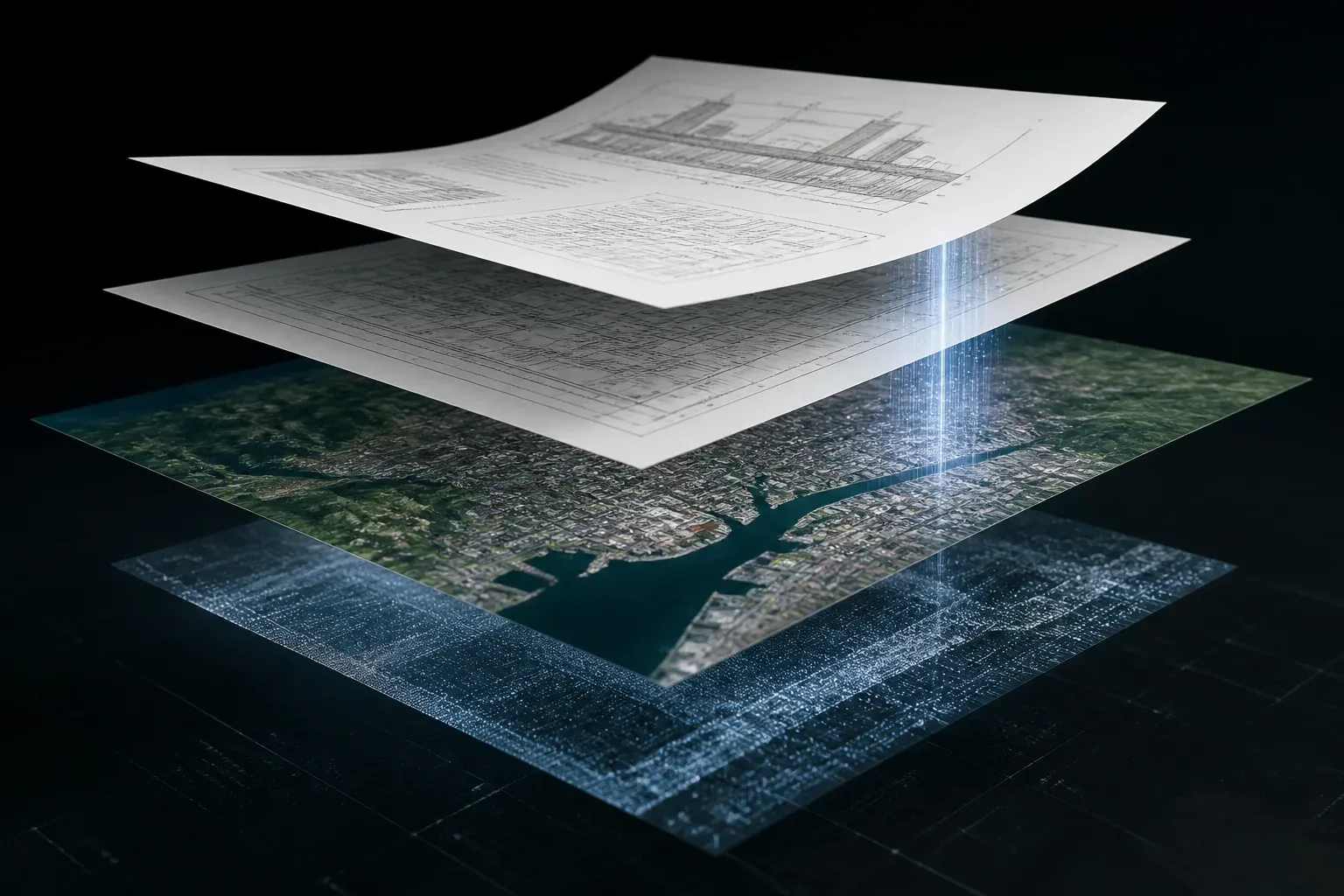
Mistral AI has officially introduced Mistral Large 4 (ML4), a native multimodal model designed to reason across language and visual inputs. The company positions the model for frontier-level coding, agentic workflows and multimodal understanding, with a particularly practical focus on engineering drawings, PDF evidence and natural images. Its stated use cases extend to manufacturing inspection and the analysis of gigapixel satellite imagery for time-sensitive work such as disaster response.
According to Mistral AI's official Mistral Large 4 announcement, ML4 is roughly a one-trillion-parameter model with 52 billion active parameters. It is available in public preview, with weights expected by the end of the month. Mistral also says deployment will begin with a European-first approach, followed by availability in other regions.
The release matters because many operational questions are not contained in plain text. A team investigating a quality issue may need to relate a diagram to a written specification. A field operation may need to locate a specific object in extremely large imagery. A document review process may require evidence buried in a PDF alongside tables, charts or visual annotations. ML4 is intended to bring those inputs into one reasoning workflow rather than treating vision as a separate, narrow task.
What Mistral Large 4 adds
Mistral describes ML4 as a vision-grounded model, meaning its multimodal work is built around connecting visual material with language-based reasoning. The announced examples are concrete: inspecting engineering and CAD drawings, extracting evidence from PDFs, and examining gigapixel satellite imagery for difficult-to-find objects.
This is a broader product direction than attaching basic image recognition to a text assistant. In the company's framing, the model is meant to handle documents, charts and natural images as part of complex tasks that can also involve coding or agentic workflows. That could be relevant where information moves between visual assets, written records and existing software processes.
The model's published capabilities include:
- Engineering drawing inspection, including analysis of CAD and engineering materials.
- PDF evidence extraction, for finding and grounding information in document content.
- Gigapixel satellite-image inspection, including searches for hard-to-find objects in large images.
- Vision and language reasoning across documents, charts and natural images.
- Post-training through Mistral Forge RL pipelines, with a stated path toward specialized and open-weight models.
Mistral says ML4 will be the foundation for a new generation of specialized and open-weight models. It also identifies Mistral Studio and the preview environment as routes for accessing weights, while outlining a roadmap for enterprise-scale, self-hosted deployment. The announcement does not provide pricing details, nor does it specify the final scope or timing of self-hosted availability.
| Area | Pixtral Large | Mistral Large 4 |
|---|---|---|
| Status | Deprecated | Public preview, with weights expected by the end of the month |
| Product direction | Earlier multimodal model | Native multimodal model positioned for coding, agentic workflows and multimodal understanding |
| Highlighted visual work | Not specified in the supplied release context | Engineering drawings, PDF evidence and gigapixel satellite imagery |
Why visual grounding changes the business case
For businesses, the value of a multimodal model depends less on its parameter count than on whether it can reliably support a real workflow. ML4's stated examples point to workflows that traditionally require people to move between documents, images and technical records manually.
In manufacturing or engineering, visual grounding could support an initial review of drawings and related documents before human specialists make a decision. In geospatial work, searching huge image files could help prioritize what analysts review first. In document-heavy operations, extracting evidence from PDFs may reduce the time spent locating relevant passages and visual context.
Those are potential applications, not guarantees of autonomous accuracy. Mistral's announcement establishes the model's intended tasks, but organizations would still need to test output quality on their own drawings, document formats, imagery and decision rules. High-consequence decisions, including quality approvals or emergency response actions, need an appropriately designed human review process.
Availability, deployment and what to assess next
ML4's public-preview status is important. It gives developers and technical teams an opportunity to evaluate the model, but it also means production planning should distinguish announced capabilities from a fully validated deployment. The expected release of weights by the end of the month may be especially relevant to organizations that want greater control over deployment, model adaptation or data handling.
Mistral's European-first deployment and longer-term self-hosted roadmap also make location and deployment model part of the evaluation. The company has not supplied a complete implementation blueprint in the announcement. Businesses considering ML4 should therefore clarify which access route fits their needs, what inputs can be processed, how results will be checked, and how the model would connect to existing document repositories, image stores or operational software.
The sensible first project is likely a bounded one: a defined document set, a known class of engineering drawings, or a repeatable imagery-review task. That approach makes it easier to measure whether ML4 improves retrieval, triage or analyst productivity without assigning it responsibility for final judgments too early.
Multimodal AI can create real operational value only when it is connected to the information and review steps that teams already use. Scalevise helps businesses assess practical use cases, select suitable tools and design reliable adoption plans around their workflows. A focused AI implementation consultation can identify where visual and document reasoning may reduce manual effort, what human checks remain necessary, and how to move from a small test to a workable process. Request a practical AI consultation to evaluate your highest-value use case.
Frequently Asked Questions
What is Mistral Large 4?
Mistral Large 4, or ML4, is Mistral AI's native multimodal model. Mistral describes it as roughly one trillion parameters with 52 billion active parameters, built for reasoning across vision and language tasks.
What can Mistral Large 4 analyze?
Mistral highlights engineering and CAD drawings, PDF evidence, documents, charts, natural images and gigapixel satellite imagery among ML4's intended multimodal uses.
When will Mistral Large 4 weights be available?
Mistral announced ML4 in public preview and said its weights are expected by the end of the month. The supplied announcement does not provide pricing details.
How does Mistral Large 4 differ from Pixtral Large?
Pixtral Large is described as deprecated in the supplied context. ML4 is the newer native multimodal model that Mistral positions for coding, agentic workflows and vision-grounded understanding across technical documents and imagery.
Conclusion
Mistral Large 4 is a significant expansion of Mistral AI's multimodal ambitions, combining language reasoning with explicitly stated capabilities for technical drawings, PDFs and very large satellite images. Its public-preview stage and planned weight release make this an early evaluation opportunity rather than a finished deployment prescription. The clearest near-term question for teams is whether ML4 can improve a specific visual-document workflow while preserving the expert review needed for reliable decisions.