
n8n and Miro Set NYC Build Challenge to Turn Plans Into Working Automations
n8n and Miro are spotlighting the path from visual planning to a working automation build through a five-hour NYC challenge on September 28.
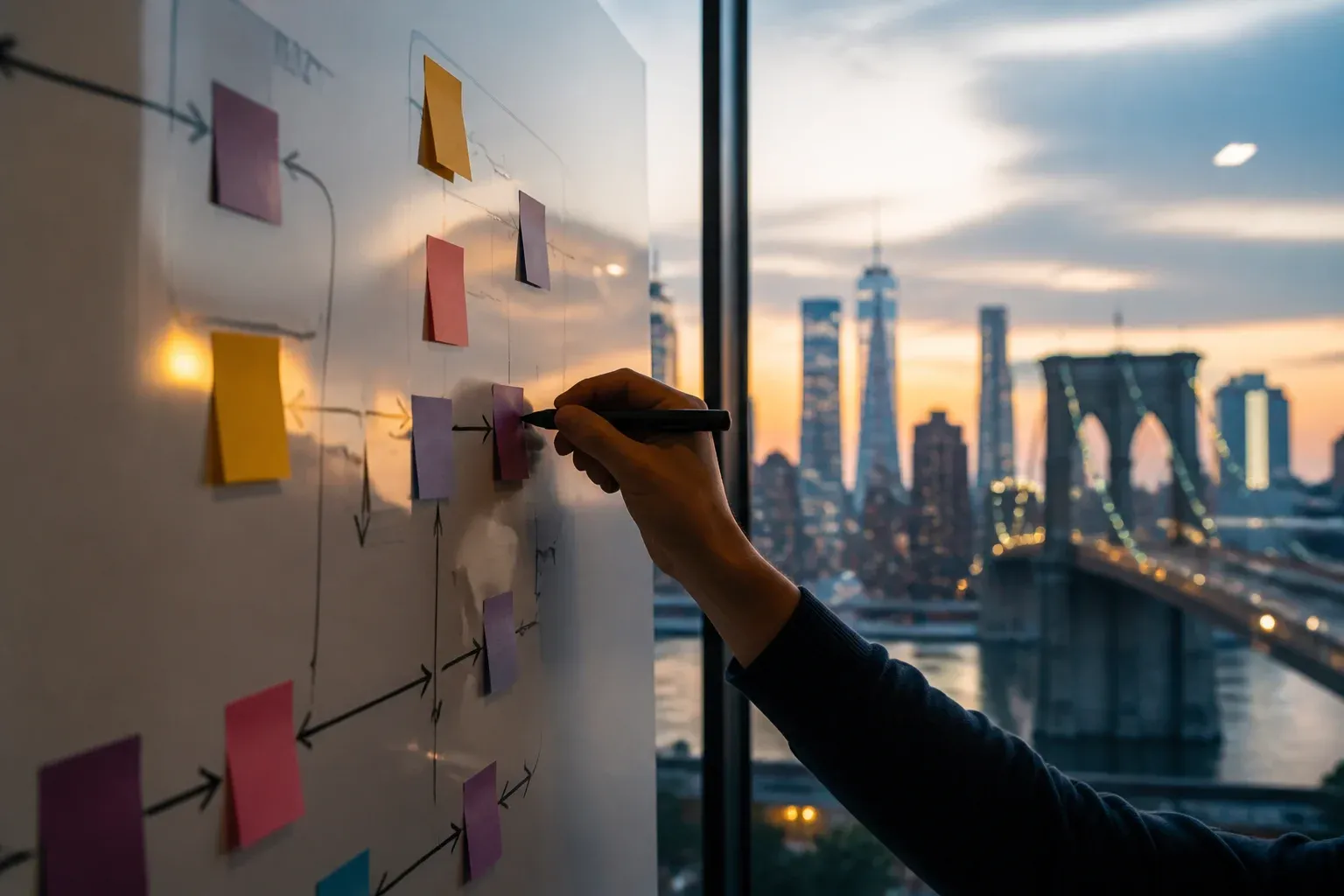
n8n and Miro are putting a practical automation challenge in front of NYC builders: participants will have five hours on September 28 to turn a plan created in Miro into a working n8n build. The format focuses on a common operational problem for teams adopting automation, namely moving from an agreed process idea to an implementation that can actually run.
The event announcement names Liam McGarrigle of n8n and Aaron Frank of Miro as judges. Beyond those details, the announcement does not specify the venue, the year, eligibility requirements, prizes, registration process, or the exact criteria judges will use to assess submissions. It also does not confirm a new product integration or feature release.
That distinction matters. The event is a demonstration of how planning and workflow-building can be connected in practice, not evidence by itself that n8n and Miro have launched a new joint capability. Still, the challenge offers a useful illustration of the work required to make automation useful: define a process clearly, decide what should happen next, and build the workflow that performs those steps.
From process map to working workflow
Miro is being used as the starting point for the challenge plan, while n8n is the environment where that plan must become a working build. The exercise therefore emphasizes execution rather than ideation alone. A visual plan can clarify people, steps, handoffs, and decision points, but a functioning workflow also needs those elements translated into triggers, actions, data handling, and testing.
For participants, the five-hour constraint places value on choosing a focused use case and making it work end to end. For business teams, the same principle applies even when there is no hackathon deadline. Automation projects tend to be more practical when they begin with a clearly defined process rather than a broad ambition to automate everything.
The announced format highlights three useful lessons:
- Process clarity comes first. A workflow build needs an agreed description of the task, its inputs, and its expected outcome.
- Execution is a separate step. A plan only delivers operational value once it is converted into a working sequence of actions.
- Scope affects speed. A limited, testable workflow is easier to build and evaluate than an undefined project with too many moving parts.
The event does not disclose what kinds of workflows entrants will create. That leaves open whether submissions will center on internal operations, customer-facing processes, marketing tasks, or other use cases. It also means there is no basis to assume that the challenge will showcase AI features, new connectors, or a formal n8n and Miro integration.
Why the format is relevant to businesses
The central idea is straightforward: teams often have process knowledge before they have an automation. A manager may be able to map how a request moves from form submission to review, customer follow-up, or a spreadsheet update. The harder task is translating that map into a reliable workflow with clear ownership and outcomes.
A timed build challenge makes that gap visible. It asks participants to show not only what a process should look like, but how it can operate. That is a useful mindset for companies evaluating workflow automation. The important question is not simply whether a process can be diagrammed. It is whether the process can be built, tested, and maintained in a way that reduces manual effort without creating new operational problems.
For teams considering n8n, the practical takeaway is to start with a workflow that has a defined trigger and a measurable result. Examples might include routing an inbound request, moving approved information between tools, or notifying the right person when a condition is met. The announcement does not identify any of these as event projects, but they reflect the type of focused process definition the challenge format rewards.
The collaboration also puts human judgment in the loop. McGarrigle and Frank will judge the builds, but the announcement does not state how submissions will be scored. Participants and observers should watch for any later details on the challenge rules, the workflows selected, or lessons shared from the completed builds.
If your team has process maps that never become operational improvements, Scalevise's n8n setup service can help turn a focused workflow into a maintainable automation. Scalevise can map the required steps, connect the relevant applications, and build practical handling for the data and exceptions that often keep manual work in place. Starting with one defined process creates a clearer path to saved time and more reliable execution. Discuss an n8n setup project with Scalevise.
Frequently Asked Questions
What is the n8n and Miro NYC build challenge?
It is an announced challenge in which participants have five hours on September 28 to turn a plan in Miro into a working n8n build.
Who are the judges for the challenge?
The announcement names Liam McGarrigle of n8n and Aaron Frank of Miro as judges.
Does the event confirm a new n8n and Miro integration?
No. The announcement describes the challenge format but does not confirm a new integration, product feature, or release.
What details about the event remain unavailable?
The announcement does not provide the venue, year, registration details, prizes, eligibility requirements, or judging criteria.
Conclusion
The NYC challenge gives n8n and Miro a practical way to show the transition from process planning to workflow execution. Its clearest business lesson is that automation starts with a well-defined process, but delivers value only when that process becomes a tested working build. The announced details establish the event format and judges, while any product announcements or integration news would need to come from later information.