
OpenAI Shares Internal Data on How Coding Agents Are Accelerating AI Research
OpenAI has published internal measures showing widespread coding-agent use in its research organization, alongside a cautious roadmap toward recursive self-improvement.
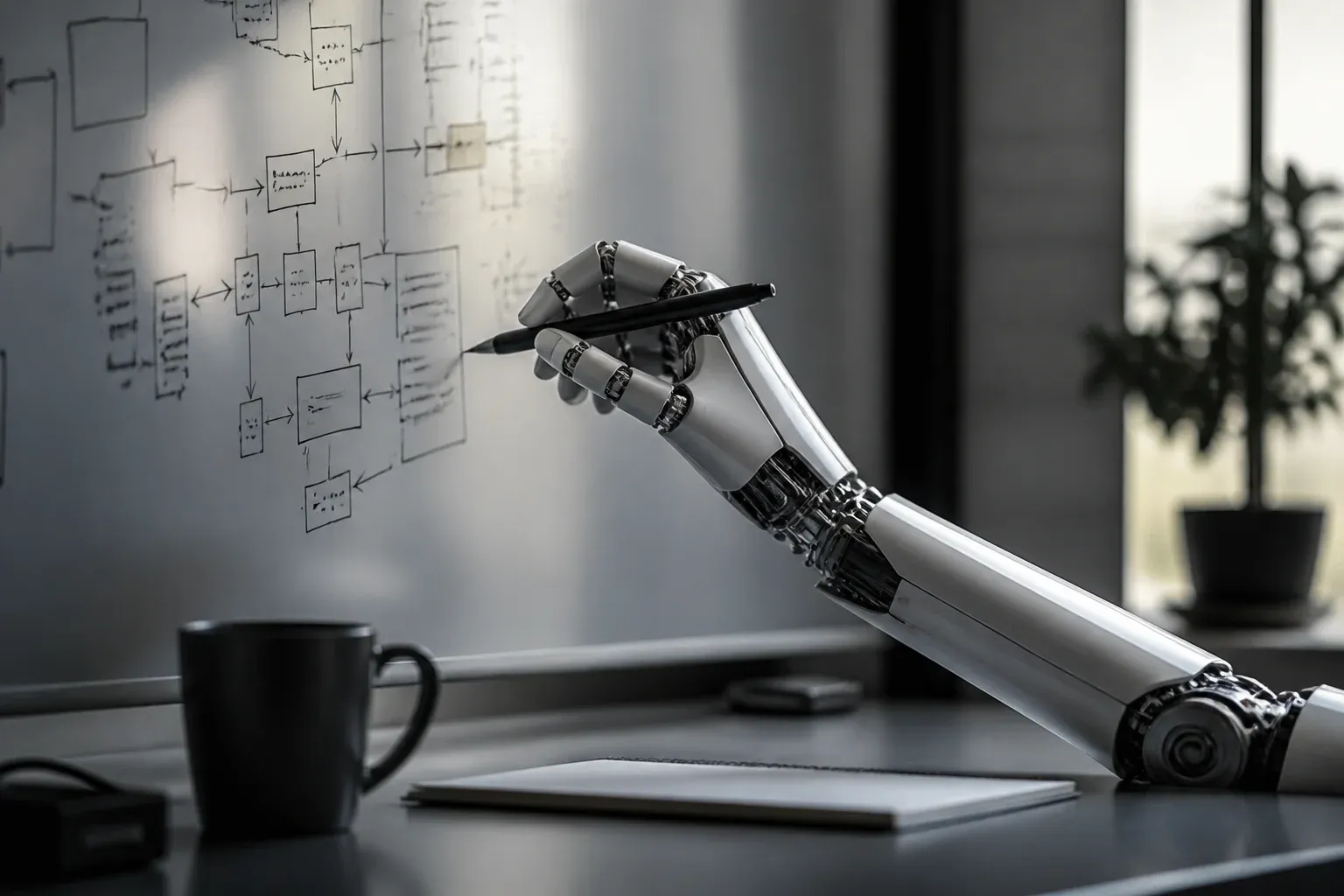
OpenAI has published a rare internal view of how coding agents are changing its AI research work. The company says agents are now routinely used by researchers, with usage reaching 3.1 agent-workdays for every human workday across its research organization in mid-August 2026. The data release matters because it provides concrete evidence of AI systems being used to speed up the work of building more capable AI systems, a dynamic OpenAI describes as a potential path toward recursive self-improvement.
In OpenAI's research acceleration report, the company frames the figures as a snapshot of internal R&D rather than a general productivity benchmark. The findings show more experiments and code production, as well as a shift toward delegating longer-running and higher-level work to agents. They do not establish that research can proceed without human researchers, but they do show that agent-assisted work has become a material part of a frontier lab's daily operations.
What OpenAI's internal metrics show
The most important signal in the release is not a new public developer product or pricing plan. It is the scale at which OpenAI says its researchers are already using coding agents. The median researcher was using agents daily by mid-August, while the organization-wide measure reached 3.1 agent-workdays per human workday.
An agent-workday is a useful way to understand the company’s measurement approach. Rather than counting only chat prompts or individual code suggestions, it attempts to represent the amount of work performed by agents over time. That distinction matters because the report describes a move beyond short, isolated assistance toward tasks that can run for longer horizons.
| Internal indicator | OpenAI's reported snapshot | What it indicates |
|---|---|---|
| Routine adoption | The median researcher used agents daily in mid-August 2026. | Coding-agent use had become part of ordinary research work. |
| Aggregate agent output | 3.1 agent-workdays per human workday across the research organization. | Agents were contributing work at a scale that exceeded human workdays under OpenAI's measure. |
| High-intensity usage | The 90th percentile user consumed more than $7,000 worth of tokens per day. | Some researchers were using substantially more agent capacity than typical users. |
The $7,000 figure should not be read as a new public price or a recommendation for a company’s AI budget. OpenAI presents it as the value of tokens consumed by a high-intensity internal user. The release does not announce developer access, a new API tier, or a commercial pricing model tied to these internal research agents.
More experiments, more code, and different tasks
OpenAI reports a broad rise in experiments and code production. Its interpretation is that agent use is accelerating multiple stages of the AI R&D cycle, rather than merely automating a narrow programming task. The company also says the work handed to agents is changing: longer-horizon and higher-level tasks are increasingly being delegated.
That progression is significant. Early coding assistance often focused on code completion, debugging, or generating small functions. Longer-horizon agent work can involve carrying out a sequence of tasks, iterating on an experiment, and producing outputs that a researcher can inspect and direct. OpenAI's data suggests that its internal use has moved further in that direction.
The report does not provide enough detail to calculate how much faster a particular research project becomes, nor does it prove that the same results will transfer to other organizations. Research environments, evaluation practices, computing resources, and the quality of internal tools all affect whether an agent can safely and reliably take on larger assignments.
Why the release is about recursive self-improvement
Recursive self-improvement, or RSI, refers to the prospect of AI systems helping improve the research and engineering processes that create later AI systems. OpenAI characterizes RSI as a potential major source of capability growth, while stressing the need for a cautious approach, safety work, and public discussion about how quickly development should proceed.
The company says it paused reinforcement learning training on Astra-class models from late July to early August 2026. According to the report, that period was used to harden research environments and expand monitoring before compute was rebalanced across model classes. This is relevant context for the usage metrics: OpenAI is presenting research acceleration and safety measures as connected operational concerns, not separate tracks.
OpenAI also reiterates goals it previously stated in fall 2025: an automated research intern by September 2026, followed by progress toward an automated AI researcher by March 2028. These are roadmap milestones, not declarations that either level of automation has already been achieved. The new release is the company’s attempt to show measurable progress in the underlying research workflow.
What this means for businesses using AI agents
Most companies do not have OpenAI's specialized research infrastructure or token consumption. Still, the release offers a practical lesson: the business value of AI agents is likely to increase when teams give them bounded but meaningful multi-step work, then build reliable review and monitoring around that work.
For a business team, the closest parallel is not asking an AI tool a one-off question. It is designing a workflow in which an agent can gather information, draft or transform material, update a connected system, and hand the result to a person for approval. Suitable tasks will vary by organization, but the implementation questions are consistent:
- Which repeatable tasks contain enough structure for an agent to handle safely?
- What data and tools must the agent access to complete the work?
- Where should human review occur before an output affects customers, records, or decisions?
- How will the team measure results, including time saved, errors avoided, and exceptions requiring intervention?
OpenAI's data is also a reminder that high agent usage alone is not a success metric. More tokens, code, or tasks only matter when they improve a defined outcome. Businesses should begin with work that has a clear owner and measurable result, rather than adopting agents because a frontier lab is using them at scale.
For companies moving from experiments to operational AI, the challenge is usually connecting models to real processes without creating brittle handoffs or uncontrolled actions. Scalevise can help map high-value tasks, design human-reviewed automations, and connect AI tools to the systems your team already uses. A practical implementation can reduce repetitive work while keeping responsibility and visibility where they belong. Explore Scalevise's AI workflow automation services and request an AI automation consultation.
Frequently Asked Questions
What did OpenAI publish about research acceleration?
OpenAI published internal metrics on coding-agent use in its research organization, including daily adoption, agent-workdays, high-intensity token use, and changes in the types of tasks delegated to agents.
What does 3.1 agent-workdays per human workday mean?
OpenAI says its research organization reached 3.1 agent-workdays per human workday in mid-August 2026. It is the company's internal measure of agent work relative to human workdays, not a universal productivity statistic.
Did OpenAI announce a new coding-agent product or public price?
No. The release reports internal research usage and token consumption. It does not announce a new public coding-agent product, API offering, or pricing tier.
What is OpenAI's stated RSI roadmap?
OpenAI reiterates a goal it announced in fall 2025 to have an automated research intern by September 2026, and says it is discussing progress toward an automated AI researcher by March 2028. These are roadmap goals, not confirmed completed milestones.
Conclusion
OpenAI's release gives the public a more concrete view of agent-assisted AI research than broad claims about automation alone. Its internal metrics suggest coding agents are already contributing at meaningful scale, while the company’s training pause and monitoring work underscore that acceleration is being presented alongside safety measures. For businesses, the immediate lesson is to focus on well-defined, measurable agent workflows rather than treating greater AI activity as an outcome in itself.