
Anthropic Opens MHS Research Preview for Unified AI Control of Lab Hardware
Anthropic's Model Hardware Standard research preview introduces common drivers and interfaces for AI agents operating lab and manufacturing devices.
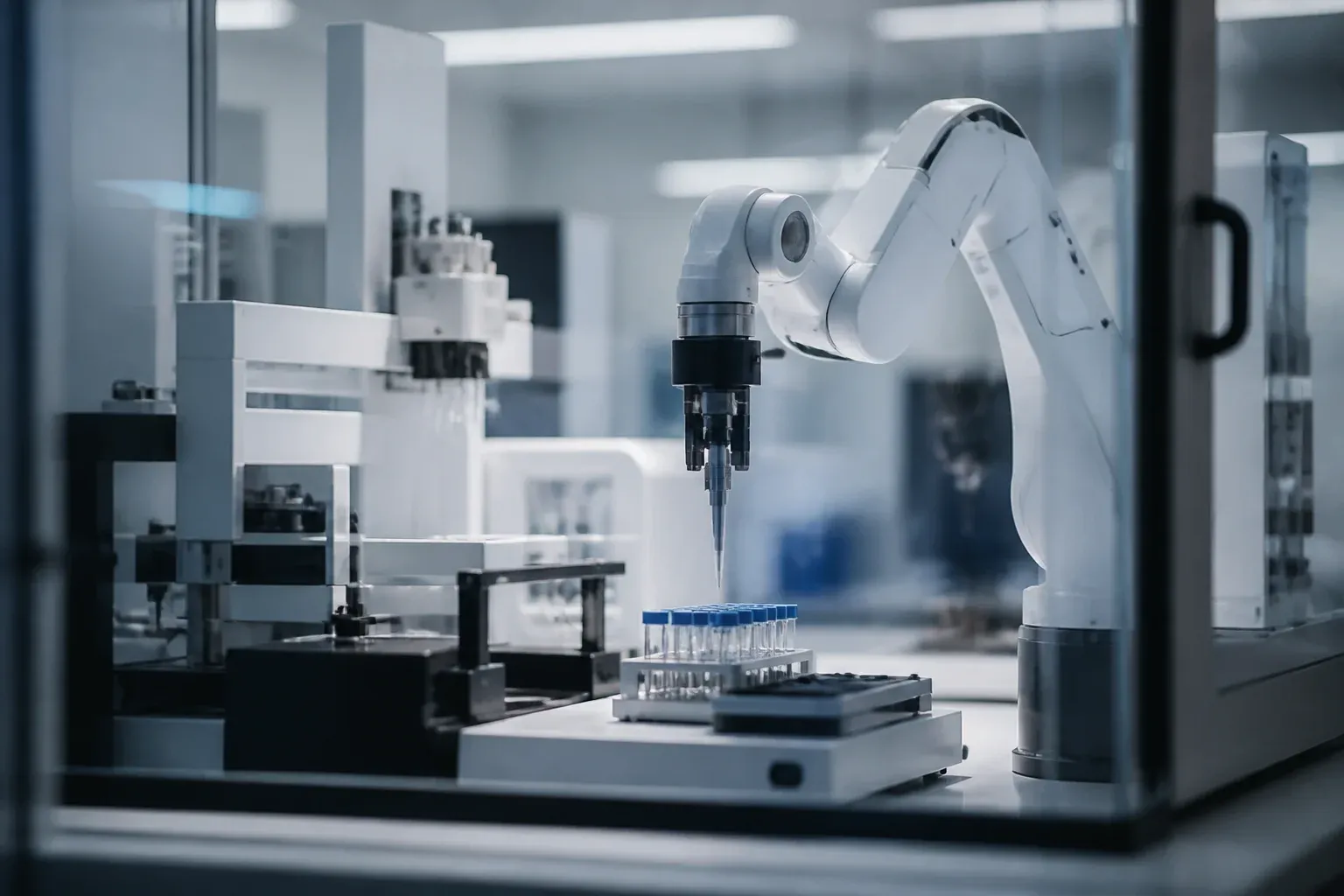
Anthropic has begun a research preview of the Model Hardware Standard (MHS), an open standard intended to give AI agents a common way to discover, read from, write to, and operate physical devices. The initial focus is lab and manufacturing equipment, including examples such as microscopes, liquid handlers, and robotic arms. The central promise is not a new piece of hardware. It is a shared driver and interface layer that could reduce the need to build a separate custom integration for every instrument.
According to Anthropic's official MHS research preview announcement, the standard is designed to let Claude-enabled agents coordinate work across multiple instruments through one interface. For teams that run physical workflows, that matters because a task often spans more than one device. A workflow may need to collect a measurement, adjust a machine, record the result, and trigger the next step. MHS is intended to make that kind of orchestration more practical without requiring every device to expose a wholly different control model.
The preview is an early stage release, not a declaration of universal hardware compatibility. Anthropic says MHS currently has its strongest coverage in laboratory and manufacturing equipment, while the research preview is intended to help extend support to additional devices. The company has also said that open source timing and scope will follow, so businesses should view the standard as a developing integration approach rather than a finished procurement specification.
How Anthropic MHS works
At its core, MHS combines a shared device specification with standard driver primitives. Rather than asking an agent to handle every vendor's control conventions independently, the standard provides common read and write commands and device discovery. That gives an agent a more consistent way to identify available equipment and interact with it.
Anthropic identifies three ways software and agents can access MHS: Model Context Protocol (MCP), command line interfaces, and APIs. The presence of several access mechanisms matters because hardware workflows are rarely built in a single environment. A developer may prototype a command in a terminal, connect an agent through MCP, and integrate a stable process into an existing application through an API.
| MHS access mechanism | What Anthropic says MHS supports | Why it matters for a workflow |
|---|---|---|
| MCP | Agent access through the Model Context Protocol | Creates a route for compatible AI agents to work with devices through the standard. |
| CLI | Command line interfaces | Provides a direct interface for developer and operational workflows. |
| APIs | Application programming interfaces | Enables MHS to be incorporated into software integrations. |
The value of this design depends on the availability and quality of device drivers. A common interface can simplify the layer above the hardware, but it cannot eliminate the need to represent a device's real capabilities and operating constraints accurately. That is why the research preview's emphasis on expanding hardware coverage is as important as the interface itself.
From individual devices to coordinated workflows
Anthropic frames MHS as a way to orchestrate multi instrument workflows. This is a meaningful distinction from simply sending one command to one machine. In a laboratory, for example, a sequence may involve a liquid handler, an imaging device, and a robotic arm. A shared interface could let an agent coordinate the sequence while each device remains represented through its own driver.
The company points to work with HHMI Janelia Research Campus, Genentech lab automation demonstrations, and University of Washington labs as early examples of the direction. These examples show where the standard is being explored, but they do not establish that every laboratory or manufacturing device is supported today.
Anthropic's separate account of its work with UST adds useful context for how Claude can fit into hardware-oriented development. The company described Claude Code reading schematics and pinouts and generating regression tests, a workflow that can help developers work with boards and cameras. Anthropic's UST collaboration announcement therefore points to a broader path in which AI assists both with hardware development and, through MHS, with operating connected equipment.
What the research preview means for businesses
For businesses with a small number of instruments, the immediate benefit is unlikely to be fully autonomous operations. The nearer term opportunity is reducing integration friction. If MHS drivers become available for the equipment a team already uses, developers may be able to connect tools into a shared workflow more consistently than building and maintaining separate interfaces for each one.
Practical use cases suggested by the preview include:
- Coordinating steps that involve several lab or manufacturing instruments.
- Giving an AI agent a standardized way to discover connected devices and use supported commands.
- Connecting device operations to existing software through APIs.
- Using Claude Code in hardware development tasks such as interpreting technical documentation and generating regression tests.
There are important limits. MHS is a research preview, so its coverage, open source plans, and long term implementation details are still evolving. The verified material does not provide pricing details or a broad rollout timetable. Businesses should also avoid assuming that a standard interface changes the care required around physical equipment. Device capabilities, operational procedures, and appropriate human oversight remain relevant to any deployment.
For companies considering a pilot, the most useful starting point is usually an inventory: identify which devices take part in a repeatable workflow, how they are currently controlled, and where manual handoffs cause delays or errors. That creates a concrete basis for evaluating whether an MHS driver and an agent integration would solve a real operational problem when broader support becomes available.
Physical operations become more valuable when the software, data, and tools around them can work together. Scalevise can help map a focused automation opportunity, assess integration paths, and connect AI agents to the systems your team already uses through an MCP setup service. Start with one repeatable process to reduce manual handoffs and create a practical route from experimentation to measurable workflow improvement. Discuss an MCP integration project with Scalevise.
Frequently Asked Questions
What is Anthropic's Model Hardware Standard?
The Model Hardware Standard, or MHS, is a unified interface and driver specification designed to let AI agents discover and operate physical devices through standardized commands and interfaces.
What hardware does the MHS research preview cover?
Anthropic says MHS currently has its strongest coverage in lab and manufacturing equipment. The announcement cites microscopes, liquid handlers, and robotic arms as examples and says the preview will help extend support to additional devices.
How can AI agents access MHS devices?
Anthropic lists three control mechanisms for MHS: Model Context Protocol, command line interfaces, and APIs. The standard also includes device discovery and read and write command primitives.
Is MHS broadly available or open source?
MHS has begun as a research preview. Anthropic has said that open source timing and scope will follow, and the verified material does not provide a broad availability timetable or pricing details.
Conclusion
Anthropic's MHS research preview is a significant attempt to standardize how AI agents interact with lab and manufacturing hardware. Its practical importance will depend on driver coverage and how the open standard develops, but the approach could make multi device workflows easier to integrate and coordinate. For teams working with connected physical equipment, MHS is a development worth tracking as the ecosystem expands.