
Anthropic Opens MHS Research Preview for AI Agents Operating Physical Hardware
Anthropic's Model Hardware Standard enters research preview, with UST demonstrating how Claude can support hardware production-validation workflows.
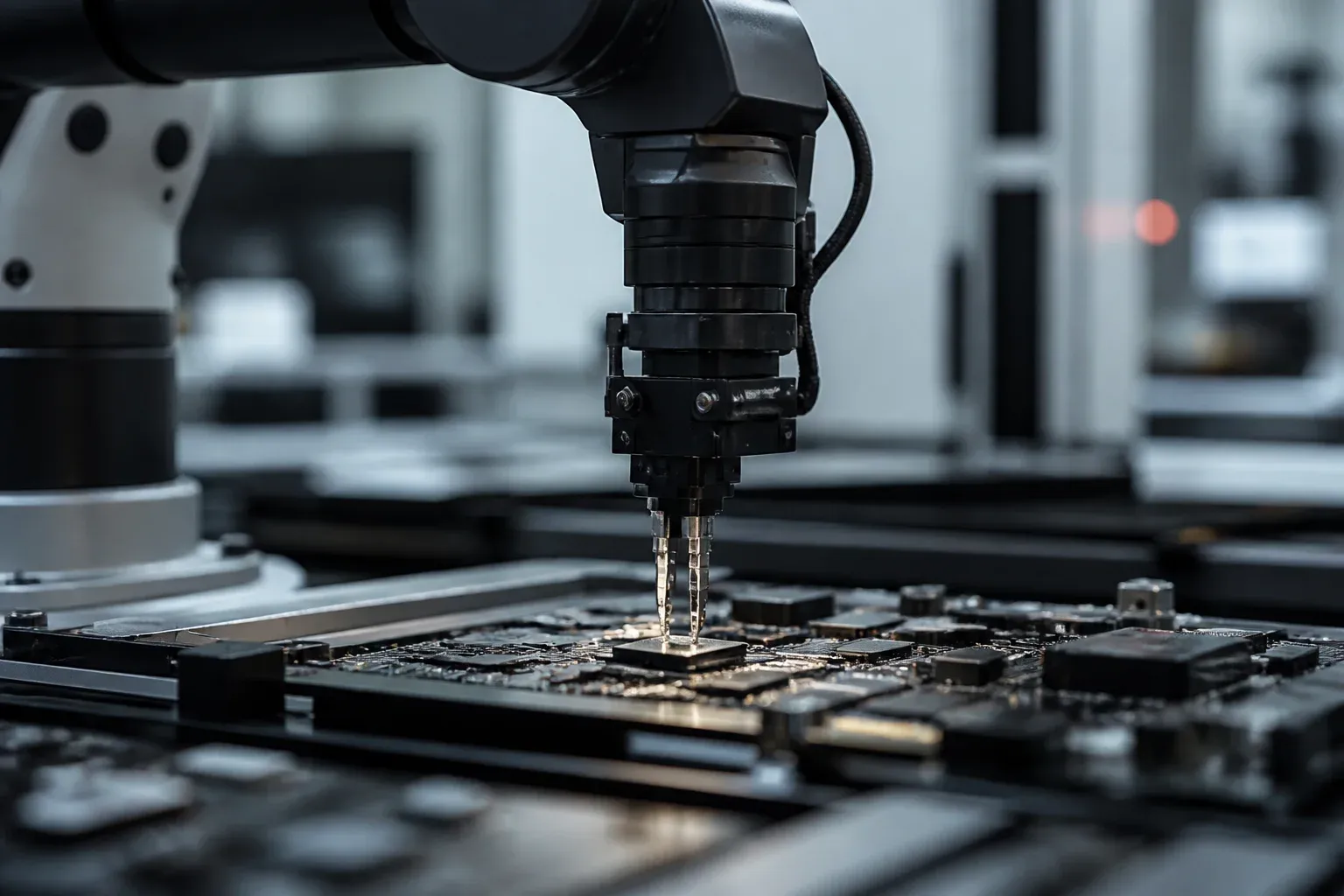
Anthropic has opened a research preview of the Model Hardware Standard (MHS), a shared specification intended to help AI agents safely operate physical devices. The initiative is not a broad product launch. Anthropic is initially issuing the preview to a first group of scientific research labs and advanced manufacturers, making it an early test of whether a more standardized interface can reduce the friction of connecting AI systems to equipment.
The practical significance is clear even though many details remain undisclosed. AI models can reason over text, images, code, and data, but putting that reasoning to work on laboratory, manufacturing, or other physical equipment has typically required custom integrations. MHS is intended to establish a common way for agents to discover and interact with devices, with safety and governance central to the effort.
Anthropic announced the preview alongside work with UST. In Anthropic's announcement on bringing Claude to physical AI, the company describes Claude as a reasoning layer in UST production-validation pipelines, including iDEC. In that setting, Claude helps interpret hardware documentation, write and run tests, and compare live equipment data with digital twins to identify regressions.
What Anthropic's MHS preview changes
MHS is best understood as an effort to standardize the connection between an AI agent and physical hardware. Rather than treating each device integration as a wholly separate engineering exercise, a shared specification could give compatible agents and equipment a common basis for interaction. Anthropic's stated goal is safe operation of physical devices, not merely data access.
That distinction matters. A system that can inspect a device's status is different from one that can initiate tests or act on equipment. Physical AI workflows need clear boundaries around what the agent can discover, what actions it can take, and how those actions are managed. Anthropic has identified safety and governance as core themes, but its public announcement does not detail the technical controls, permissions model, or device-level safeguards that participants will use.
| Area | What Anthropic has confirmed | What remains undisclosed |
|---|---|---|
| Availability | A research preview for an initial group of scientific research labs and advanced manufacturers | General availability and a rollout timetable |
| Purpose | A shared specification for AI agents to safely operate physical devices | A full technical specification in the public announcement |
| Hardware support | Initial testing connected to scientific research and advanced manufacturing contexts | A public catalog of supported devices or vendors |
| Commercial terms | No pricing announcement | Pricing or licensing details |
The preview should therefore not be read as confirmation that any business can now connect Claude to its existing equipment through MHS. Nor does Anthropic's announcement establish a specific reduction in integration time for a particular device class. Those are questions the research-preview program will need to answer through real deployments.
UST provides the first concrete use case
UST's production-validation work gives the announcement a more tangible context than a standards proposal alone. According to Anthropic, Claude helps interpret hardware documentation, generate and execute tests, and compare live equipment readings against digital twins to identify regressions. A digital twin is a digital representation used to compare expected and observed behavior. In a validation setting, that comparison can help surface regressions, meaning changes that cause a system to behave worse or differently than expected.
This is a focused application of AI reasoning in a hardware workflow. It does not mean Claude independently runs an entire factory or laboratory. But it illustrates the kind of task MHS could support: connecting an agent's ability to understand documentation and test results with a controlled process involving live equipment.
Why the research preview matters for businesses
For teams that rely on connected equipment, custom integration work can become a barrier to automation. That includes organizations with testing rigs, quality-control equipment, industrial devices, or specialized IoT deployments. A mature shared standard could potentially make it easier to build repeatable workflows around those systems instead of creating a new connection for every agent and device combination.
The opportunity is especially relevant where staff spend time moving between equipment documentation, test procedures, live readings, and issue reports. Agent-assisted workflows may eventually help with tasks such as:
- interpreting schematics, pinouts, and technical documentation during validation work
- generating and running defined tests within approved operational boundaries
- comparing equipment data with a digital twin to identify possible regressions
- making device capabilities easier for approved agents to discover and use
Those are prospective implications, not capabilities Anthropic has made generally available through MHS. Businesses should also avoid treating a common interface as a substitute for operational expertise. Physical-device automation involves consequences that are different from automating a document or a software workflow, which is why the standard's emphasis on safe operation is consequential.
For businesses exploring AI agents that need to work with equipment, internal tools, or operational data, the key preparation is to map the workflow before selecting the technology. Identify the systems involved, the actions that should remain human-approved, and the information an agent needs to perform a useful task. Scalevise can help turn that map into a practical integration plan through its MCP setup service for AI tool connections, reducing manual handoffs while keeping automation aligned with real business processes. Discuss an AI integration project with Scalevise.
What to watch next
Anthropic's public material indicates that more information is forthcoming, including a related item titled “Previewing the Model Hardware Standard.” The most important next updates will be technical documentation, the scope of compatible hardware, evidence from additional preview participants, and any decision on broader availability.
Until then, MHS is a significant but early signal: Anthropic is testing a common foundation for agents to interact with physical systems. The UST collaboration demonstrates one production-validation use case, while the research-preview status makes clear that the standard's reach, commercial model, and device ecosystem have not yet been established.
Frequently Asked Questions
What is Anthropic's Model Hardware Standard?
Anthropic describes MHS as a shared specification designed to help AI agents safely operate physical devices. It is currently available only as a research preview.
Is MHS generally available?
No. Anthropic has opened the preview to an initial group of scientific research labs and advanced manufacturers. It has not announced general availability or a rollout date.
Which hardware devices does MHS support?
Anthropic has not published a broad list of supported devices, hardware vendors, or compatibility requirements in the announcement.
How is UST using Claude in physical AI workflows?
Anthropic says UST uses Claude in production-validation pipelines to read schematics and pinouts, write and run tests, and compare live equipment data with digital twins to flag regressions.
Has Anthropic announced MHS pricing?
No. The research-preview announcement does not specify pricing, licensing terms, or commercial availability.
Conclusion
Anthropic's MHS research preview is an early attempt to create a safer, more consistent interface between AI agents and physical hardware. The UST collaboration shows how Claude can support hardware validation today, but MHS itself remains limited to an initial preview group. Its broader value will depend on the technical standard, compatible devices, and results that emerge from real-world testing.