
Best AI Tools for Businesses in 2026: Automation, Integration and Scalable Growth
A strategic guide to the best AI tools for businesses in 2026. Learn how to combine automation, CRM, marketing AI, and integration architecture to scale without operational chaos.
Executive Summary
The best AI tools for businesses in 2026 are those that combine automation, integration, and measurable ROI.
For workflow automation, Make and n8n offer the strongest scalability, while Zapier remains ideal for small teams. In sales, HubSpot AI supports growing companies, whereas Salesforce Einstein delivers enterprise-grade predictive insights. For marketing, ChatGPT and Claude lead in content acceleration and strategic analysis.
HR teams benefit from platforms like HiBob and Eightfold AI for talent intelligence and workforce planning. Finance departments should prioritize tools such as Planful and Vena Solutions for forecasting and financial automation.
The key differentiator is not the tool itself, but how well it integrates into your operational architecture.
AI Tools Comparison Matrix
| Category | Best for SMB | Best for Enterprise | Primary Strength |
|---|---|---|---|
| Workflow Automation | Zapier | n8n | System integration & logic |
| Sales & CRM | HubSpot AI | Salesforce Einstein | Predictive pipeline insights |
| Marketing | ChatGPT | Claude | Content & strategic analysis |
| Customer Support | Intercom AI | Zendesk AI | Ticket automation |
| HR | HiBob | Eightfold AI | Talent intelligence |
| Finance | Vena Solutions | Planful | Forecasting & planning |
| Internal Productivity | Notion AI | Microsoft Copilot | Knowledge automation |
Table of Contents
- Workflow Automation
- Human Resources
- Sales and CRM
- Marketing and Growth
- Customer Support
- Finance
- Internal Productivity
- Implementation Framework
- FAQ
This guide breaks down the best AI tools for businesses across automation, sales, CRM, HR, marketing, finance, customer support, and internal productivity. More importantly, it explains how to integrate them into scalable operational architecture.
What Actually Defines the Best AI Tools for Businesses
Not every popular AI product belongs in a serious business stack. The best AI tools for businesses share five characteristics:
- Deep integration capability
- Measurable impact on cost or revenue
- Scalability across growth stages
- Strong data governance options
- Cross-department compatibility
If a tool cannot integrate into your systems, it creates isolated efficiency instead of structural leverage.
Automation without integration creates complexity. Automation built on architecture creates scale.
Best AI Tools for Workflow Automation
Workflow automation is the foundation of scalable AI adoption. Before AI can optimize decisions, systems must communicate reliably.
Make

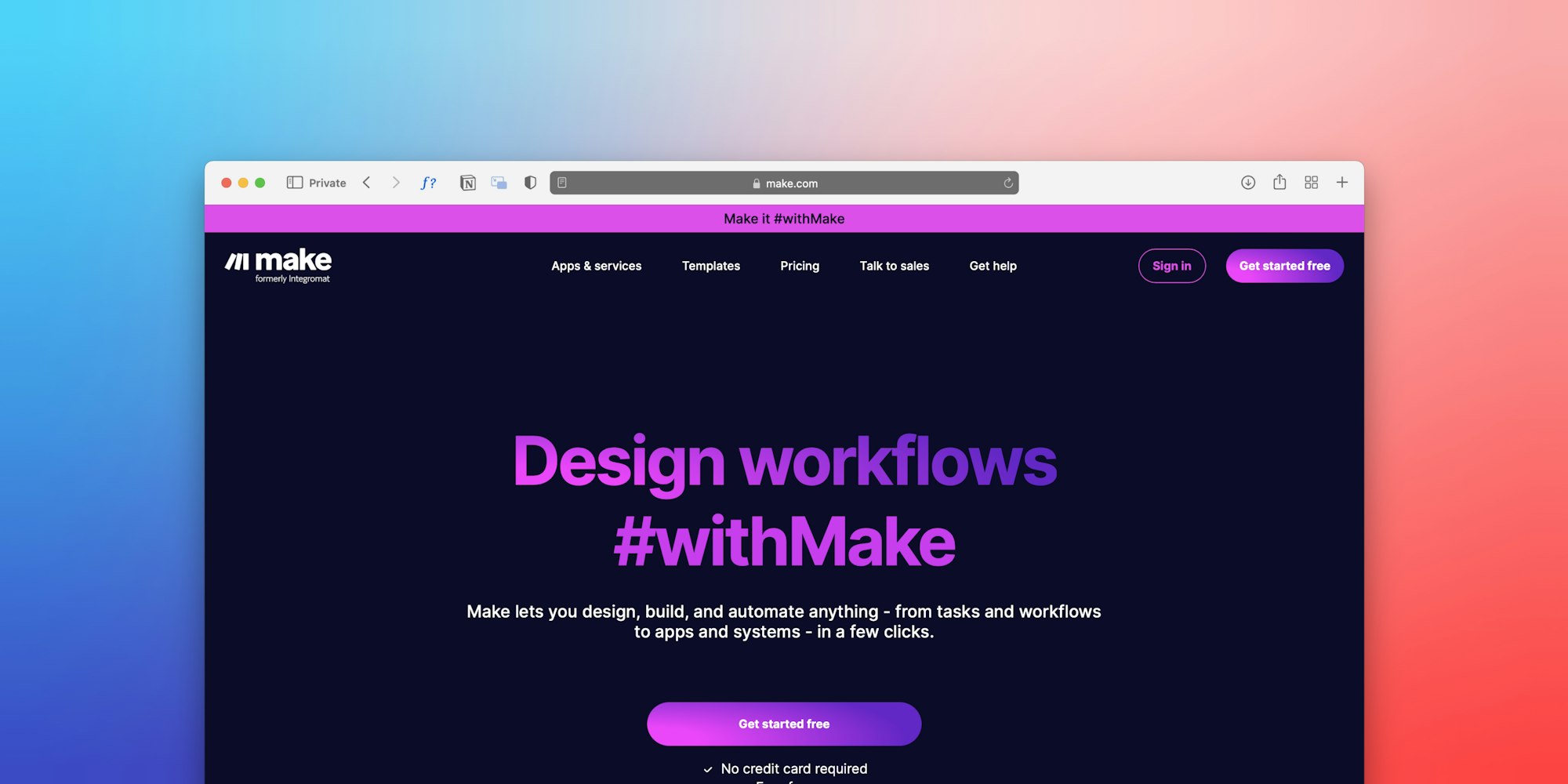
Make is one of the most flexible automation platforms available. It allows advanced multi-step logic, branching conditions, API integrations, and AI-powered decision steps.
Strengths:
- Visual workflow builder
- Strong SaaS ecosystem coverage
- Scales well for mid-sized organizations
- Cost-efficient compared to enterprise automation suites
Limitations:
- Requires structured workflow thinking
- Governance becomes important at scale
Best for growing companies that treat automation as operational infrastructure.
n8n
 n8n
n8n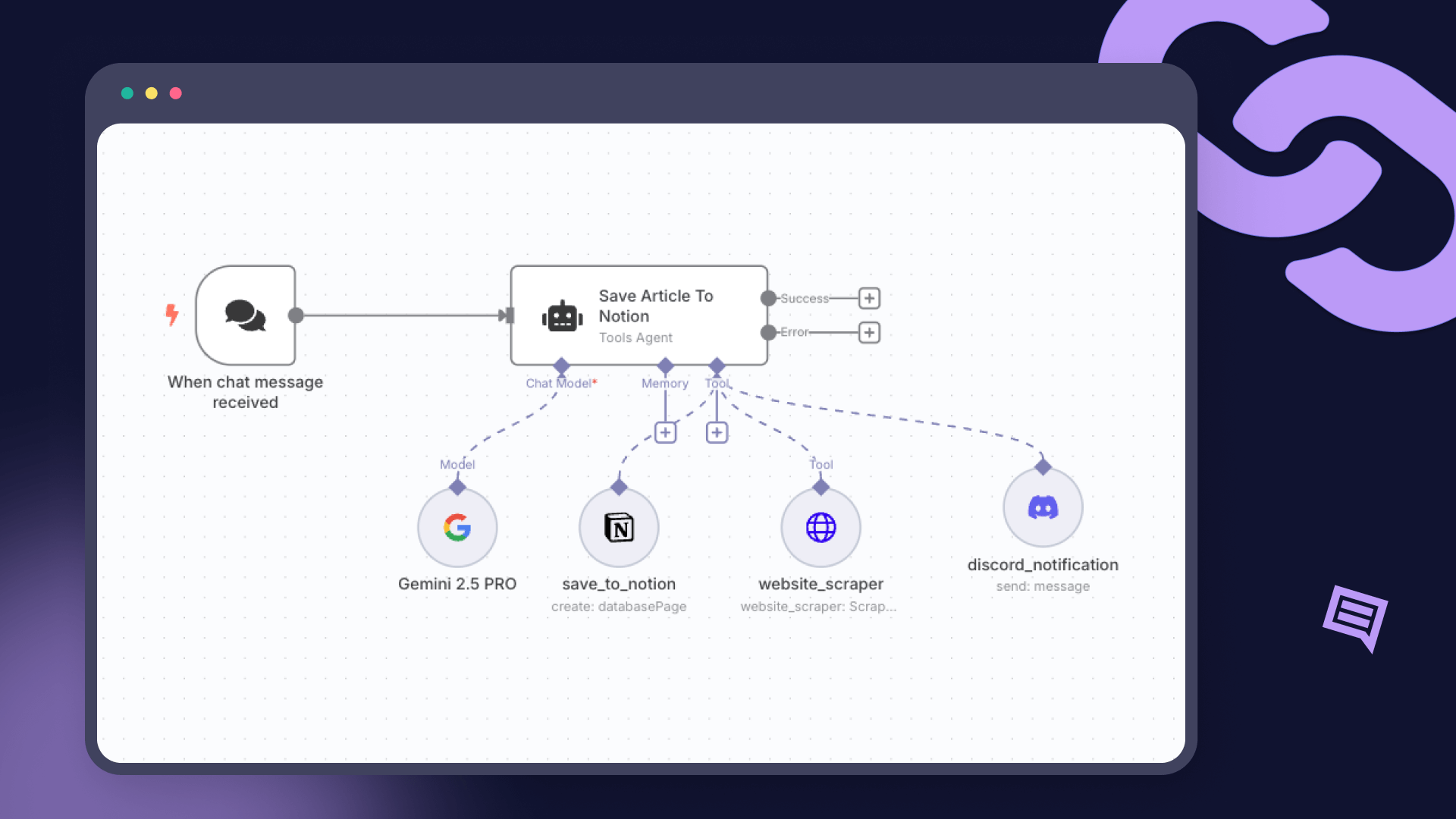
n8n is ideal for companies requiring technical control or self-hosting. It supports deep customization and secure deployment environments.
Strengths:
- Self-hosting capability
- High flexibility
- Developer-friendly architecture
Limitations:
- Requires technical oversight
- Not beginner-oriented
Best for technical teams and security-conscious organizations.
Zapier with AI
Zapier remains the fastest automation tool to deploy. With AI-enhanced steps, it can transform, enrich, and route data easily.
Strengths:
- Extremely user-friendly
- Rapid implementation
- Large integration marketplace
Limitations:
- Less powerful for complex enterprise workflows
- Costs can increase at high volume
Best for small businesses seeking immediate operational wins.
Automation Comparison
| Tool | Ease of Use | Scalability | Customization | Ideal Company Stage |
|---|---|---|---|---|
| Make | Medium | High | High | Growth-stage |
| n8n | Low-Medium | High | Very High | Technical / Enterprise |
| Zapier | High | Medium | Medium | Early-stage |
Among all categories, workflow automation platforms are often the most impactful AI tools for businesses because they eliminate recurring manual effort across departments.
Best AI Tools for HR
Human Resources is increasingly data-driven. As companies scale, recruitment pipelines expand, onboarding becomes more complex, and performance management requires structure. AI in HR is most effective when it reduces repetitive administrative work, improves talent matching, and strengthens workforce planning.
However, HR AI only delivers measurable ROI when processes are clearly defined. Without structured job roles, standardized evaluation criteria, and clean employee data, automation simply accelerates inconsistency.
Below are some of the best AI tools for HR in 2026.
Humanly
Humanly focuses on AI-powered candidate screening and interview automation. It integrates with ATS platforms to classify candidates, schedule interviews, and support structured hiring workflows.
Strengths
- Strong automation for early-stage screening
- Reduces manual review time
- Integrates with major ATS systems
Limitations
- Less relevant without an existing ATS
- Dependent on structured job requirements
Eightfold AI
Eightfold AI is a workforce intelligence platform that uses AI for predictive talent matching, internal mobility, and long-term workforce planning. It is particularly suited for mid-sized and enterprise organizations.
Strengths
- Predictive talent matching
- Supports retention and career pathing
- Integrates with learning and HR systems
Limitations
- Higher implementation complexity
- Requires mature HR data structures
Pymetrics
Pymetrics uses behavioral science and AI-driven assessments to match candidates with roles. It focuses on skills-based matching and reducing unconscious bias.
Strengths
- Data-driven candidate profiling
- Supports diversity initiatives
- Strong behavioral assessment model
Limitations
- Requires candidate participation
- Less effective without clearly defined role frameworks
HiBob
HiBob is a modern HR platform with embedded analytics and automation capabilities. It supports onboarding, engagement tracking, performance management, and workforce insights.
Strengths
- Strong user experience
- Centralized employee data
- Supports automation across HR workflows
Limitations
- AI depth depends on integrations
- Most effective when processes are standardized
HR AI Comparison
| Tool | Core Strength | Scalability | Best Company Stage |
|---|---|---|---|
| Humanly | Screening automation | Medium | Growing teams |
| Eightfold AI | Predictive talent intelligence | High | Mid-market / Enterprise |
| Pymetrics | Behavioral matching | Medium | Structured hiring orgs |
| HiBob | Modern HR workflow automation | High | Scaling companies |
AI in HR should reduce time-to-hire, improve retention metrics, and automate repetitive workflows. It should not replace structured people management.
Best AI Tools for Finance
Finance teams manage forecasting, compliance, reporting, and reconciliation. AI in finance must prioritize accuracy, explainability, and integration with ERP systems.
The best AI tools for finance automate recurring processes, strengthen financial forecasting, and reduce manual reconciliation tasks. As with HR, effectiveness depends on data quality and process maturity.
Below are some of the best AI tools for finance in 2026.
Planful
Planful combines financial planning and analysis with AI-driven forecasting and scenario modeling. It integrates with ERP and CRM systems to centralize data.
Strengths
- Scenario-based forecasting
- ERP integration
- Reduces manual reporting
Limitations
- Requires clean financial data
- Higher complexity for small teams
Vena Solutions
Vena Solutions provides AI-supported financial planning within spreadsheet-style workflows. It helps finance teams automate budgeting, reporting, and consolidations.
Strengths
- Familiar spreadsheet environment
- Strong system integrations
- Automated financial consolidation
Limitations
- Requires structured financial processes
- Training needed for advanced features
BlackLine
BlackLine focuses on financial close and reconciliation automation. AI assists in identifying anomalies, standardizing processes, and improving audit readiness.
Strengths
- Strong reconciliation automation
- Audit-friendly structure
- Reduces month-end close pressure
Limitations
- Narrower scope outside close processes
- Depends on well-defined master data
Finance AI Comparison
| Tool | Core Strength | Integration Depth | Best Company Stage |
|---|---|---|---|
| Planful | Forecasting & scenario AI | High | Mid-market / Enterprise |
| Vena Solutions | Budgeting & consolidation | Medium | Growing finance teams |
| BlackLine | Reconciliation automation | High | Enterprise environments |
Finance AI should improve forecast accuracy, reduce close time, and strengthen compliance workflows. When integrated correctly, it becomes a structural efficiency driver rather than a reporting shortcut.
Best AI Tools for Sales and CRM Optimization
Revenue growth depends on structured sales processes. AI amplifies structure. It does not create it.
HubSpot AI
HubSpot integrates AI across email drafting, pipeline forecasting, content suggestions, and lead scoring.
Best suited for SMBs and scale-ups already operating within HubSpot.
Salesforce Einstein
Salesforce Einstein provides predictive scoring, revenue forecasting, and opportunity intelligence inside Salesforce environments.
Best suited for mid-market and enterprise organizations with mature CRM hygiene.
ChatGPT Enterprise
ChatGPT is widely used for proposal drafting, meeting summaries, objection handling frameworks, and internal sales documentation.
When integrated into CRM workflows, it reduces administrative overhead significantly.
Sales AI Comparison
| Tool | CRM Native | Predictive Depth | Best Company Size |
|---|---|---|---|
| HubSpot AI | Yes | Medium | SMB |
| Salesforce Einstein | Yes | High | Mid-market / Enterprise |
| ChatGPT Enterprise | No | Medium | All sizes (assistive) |
The best AI tools for businesses in sales are those that strengthen forecasting accuracy and enforce pipeline discipline.
Best AI Tools for Marketing and Growth
Marketing AI increases output velocity. Without integration into CRM and analytics systems, output alone does not drive profit.
ChatGPT
 OpenAI
Highly flexible for blog creation, SEO strategy, campaign ideation, ad messaging, and strategic content.
Claude
 Anthropic
Strong for structured long-form content, in-depth analysis, and strategic documentation.
Jasper
Designed specifically for marketing teams that need templated campaign workflows and brand consistency.
Marketing AI Comparison
| Tool | Long-Form Quality | Campaign Workflow | Flexibility | Ideal Use |
|---|---|---|---|---|
| ChatGPT | High | Medium | Very High | Broad marketing use |
| Claude | Very High | Low | High | Strategic content |
| Jasper | Medium | High | Medium | Campaign teams |
The best AI tools for businesses in marketing are those integrated with CRM tracking, conversion metrics, and attribution systems.
Best AI Tools for Customer Support
Customer support AI reduces operational cost only when properly integrated into ticketing and CRM systems.
Intercom AI
Automates ticket classification, response suggestions, and first-line resolution within Intercom environments.
Zendesk AI
Enterprise-grade routing, categorization, and analytics within structured support teams.
Support Comparison
| Tool | Enterprise Fit | Automation Depth | Ideal Team Size |
|---|---|---|---|
| Intercom AI | Medium | Medium | SMB |
| Zendesk AI | High | High | Mid-market / Enterprise |
Support AI becomes powerful when its insights feed back into sales, product, and marketing systems.
Best AI Tools for Internal Productivity
Internal AI reduces administrative friction.
Notion AI
Enhances documentation, summarization, and internal knowledge retrieval.
Microsoft Copilot
Integrated into Microsoft 365 for drafting, analysis, and meeting summaries.
Google Gemini for Workspace
 Google
Optimizes productivity within Google environments.
Internal AI tools are effective only when documentation discipline already exists.
Integration: The Real Competitive Advantage
The best AI tools for businesses are not isolated tools. They are integrated systems.
Example architecture:
Marketing AI generates content. Automation enriches leads. CRM AI scores opportunities. Sales AI summarizes conversations. Support AI feeds product insights back into development.
Every system communicates. Every insight compounds.
This is automation architecture.
Without integration, AI remains tactical. With integration, it becomes infrastructure.
How Scalevise Implements AI Automation and Integration
Selecting the best AI tools for businesses is only the first step. Implementation determines ROI.
At Scalevise, AI adoption follows a structured methodology:
- Workflow Mapping We map existing operational processes across marketing, sales, support, and operations.
- Friction Identification We identify recurring manual bottlenecks, data duplication, and communication gaps.
- Automation Architecture Design We design automation layers using platforms like Make or n8n, ensuring clean integration between systems.
- AI Layer Integration We integrate AI models for scoring, classification, summarization, and predictive analysis.
- KPI Alignment Every automation is tied to measurable metrics such as response time, conversion rate, or operational cost reduction.
- Governance and Security We define ownership, access control, and compliance boundaries to prevent tool sprawl.
The result is not more tools. The result is a coherent system.
AI is not implemented as a feature. It is implemented as infrastructure.
Common AI Adoption Mistakes
Many businesses:
- Adopt tools without integration planning
- Ignore data governance
- Fail to assign internal ownership
- Measure usage instead of ROI
Each AI tool must strengthen architecture, not fragment it.
Frequently Asked Questions
What are the best AI tools for businesses in 2026?
The best AI tools for businesses include Make, n8n, Zapier, HubSpot AI, Salesforce Einstein, ChatGPT Enterprise, Intercom AI, Zendesk AI, Notion AI, Microsoft Copilot, and Google Gemini. The correct choice depends on integration needs and operational maturity.
Which AI tool is best for small businesses?
Small businesses typically benefit from Zapier for automation, HubSpot AI for CRM, and ChatGPT for content and communication acceleration.
What is the best AI tool for automation?
Make and n8n are among the most scalable automation platforms for businesses seeking structured, intelligent workflows.
How do businesses avoid AI tool overload?
By defining measurable KPIs before adoption, assigning clear ownership, and prioritizing integration over feature expansion.
Are AI tools worth the investment?
Yes, when tied directly to automation, integration, and measurable ROI. No, when adopted without architectural planning.
Final Conclusion
There is no universal winner among the best AI tools for businesses in 2026. The true differentiator is integration. Automation without architecture creates operational chaos. Automation designed around integration creates scalable growth, predictable revenue, and sustainable efficiency.
Choose tools deliberately. Integrate intelligently. Scale without fragmentation.