
Claude-Enabled Protein Binder Design Shows Progress, but TREM2 Results Need Context
A one-day TREM2 binder campaign found that autonomous AI agents, including Claude Sonnet 4.6, generated binders at a meaningful hit rate. The evidence signals practical progress in AI-assisted protein design, while leaving major questions about generalization and clinical relevance.
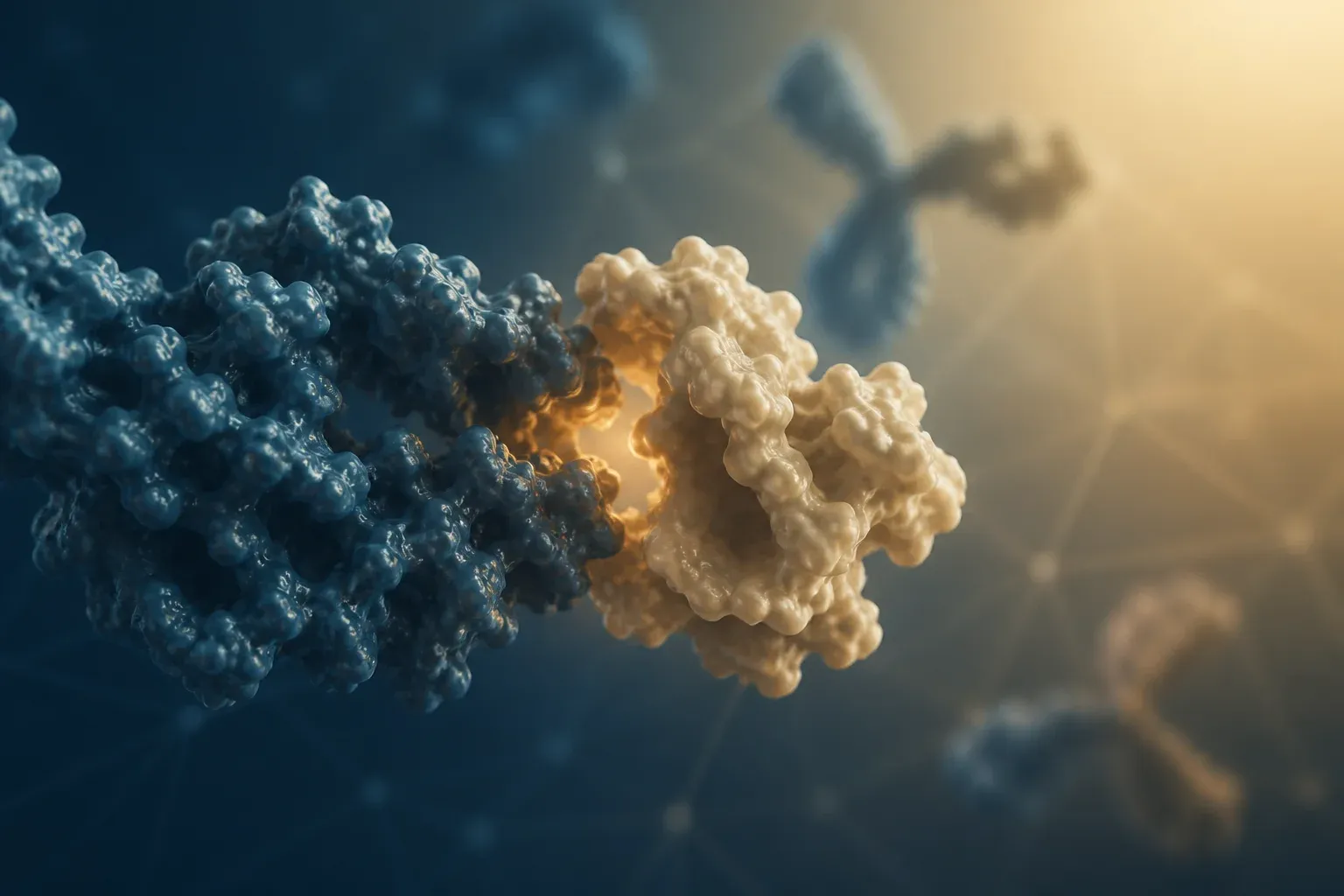
Claude-enabled protein binder design has produced a meaningful experimental signal in a TREM2 campaign, but the result should be read as evidence of progress in AI-assisted biotech tooling rather than proof of faster drug discovery. In a February 2026 one-day hackathon organized by muni, autonomous AI agents including Claude Sonnet 4.6 submitted designs that were subsequently tested in the wet lab by Adaptyv Bio.
The screen evaluated 35 agent-designed binders, of which 12 bound TREM2, for a 34.3% binder hit rate. That outcome is within the upper end of the mid-teens to mid-30s range cited for Claude-enabled design work. Crucially, the reported 34.3% figure applies to the collective agent-designed set, not to Claude Sonnet 4.6 alone. Claude was one of six agents in the campaign. The muni report on the agents-versus-humans TREM2 experiment provides the primary account of the results.
What the TREM2 experiment demonstrates
The most important development is not that an AI system proposed protein sequences. Computational protein design has been an active area for years. The more consequential point is that agent-generated designs were put through a shared wet-lab screen and produced binders at a non-trivial rate within a short campaign.
TREM2 is the target used for this experiment. Across the tested submissions, human participants designed 65 binders, with 25 binding successfully, a 38.5% hit rate. The human group therefore outperformed the collective AI-agent group on this measure, although the gap was relatively narrow in a small, target-specific exercise.
| Measure | Autonomous AI agents | Human designers |
|---|---|---|
| Binders submitted to the wet-lab screen | 35 | 65 |
| Binders that bound TREM2 | 12 | 25 |
| Binder hit rate | 34.3% | 38.5% |
| Reported example of high-affinity performance | 3.64 nM KD for a GPT-5.2 PXDesign binder | 1.11 nM KD for 13_MRAZS_mosaic |
The publicly reported per-design data also show that the campaign generated high-affinity binders. One agent-designed binder associated with GPT-5.2 PXDesign was reported at 3.64 nM KD, while a human-designed binder, 13MRAZSmosaic, was reported at 1.11 nM KD. These examples reinforce that the exercise was not limited to marginal binding events, while also showing that the strongest reported result came from a human submission.
The experiment has three practical implications for biotech teams:
- AI agents can contribute usable experimental candidates, not only summaries or hypothetical design ideas.
- Wet-lab validation remains decisive. Binding results, rather than model-generated confidence alone, are what make the campaign informative.
- Performance assessment must remain model-specific and campaign-specific. The aggregate agent result cannot be treated as a standalone benchmark for Claude or any other individual system.
Why the result matters, and where its limits begin
For AI-assisted molecular design, the strongest takeaway is that language-model-driven agent workflows can participate in a design-to-test loop. Claude-based workflows have also appeared in broader structural-biology and AI-agent work, adding context to the view that general-purpose models can help coordinate computational biology tasks. The TREM2 result adds a concrete wet-lab outcome to that wider direction of travel.
Still, a binder hit rate is only one part of the work required to develop a therapeutic candidate. This campaign involved one target, TREM2, and a one-day design period. It does not establish how the approach will perform across targets with different structural properties or biological constraints. Nor does it answer questions around developability, manufacturability, safety, pharmacokinetics, selectivity, or clinical efficacy.
That distinction matters for drug discovery timelines. AI may reduce the effort needed to produce and prioritize candidate binders, especially when models can help coordinate design tools and interpret outputs. But no result in this experiment supports a claim that clinical development itself becomes rapid, predictable, or low risk. The experimental bottleneck has shifted in part toward deciding which AI-generated candidates deserve follow-up, then validating them through increasingly demanding assays.
Governance also becomes more important as these workflows mature. Organizations using autonomous or semi-autonomous systems for molecular design need clear controls over model access, design provenance, data handling, human review, and laboratory test criteria. A high hit rate can make a workflow more valuable, but it does not remove the need for scientific accountability at every step from target selection through validation.
For biotech leaders, the opportunity is to determine where AI can improve candidate generation without weakening scientific controls, traceability, or decision quality. Scalevise's AI consultancy can help teams assess AI workflows, define governance requirements, and identify practical integration points across research operations. A focused assessment now can clarify where automation supports experimental throughput and where expert review must remain central. Request a consultation to discuss an AI implementation roadmap.
Frequently Asked Questions
What was the AI-agent binder hit rate in the TREM2 experiment?
The agent-designed set produced 12 TREM2 binders from 35 submitted designs, a 34.3% hit rate.
Did Claude Sonnet 4.6 alone achieve a 34.3% binder hit rate?
No individual Claude-only hit rate is reported in the supplied results. Claude Sonnet 4.6 was one of six autonomous AI agents, while 34.3% describes the combined agent-designed set.
How did human designers perform in the same binder screen?
Human participants submitted 65 designs, of which 25 bound TREM2, producing a 38.5% hit rate.
Do these results show that AI can speed up drug discovery?
They show that AI-agent workflows can generate experimentally validated binders for one target in a short campaign. They do not establish performance across targets or demonstrate clinical translation.
Conclusion
The TREM2 campaign provides credible, experimentally grounded evidence that autonomous AI workflows, including one involving Claude Sonnet 4.6, can contribute viable protein binder candidates. Its 34.3% aggregate agent hit rate is a notable tooling milestone, not a complete measure of therapeutic discovery performance. Broader testing across targets and developability criteria will determine how much these workflows can change real-world biotech programs.