
GEO Is Changing Fast: Why AI Search Visibility Now Depends on Selection, Not Rankings
GEO, AEO and ASO define the future of AI search. Learn why selection replaces rankings and how to stay visible in AI results.
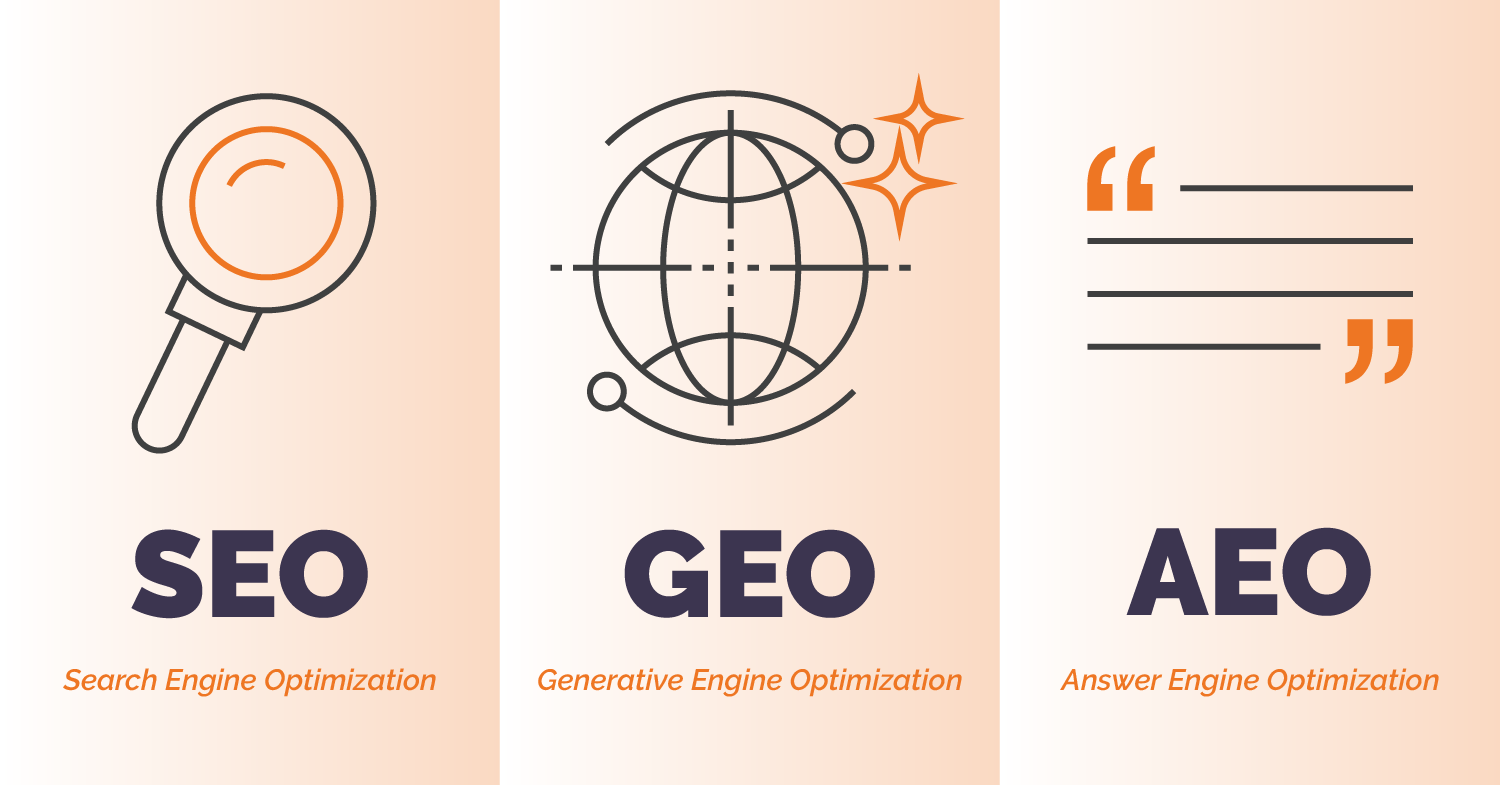
At Scalevise, we have been actively analyzing how platforms like ChatGPT, Perplexity, and Google AI Overviews determine visibility. The conclusion is straightforward. GEO is not wrong, but it is incomplete. The real battle is no longer about being indexed. It is about being selected by AI Chatbots.
From Ranking to Selection
Traditional SEO was predictable. You optimized a page, built authority, and aimed for the top ten results. Visibility was tied to position.
AI search removes that structure. Instead of ten results, AI systems typically reference only a handful of sources. If your brand is not included in that small set, you effectively do not exist in that context.
This shift is already visible in real usage patterns. AI answers are replacing clicks, reducing traffic to websites, and changing how users consume information. A broader overview of this shift can be seen in research published by TechRadar.
The implication is direct. Visibility is no longer about ranking higher. It is about being chosen.
GEO, AEO, and the Rise of ASO
There is increasing confusion around GEO, AEO, and ASO. These are not just different labels. They represent different levels of maturity.
GEO focuses on making pages understandable for AI systems. AEO goes one step further by structuring content so it can be used directly in answers. Both approaches are still largely page-focused.
ASO, or Agentic Search Optimization, introduces a different perspective. It is not about optimizing a page. It is about influencing how an AI system evaluates your entire brand.
| Model | Focus | Limitation | Future relevance |
|---|---|---|---|
| GEO | AI readability of pages | Too page-centric | Medium |
| AEO | Answer-ready content | Still query-driven | Medium |
| ASO | AI-driven brand selection | Requires full strategy | High |
This transition is critical. AI systems do not just look at your website. They interpret your presence across the web.
Authority Is Becoming Concentrated
Another important shift is how visibility is distributed.
AI systems rely heavily on trusted sources. A relatively small group of domains dominates citations. This creates a dynamic where strong entities become even stronger, while weaker or inconsistent brands disappear.
An example of this pattern is discussed here:
https://launchcodex.com/blog/seo-geo-ai/google-march-2026-core-update/
This explains why many technically optimized websites still fail to appear in AI-generated answers. They may perform well in SEO, but they lack broader authority signals.
In practice, this means that backlinks alone are no longer enough. Mentions, consistency, and recognition across multiple platforms now play a much larger role.
Why Measurement Is No Longer Straightforward
One of the biggest misconceptions in GEO is the idea that visibility can be measured with a single score.
AI systems are not deterministic. The same query can produce different results depending on context, timing, or model behavior. Research from arXiv confirms that AI visibility varies significantly across prompts and conditions.
This introduces a fundamental challenge. A single scan does not reflect reality. Visibility must be understood as a distribution rather than a fixed value.
Most tools are not built for this yet. They still treat AI visibility as a static metric, which leads to misleading conclusions.
The End of Click-Based Thinking
For years, SEO success was measured in traffic. More rankings meant more clicks. That relationship is now breaking down.
AI search introduces a model where users often receive answers without leaving the interface. This reduces the number of clicks, even when your content is being used.
Visibility is shifting from traffic to influence. Being cited in an AI answer may have more impact than ranking first in traditional search.
This is where most companies misinterpret performance. They see traffic decline and assume failure, while in reality their content may still be shaping decisions.
What Needs to Change
The core issue is not technical. It is strategic.
Companies that continue to optimize only for pages will struggle. AI systems evaluate broader signals, including how consistently a brand appears, how often it is referenced, and how trustworthy it seems across different sources.
At Scalevise, we approach this differently. Instead of focusing purely on SEO metrics, we analyze how AI systems interpret your entire digital footprint. The goal is not just visibility, but selection.
Where to Start
Before investing in complex strategies, you need clarity on your current position.
Are you being selected by AI systems, or ignored? This is exactly what our tool is designed to answer.
Try the AI Visibility GEO Checker here:
https://scalevise.com/ai-visibility-geo-checker
It gives you a direct view of how your website performs in AI-driven environments and where you are losing visibility.
Final Thought
The biggest change in AI search is not a new technique or ranking factor.
It is a shift in logic. Search engines used to organize information. AI systems now decide what matters.
If your strategy is still focused on rankings, you are solving yesterday’s problem.
The real question is no longer where you rank. It is whether you are selected at all.