
Google Ads AI Max Migration: Broad Match and ACA Move Before DSAs
Google Ads has begun moving legacy Search campaign features into AI Max. Broad match and automatically created assets moved first, while Dynamic Search Ads now have a February 2027 migration date.
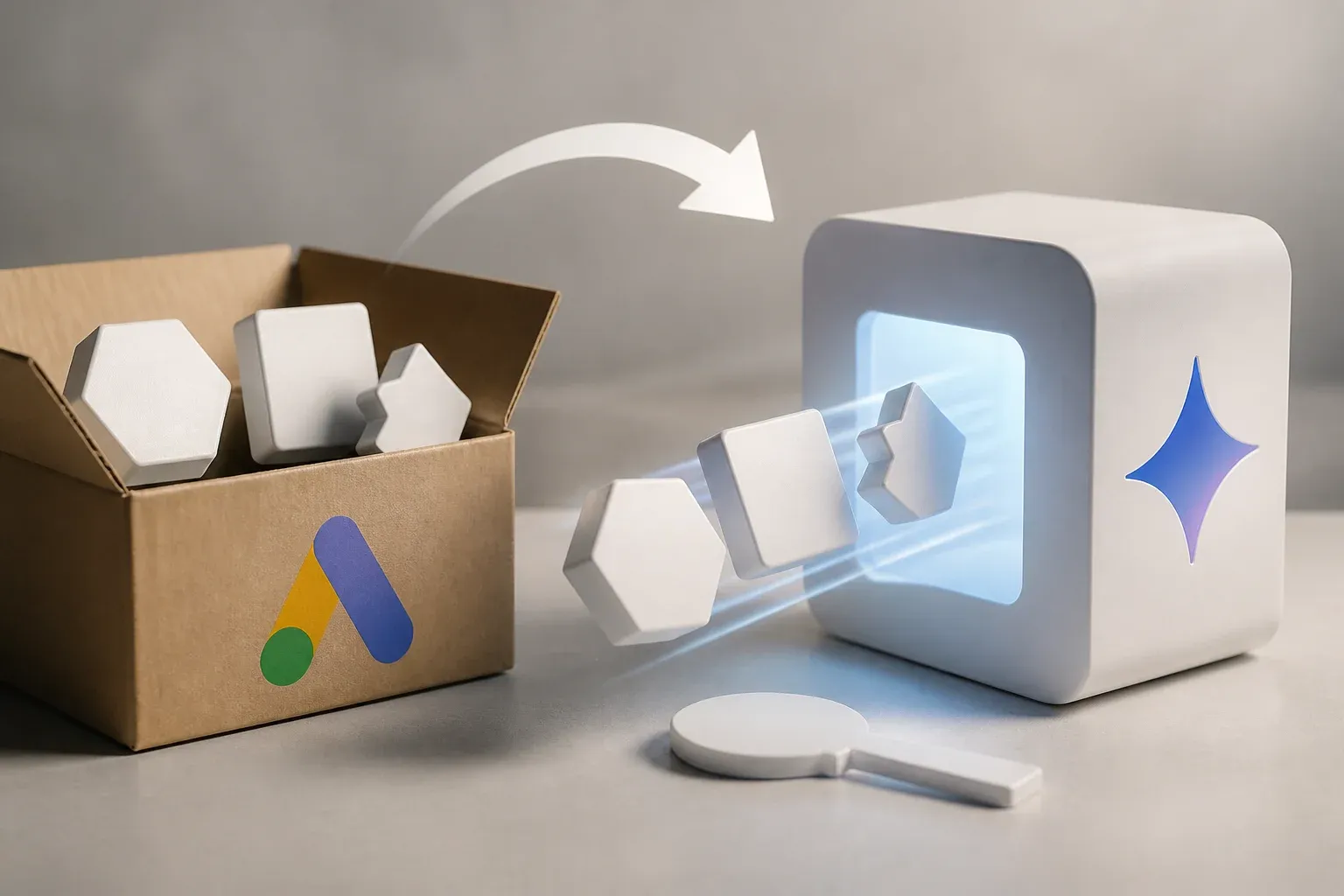
Google Ads is moving several legacy Search campaign features into AI Max for Search campaigns, but the migration is no longer following one uniform timetable. Campaign-level broad match and automatically created assets have moved through the September 2026 upgrade process, while Dynamic Search Ads (DSAs) are now scheduled for automatic migration in February 2027. For advertisers, the immediate task is to identify which campaigns have already changed and which DSA campaigns still need a separate plan.
Google described the change as an upgrade path from three legacy features into AI Max: campaign-level broad match, automatically created assets (ACA), and DSAs. The company began with voluntary upgrades in 2026, encouraging advertisers to become familiar with AI Max controls before automatic upgrades began. In Google's official announcement on the DSA upgrade to AI Max, the company later updated the DSA timetable, pushing automatic DSA migration to February 2027.
The staggered schedule matters because a campaign using broad match or automatically created assets may already be operating under AI Max, while a DSA campaign may remain on its existing setup for several more months. Treating all three changes as a single completed migration could leave reporting, testing, and campaign review out of step with the actual rollout.
What is changing in the AI Max migration
AI Max is Google's newer framework for Search campaigns. Google documentation describes capabilities including search term matching, asset optimization, text customization, Final URL expansion, reporting, and controls. The migration replaces specific legacy feature configurations with this broader AI Max approach.
The rollout has two distinct stages. Voluntary upgrades gave advertisers an opportunity to switch and learn the available controls. Automatic upgrades then applied to remaining eligible campaigns using the affected legacy features. The DSA schedule is the key exception following Google's June 2026 update.
| Legacy Search feature | Migration timing | Current planning implication |
|---|---|---|
| Campaign-level broad match | Automatic upgrades moved forward in September 2026. | Review affected campaigns as AI Max campaigns. |
| Automatically created assets | Automatic upgrades moved forward in September 2026. | Review asset-related settings and resulting campaign behavior in AI Max. |
| Dynamic Search Ads | Automatic migration is delayed until February 2027. | Use the extra time to plan a separate DSA transition and evaluation. |
Google's June update also restored the ability to create new DSAs during the delay. That does not remove the planned migration. It gives advertisers additional flexibility before the February 2027 automatic upgrade date.
Why performance and spend need closer attention
The verified materials do not provide universal performance or cost results for campaigns that migrate to AI Max. Advertisers should therefore avoid assuming that the transition will automatically improve results or that existing spend patterns will remain unchanged.
AI Max can affect how a campaign matches to searches, adapts text, and selects landing pages through Final URL expansion. Those functions can change the traffic a campaign receives and how users reach a site. The practical impact will depend on the campaign's existing setup, assets, website content, conversion measurement, budget, and search demand.
For businesses managing paid search budgets closely, the relevant question is not whether AI Max is inherently better. It is whether campaign outcomes continue to align with commercial goals after the migration. That requires a deliberate before-and-after review rather than a passive acceptance of the upgrade.
How advertisers can prepare
A useful preparation process starts with separating the affected campaign types. Do not assume that a DSA campaign has already migrated simply because broad match or ACA changes were completed elsewhere in the account.
Advertisers can take these practical steps:
- Inventory affected campaigns and label campaigns using campaign-level broad match, ACA, or DSAs.
- Record a performance baseline for the period before a change, using the business's own key measures such as spend, conversions, conversion value, and search terms where available.
- Review AI Max controls during voluntary upgrades, particularly text customization, asset optimization, and Final URL expansion.
- Check website landing pages and conversion measurement before allowing expanded URL selection to influence where ad traffic lands.
- Build a separate DSA plan for the February 2027 migration rather than treating the DSA delay as a permanent exception.
Use the delay to make comparisons clearer
The DSA delay creates a temporary period in which some legacy DSA campaigns can remain distinct from AI Max campaigns. That can be useful for operational planning, provided advertisers document their campaign structure and do not confuse timing differences with performance evidence.
A clean baseline is especially important when multiple account changes happen at once. If bids, budgets, landing pages, tracking, and AI Max settings all change together, it becomes harder to understand what influenced results. Where possible, make the transition review focused enough to identify meaningful changes in campaign behavior.
Google's migration is not a reason to abandon human oversight. It is a reason to make campaign settings, site content, and measurement more intentional. AI-driven matching and asset decisions still need to support the pages, offers, and conversions that matter to the business.
For companies that need to assess AI Max without losing control of paid-search measurement, Scalevise can help turn campaign changes into a practical implementation plan, from identifying affected workflows to evaluating tracking and website readiness. A practical AI advertising implementation plan can reduce uncertainty around new controls and keep decisions tied to measurable business outcomes. Request an AI consultancy.
Frequently Asked Questions
Which Google Ads features are migrating to AI Max?
Google has identified campaign-level broad match, automatically created assets, and Dynamic Search Ads as legacy Search features moving to AI Max.
When will Dynamic Search Ads automatically migrate to AI Max?
Google's updated timetable schedules automatic DSA migration to AI Max for February 2027.
Can advertisers still create new Dynamic Search Ads?
Yes. Google's June 2026 update restored the ability to create new DSAs during the delay before automatic migration.
What should advertisers review after broad match or ACA move to AI Max?
Advertisers should review AI Max settings, including text customization, asset optimization, and Final URL expansion, then compare campaign results with a documented baseline.
Conclusion
Google Ads' AI Max migration is a confirmed shift away from separate legacy Search features, but its timing differs by feature. Broad match and automatically created assets moved first, while DSAs have until February 2027 before automatic migration. Advertisers that separate these timelines, document performance, and review AI Max controls will be better positioned to manage the transition on their own terms.