
Google AI Overviews Can Expand in Search: What the SERP Change Means for SEO
Google has confirmed that AI Overviews can automatically expand into detailed responses for some searches, changing where traditional results appear on the page.
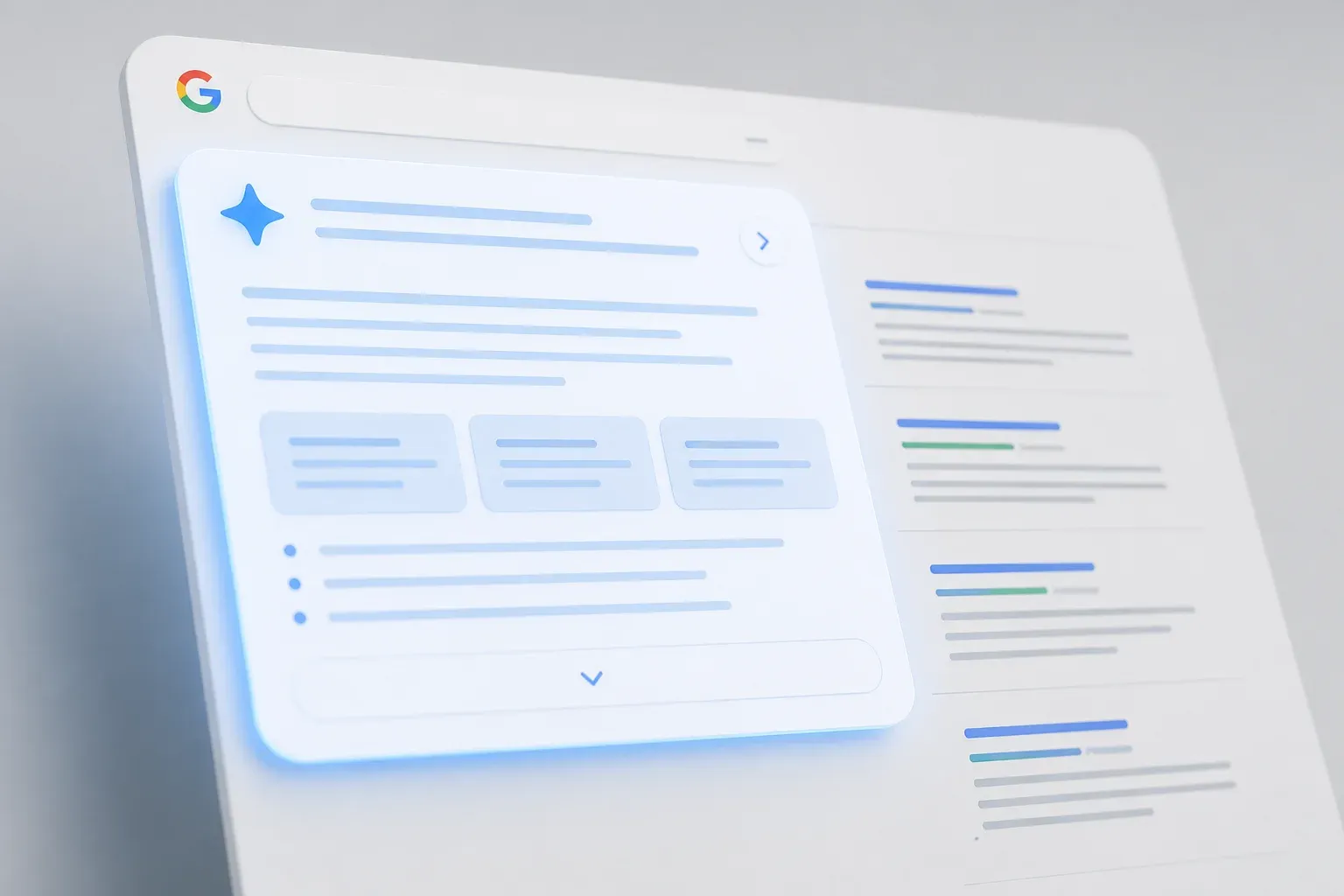
Google has confirmed a new AI Overviews behavior that can materially change the shape of a search results page. For some queries, the previously collapsed overview can automatically open into a longer response, placing traditional blue-link results further down the screen. For website owners, the change reinforces a growing reality in Google Search: visibility is no longer limited to ranking among the first organic results.
Search Engine Land's report on Google's dynamic AI Overview expansion says the company confirmed the behavior on August 28, 2026. Google described the expansion as applying where its systems determine that a longer answer is most useful to people. The feature does not simply add another result type. It can change how much information a searcher sees before they reach the conventional results that have historically driven much of organic search traffic.
What Google changed in AI Overviews
An AI Overview normally begins as a more compact response at the top of eligible results pages, with a control that lets a person reveal more. Under the newly confirmed behavior, Google may expand that response automatically into a full, detailed answer that resembles the presentation of AI Mode. The traditional Show More control is removed in these cases.
Google also said the automatic expansion can be cancelled if the person has already started scrolling toward content below the overview. That detail suggests the system is intended to balance a more complete answer with a user's demonstrated intention to reach standard search results. Google has not said which query categories will receive the expanded treatment, how often it will occur, or which ranking signals determine when a longer answer is considered useful.
| AI Overview presentation | Earlier collapsed experience | Dynamically expanded experience |
|---|---|---|
| Initial answer length | Compact overview | Full, detailed response for some queries |
| User control | Traditional Show More control | Show More is removed when the overview expands automatically |
| Position of blue-link results | Below the compact overview | Potentially further down the page |
| Scrolling behavior | Not specified in the reported change | Expansion can be cancelled when a user has begun scrolling below the overview |
This update fits Google's broader work on AI Overviews and AI Mode. Previous updates have included Gemini-based improvements to AI Overviews and conversational follow-on capabilities. The dynamic expansion is distinct because it is a visible interface change with a direct effect on the amount of screen space devoted to Google's generated response.
Why the layout change matters for organic visibility
A larger overview can alter the path a searcher takes through a results page. When the answer addresses the searcher's immediate question, some users may have less reason to scroll to a publisher or business website. Conversely, a detailed overview may surface citations or sources that introduce searchers to sites they did not already know.
It would be premature to assign a specific click-through-rate effect. Google has not provided traffic or CTR data for the dynamic expansion, and the outcome will depend on the query, the usefulness of the generated answer, the cited sources, and the searcher's purpose. A person researching options, comparing providers, or looking for a local service may still need information that goes beyond a summary.
The practical implication is that a high conventional ranking remains valuable, but it may not guarantee the same prominence on every eligible results page. Teams that only monitor keyword positions could miss an important shift in how their pages are displayed, cited, or displaced in the search journey.
Content strategy should focus on usefulness, not formulaic AI optimization
Google has not published a separate optimization checklist for this expansion. Businesses should therefore avoid treating it as a reason to chase a new technical shortcut. The more durable response is to make pages capable of answering the underlying question clearly and credibly, while offering depth that a short summary cannot fully replace.
Useful priorities include:
- Match content to the real question rather than relying on broad, loosely related keyword coverage.
- Answer important questions directly near the relevant section, then add supporting explanation, examples, or decision-making context.
- Keep essential business information clear, including offerings, location or service area when relevant, and contact paths.
- Review search-result layouts for priority queries to see whether AI Overviews appear and how far organic results move.
- Measure organic performance over time instead of assuming a ranking change alone explains traffic movement.
For businesses that depend on search discovery, this is also a reminder to distinguish between visibility and visits. Appearing prominently in a results page ecosystem can build awareness, but website traffic is still needed for actions such as enquiries, purchases, bookings, and deeper evaluation. Pages should give visitors a clear reason to continue after they arrive.
Google's expansion is selective, not a stated replacement for organic results. Blue links remain part of the results page, and Google says the experience expands only where its systems judge the longer response useful. Still, the update makes SERP monitoring more important for queries that produce informational answers before a searcher reaches a website.
If AI-generated answers are taking more space on searches that matter to your company, Scalevise can help you identify where your brand appears, where competitors are cited, and which topics create the greatest visibility gap. A practical review can connect changing search layouts to content priorities instead of relying on rank tracking alone. Discuss an AI visibility strategy with Scalevise.
Frequently Asked Questions
What is Google's dynamically expanded AI Overview?
It is an AI Overview that can automatically open from a compact response into a longer, detailed answer for some queries. Google says the behavior is used when its systems determine the longer answer is most useful to people.
Does the expanded AI Overview replace normal Google search results?
No. Traditional blue-link results remain on the page, but a longer AI Overview can push them further down the screen.
Will expanded AI Overviews reduce organic click-through rates?
Google has not provided CTR data for this behavior. Click-through effects will depend on the query, the generated answer, the cited sources, and what the searcher needs next.
Can users stop an AI Overview from expanding?
Google said the automatic expansion can be cancelled if a user has already begun scrolling toward content below the overview.
What should website owners do about this Google Search change?
Monitor priority queries for AI Overview layouts, measure traffic and visibility over time, and publish clear, useful content that addresses the underlying questions customers ask.
Conclusion
Google's dynamically expanded AI Overviews make generated answers a more prominent part of some search results pages. The confirmed change does not eliminate organic listings, but it can move them lower and change how people encounter websites. Businesses should watch the queries that matter most, assess visibility beyond rankings, and continue investing in content that provides clear answers and meaningful reasons for visitors to engage.