
Google Gemini Skills Add Reusable, Stackable Instructions for More Automated Work
Google is expanding Gemini Skills into reusable instructions that can be built from chats, automatically applied when relevant, and combined for more complex work.
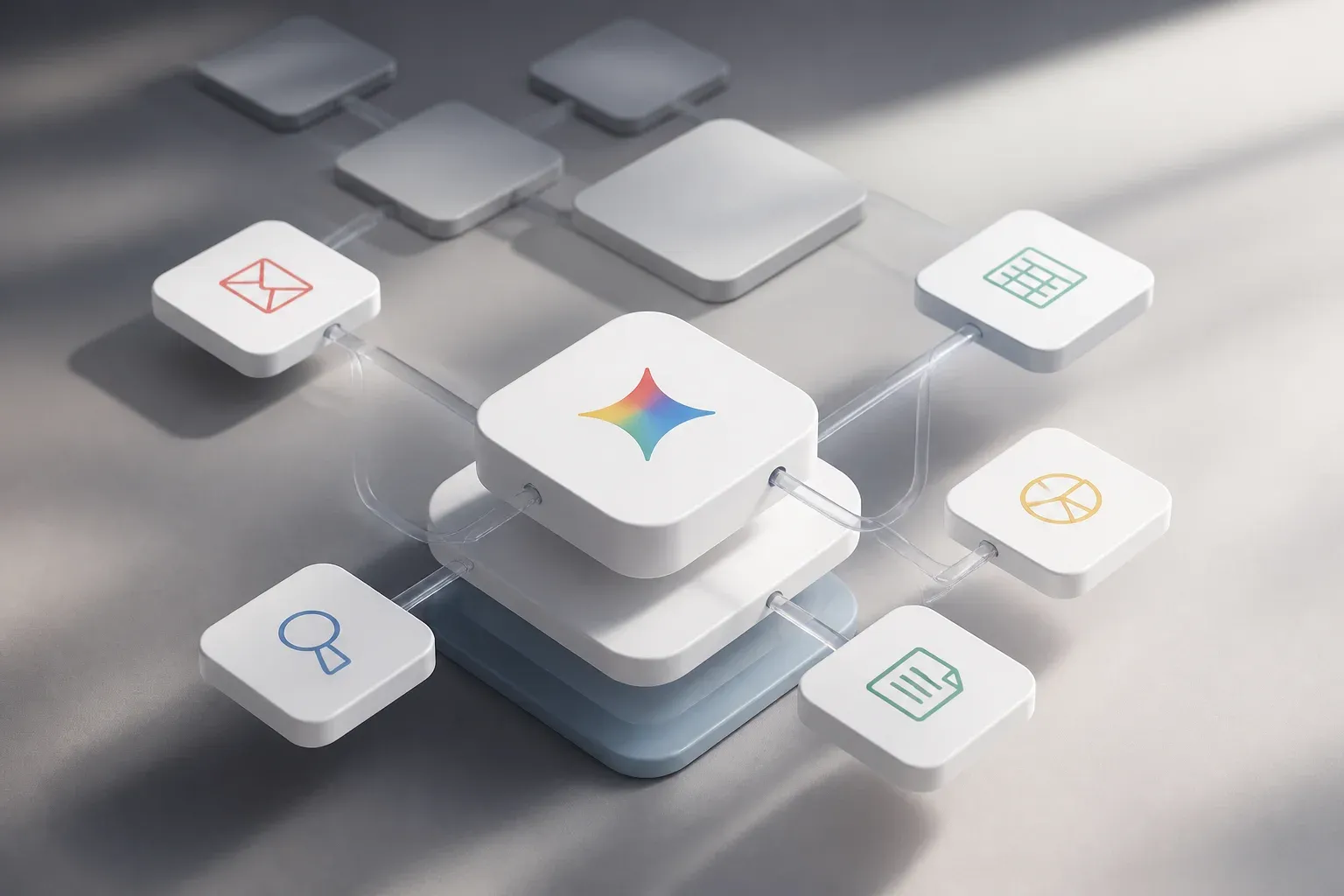
Google is formalizing Gemini Skills as reusable, customizable instructions that can turn successful chat workflows into repeatable tools. Users can create a Skill from a chat or task, Gemini can automatically apply a saved Skill when it matches a new prompt, and multiple Skills can be combined in one conversation. The change moves Gemini closer to a practical assistant that can retain and reuse working methods rather than requiring users to restate them each time.
The most important shift is not simply saved prompts. Gemini Skills are intended to be proactive and stackable. A user who has created a preferred writing style, for example, can potentially pair it with another saved instruction for a particular format or task. That makes the feature relevant to recurring work such as drafting customer communications, creating consistent marketing materials, or preparing structured internal updates.
Google documents the core workflow in its official Gemini Apps guidance for creating and managing Skills. The documentation describes creating Skills from chats, managing saved Skills, automatic use when a Skill is relevant, and combining Skills for larger tasks.
How Gemini Skills changes repeatable AI work
A useful Skill captures instructions that would otherwise be repeatedly pasted into a prompt. This could include a preferred tone, a recurring output structure, or task-specific guidance. Gemini then has a mechanism to recognize when a saved Skill aligns with a new request, rather than making the user manually select it every time.
That distinction matters for teams that already use AI informally. Many useful workflows begin as a one-off conversation: an owner refines a customer email, a marketer develops a repeatable content brief, or a manager settles on a useful reporting format. Skills provide a way to preserve those instructions as a reusable asset inside Gemini.
The documented capabilities include:
- Creating a Skill from a chat or task to retain instructions that worked.
- Automatic application of relevant Skills when Gemini determines they align with a prompt.
- Stacking multiple Skills in the same chat for tasks that need more than one set of instructions.
- Managing saved Skills as a reusable library of workflows.
- Using Skills across additional Google surfaces, including Chrome's Skills Library for saving and reusing prompts across signed-in devices.
Stacking is particularly important because real work rarely fits one instruction set. A user may need a personal writing style, a standard document structure, and guidance for a specific type of audience in the same task. Google describes Skills as combinable for these larger tasks, though the supplied materials do not specify how Gemini resolves conflicts between overlapping instructions. Users should therefore test combinations before relying on them for high-stakes or customer-facing output.
| Area | Earlier Gems system | Gemini Skills |
|---|---|---|
| Google's planned direction | Existing user workstreams in Gems | Successor system for reusable instructions |
| Migration plan | Gems are scheduled to transition starting in November 2026 | Gemini will recreate existing Gems as Skills |
| Combining instructions | Not described in the supplied migration materials | Multiple Skills can be stacked in one chat |
| Automatic use | Not described in the supplied migration materials | Gemini can apply a saved Skill when relevant to a prompt |
Google's migration planning makes clear that Skills are not a separate side experiment. Starting in November 2026, Gems will transition to Skills in Gemini Apps, with Gemini recreating existing Gems as Skills to preserve user workstreams. For existing Gems users, that is a meaningful continuity commitment. For new users, it signals that Skills are the model Google intends to build on.
What businesses can do with Skills now
The practical value is in reducing setup work for repeatable AI tasks. Instead of rebuilding a prompt from scratch, a team can save a proven set of instructions and reuse it as the starting point for related requests. This can make output more consistent, provided people still review the result for accuracy, appropriateness, and completeness.
Examples supported by the feature's reusable-instruction model include a writing-style Skill paired with a task-specific Skill, or a recurring format Skill used for similar drafts. The feature does not remove the need for clear inputs. A Skill can preserve a process, but it cannot make incomplete source information reliable or guarantee that generated content is correct.
Skills also broaden Gemini's role across Google's products. In Chrome, the Skills Library supports saving and reusing prompts across signed-in devices. Google is also extending Skills into Workspace contexts as part of broader integration work. This gives users a path toward more portable, repeatable prompt-based work, rather than treating every AI conversation as isolated.
Availability remains an important constraint. Skills are currently available to individuals with personal Google Accounts, while access for work and school accounts is described as coming soon. Workspace and enterprise controls are evolving over time. Companies considering broader use should confirm the availability and controls that apply to their own Google account type before designing a shared process around the feature.
Pricing also requires care. The supplied materials indicate that some proactive and automation-related capabilities, including scheduled actions and advanced agent capabilities, require higher-tier Google AI Pro or Google AI Ultra subscriptions, or specific Workspace plans. Google has not provided a single pricing rule in the supplied research that applies to every Skills use case. Users should therefore distinguish the core Skills workflow from adjacent proactive capabilities and verify plan requirements for the features they intend to use.
For businesses, the implementation question is straightforward: identify tasks where a stable set of instructions repeatedly produces useful drafts or structured outputs. Start with a narrow workflow, document what the Skill should and should not do, and keep human review in the process. That approach can reveal whether reusable instructions save real time before the team attempts more complex combinations.
Reusable AI instructions are most valuable when they fit into a real process rather than becoming another disconnected prompt library. Scalevise can help identify repeatable work, define review steps, and connect AI workflows to the tools your team already uses. Our AI workflow automation service focuses on reducing manual work while keeping implementation practical and measurable. Discuss an AI automation project with Scalevise.
Frequently Asked Questions
What are Google Gemini Skills?
Google Gemini Skills are reusable, customizable instructions that users can create from chats or tasks and save for later use in Gemini.
Can Gemini automatically use a saved Skill?
Yes. Google's Gemini Apps guidance states that Gemini can automatically apply a saved Skill when it is relevant to a user's prompt.
Can users combine multiple Gemini Skills?
Yes. Google describes Skills as stackable, allowing users to combine multiple Skills within the same chat for more complex tasks.
What will happen to Gemini Gems?
Google plans to transition Gems to Skills starting in November 2026. Gemini will recreate existing Gems as Skills to preserve user workstreams.
Do all Gemini plans include proactive automation features?
Not necessarily. The supplied materials indicate that some proactive or automation features, such as scheduled actions and advanced agent capabilities, require Google AI Pro, Google AI Ultra, or specific Workspace plans.
Conclusion
Gemini Skills give Google a clearer framework for turning repeatable prompting into reusable AI workflows. Automatic application and skill stacking could make Gemini more useful for recurring work, while the planned Gems migration provides continuity for existing users. Availability, plan requirements, and evolving Workspace controls mean businesses should validate the features available to their accounts, then begin with a focused workflow where reusable instructions can deliver consistent value.