
Google Expands Gemini Spark as a Persistent AI Agent Across Its Product Ecosystem
Gemini Spark is Google's early-stage persistent AI agent, designed to work across Gemini and Google services with user oversight for major actions.
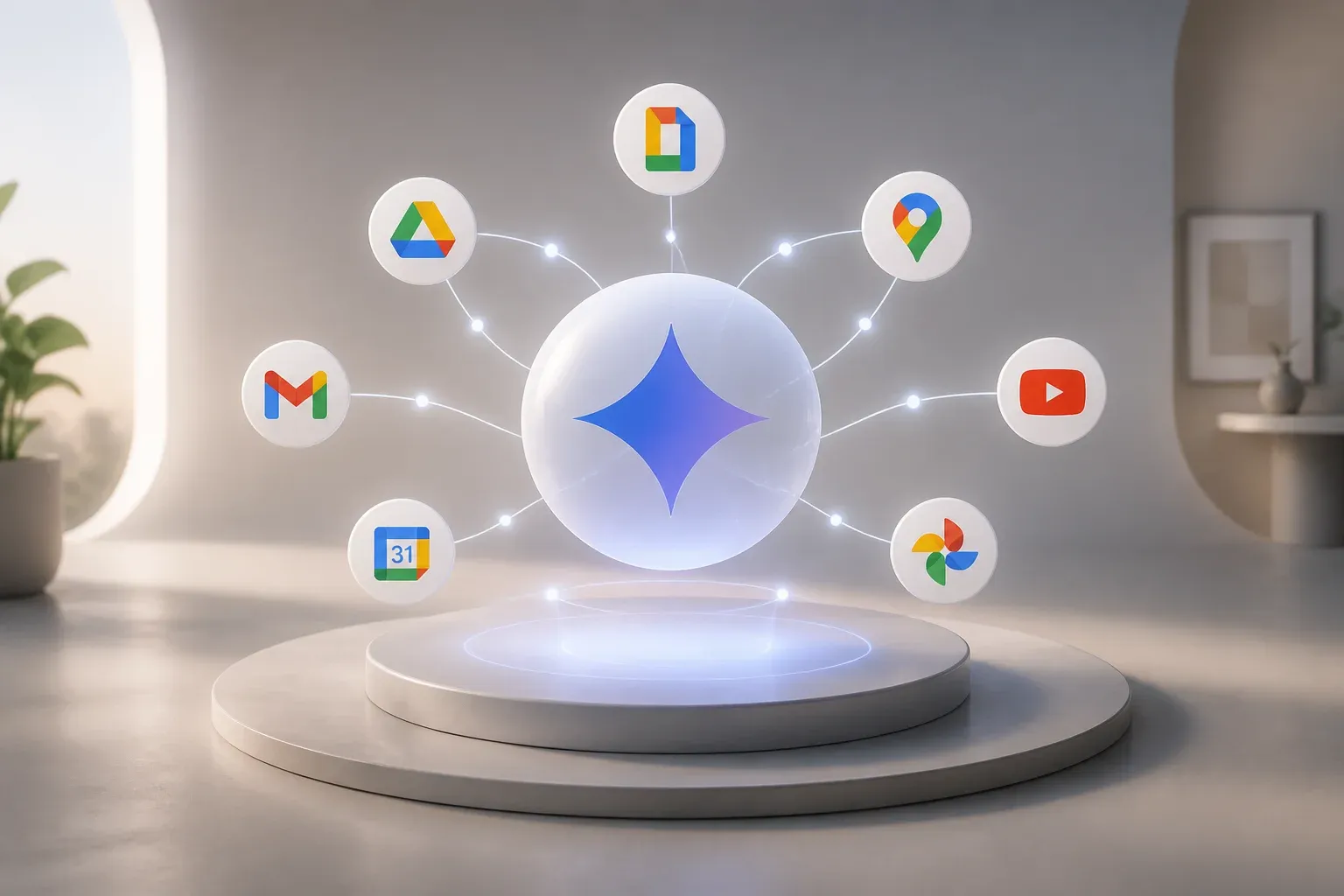
Google is moving Gemini beyond prompt-and-response interactions with Gemini Spark, a persistent personal AI agent intended to run in the background and carry out user-directed work across its product ecosystem. Announced as part of the company's I/O 2026 push into what it calls the "agentic Gemini era," Spark is tied to the Gemini app and Antigravity agent platform, with integrations planned or described across services including Gmail, Drive, Docs, Calendar, YouTube and Flow.
The important distinction is persistence. Rather than requiring users to open a new chat for every task, Spark is designed as a 24/7 assistant that can be activated to work over time. Google says users retain oversight for major actions, an essential boundary for an agent expected to operate across personal information, communications and productivity tools. The company characterizes Spark as very early in its development, with access initially limited to trusted testers and a US beta planned for Google AI Ultra subscribers.
Google's official I/O 2026 announcement positions Spark as a central layer in a broader product strategy, rather than a standalone experimental feature. That makes its rollout consequential: Google is seeking to connect agent capabilities to the services where many people already manage work, documents, schedules and media.
What Gemini Spark changes
A background agent across Google surfaces
Spark is designed to act on directions across Google products while running in the background. Google describes the agent as operating through Antigravity and Gemini 3.5, connecting the assistant model and agent platform to multiple consumer and productivity surfaces.
The announced experience spans several related workflows:
- Daily Brief is intended to provide a personalized overnight briefing.
- Gmail Live, planned for this summer, is designed for conversational email tasks.
- Google Pics, Docs Live and Keep brain-dump workflows are part of the wider set of Gemini-connected experiences.
- Spark's stated product scope includes the Gemini app, Search, Gmail, YouTube, Flow and Workspace.
These are not interchangeable features. Daily Brief is a proactive information format, while Gmail Live and Docs Live point toward more conversational, task-oriented work inside individual applications. Spark is the persistent agent concept intended to connect this activity across surfaces.
For users, the potential benefit is continuity. A request that involves email, calendar context and documents could be handled as an ongoing task rather than fragmented into separate interactions. For Google, the design gives Gemini a role inside the workflows that produce and store the context an agent needs to be useful.
Access, pricing and the early rollout
Google has not presented Spark as generally available to every Gemini user. Its immediate plan is a rollout to trusted testers, followed by a beta for Google AI Ultra subscribers in the United States. The company also announced an AI Ultra plan priced at around $100 per month during the initial expansion phase.
Google says AI Ultra will include Spark access, higher usage quotas and expanded storage compared with Pro. The research supplied does not specify a broader Spark release date, a final price outside that initial phase, or a complete country-by-country availability schedule. Readers should therefore treat the US Ultra beta as the confirmed access point, not as a universal launch.
| Access area | Google AI Pro | Google AI Ultra |
|---|---|---|
| Gemini Spark beta | Not stated in the supplied rollout plan | Planned for subscribers in the United States |
| Usage quotas | Baseline for Google's comparison | Higher quotas, according to Google |
| Storage | Baseline for Google's comparison | Expanded storage, according to Google |
| Price disclosed in supplied research | Not specified | About $100 per month during initial expansion |
The premium positioning is notable because autonomous, background work is likely to consume more model capacity than a conventional chat exchange. Google has linked the highest tier to additional quotas and storage, but it has not supplied detailed task limits in the material available here.
Enterprise implications depend on controls
Spark's planned integration with Workspace makes the initiative relevant to organizations, not only individual subscribers. An agent that can draw on Gmail, Drive, Docs and Calendar could potentially reduce the friction of routine coordination, document preparation and information retrieval. However, those benefits depend on how access permissions, review steps and data controls work in real deployments.
Google's statement that users oversee major actions is a meaningful design principle, but it is not a full account of enterprise governance. The announced material does not establish how Spark will be administered in Workspace organizations, which controls will be available to administrators, or how broadly the agent will be offered to business customers. Those details will determine whether the product is practical for sensitive and regulated workflows.
Organizations evaluating agentic tools should separate the appeal of cross-application automation from the operational questions it creates: which data an agent may access, which actions require approval, and how teams monitor its work. Scalevise can help organizations assess AI architecture, workflow automation and integration requirements before connecting agent capabilities to production systems.
Frequently Asked Questions
What is Google Gemini Spark?
Gemini Spark is Google's persistent personal AI agent concept. It is designed to run in the background, act on user directions across Google services and keep users involved in major actions.
When will Gemini Spark be available?
Google says Spark is rolling out to trusted testers. A beta is planned for Google AI Ultra subscribers in the United States, but the supplied information does not provide a broader release date.
How much will access to Gemini Spark cost?
Google announced an AI Ultra plan at around $100 per month during the initial expansion phase. Spark access is associated with that tier, alongside higher usage quotas and expanded storage compared with Pro.
Which Google products will Gemini Spark work with?
Google has described Spark across the Gemini app, Search, Gmail, YouTube, Flow and Workspace, with related workflows involving services such as Drive, Docs, Calendar and Keep.
Will Gemini Spark act without user approval?
Google describes Spark as operating with user oversight for major actions. The supplied material does not provide a complete technical breakdown of approval controls or enterprise administration settings.
Conclusion
Gemini Spark is Google's clearest move toward a persistent, cross-product AI agent rather than another isolated assistant feature. Its limited tester rollout and planned US AI Ultra beta show that the company is productizing the concept cautiously, while its Workspace and Gemini integrations point to a much broader ambition. The next meaningful test will be whether Google's oversight, access and governance details make that agent model reliable enough for everyday personal and organizational work.