
Google’s September 2026 Spam Update Took Nearly Two Weeks: What Site Owners Should Do
Google’s September 2026 spam update was a global, policy-focused ranking adjustment that ran for 13 days and 16 hours. The extended rollout makes disciplined monitoring more important than reacting to daily ranking swings.
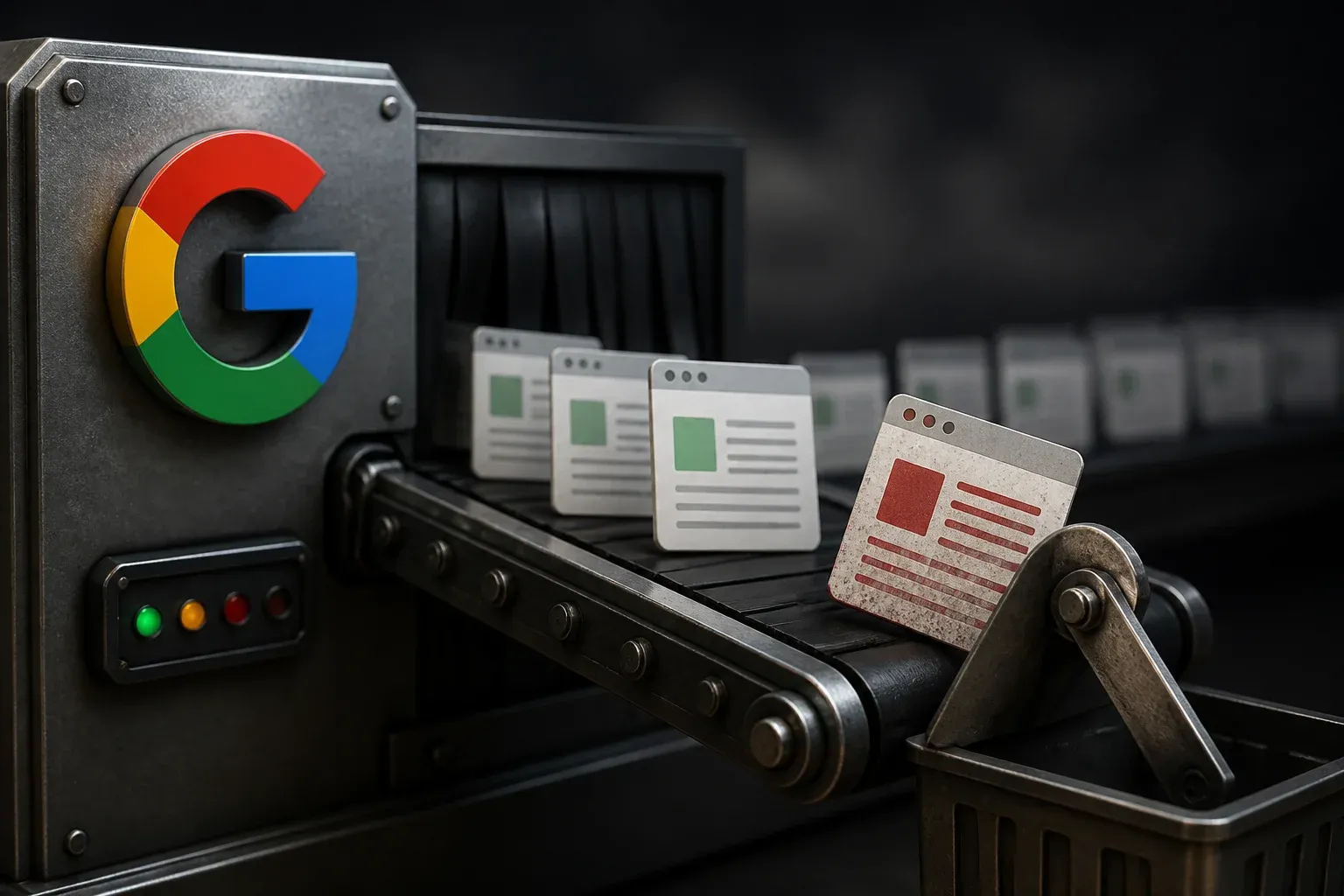
Google’s September 2026 spam update rolled out globally from 24 September and took 13 days and 16 hours to complete. Google’s September 2026 spam update described it as a normal spam update, but its duration made it notably slower than the company’s previous spam update in August. For site owners, the important lesson is not to guess at a hidden cause. It is to treat rankings during a long rollout as incomplete data, monitor changes carefully and avoid making rushed website changes before the update has settled.
The timing comes from the Google Search Status Dashboard entry for the September 2026 spam update. Google also said the update applied across all languages and locations, with a rollout that could take up to two weeks. That global scope means businesses with international audiences could see volatility in more than one market while the same update was still progressing.
What the longer rollout confirms, and what it does not
Google confirmed the rollout’s dates, worldwide scope and classification as a spam update. It did not publicly explain why this rollout lasted almost two weeks, nor did it disclose the specific signals or weighting behind ranking changes. A longer timeline should therefore not be treated as proof of an unusually severe penalty, a new ranking system or a problem with a particular website.
Spam updates are distinct from broad core updates. Based on Google’s description, this change focused on enforcing spam-related policies rather than conducting a general reassessment of content quality across every topic. A ranking movement during the period may be connected to the update, but Google’s public materials do not allow site owners to identify a precise trigger from timing alone.
The available rollout data does establish a meaningful difference from the prior spam update in 2026:
| Update | Reported rollout duration | What the research confirms |
|---|---|---|
| August 2026 spam update | Roughly 2 days and 16 hours | A shorter 2026 spam update rollout |
| September 2026 spam update | 13 days and 16 hours | A global normal spam update and the longest spam rollout in 2026 to date |
The comparison is useful operationally. A short rollout may allow a clearer before-and-after assessment within days. A nearly two-week rollout creates a longer period in which rankings can move as Google’s changes reach different systems, languages and locations. It also leaves more room for ordinary factors, such as changing demand or competitor activity, to overlap with update-related volatility.
Monitor performance without chasing daily fluctuations
For businesses that depend on organic traffic, a long Google rollout is a reason to strengthen measurement, not to rewrite pages in response to every position change. The most useful evidence should come from first-party performance data and a consistent baseline from before the rollout.
During the rollout window, site owners should:
- Review Search Console performance reports for changes in clicks, impressions, average position and affected queries.
- Compare ranking history by country and language where the website serves multiple markets.
- Identify whether declines are concentrated in a page type, query group or geographic segment rather than assuming a sitewide effect.
- Record the date and scope of material changes so post-rollout comparisons are based on evidence.
- Avoid major structural or content overhauls solely because of short-term movement during the update.
The final point matters because reacting midway through a rollout can make later analysis harder. If teams change templates, internal linking, content or technical settings while rankings are already moving, they may not be able to separate the effect of their own changes from Google’s update.
How to assess the result after completion
Once the update is complete, compare performance with a meaningful pre-update baseline rather than a single day of traffic. Look for sustained movement after the rollout, then examine the pages and queries involved. If a decline aligns with patterns that raise spam-policy concerns, the practical response is to review that area of the site and return to normal optimization work centered on high-quality, policy-compliant content.
That does not mean every loss has a simple explanation. Google has not disclosed the September update’s detailed signals, so a ranking decline alone cannot establish which factor caused it. Conversely, a temporary dip that reverses after the rollout may not justify extensive intervention. The goal is a measured diagnosis based on stable trends, not a rapid attempt to reverse a movement that may still be in progress.
For companies investing in search as a dependable acquisition channel, visibility in AI-driven results and conventional search increasingly needs the same discipline: clear content, trustworthy site practices and evidence-led measurement. GEO Search Leads helps teams identify opportunities to improve AI search visibility and organic lead generation, so they can focus resources on pages and topics that support qualified demand rather than react to noise. Start an AI visibility scan.
Frequently Asked Questions
When did Google’s September 2026 spam update roll out?
Google’s Search Status Dashboard shows that the rollout began on 24 September 2026 and lasted 13 days and 16 hours, implying completion around 8 October 2026.
Was the September 2026 spam update global?
Yes. Google said the update applied globally, across all languages and locations.
Was this a core update?
No. Google described it as a normal spam update, which is focused on spam-related policy enforcement rather than a broad core update.
Why did Google’s September spam update take longer than the August update?
Google confirmed the rollout duration but did not publicly disclose why it took longer. The September rollout lasted 13 days and 16 hours, compared with roughly 2 days and 16 hours for the August 2026 spam update.
What should site owners do during a Google spam update?
Monitor Search Console and ranking history, including international segments where relevant. Avoid major changes based solely on short-term volatility, then assess sustained performance after the rollout is complete.
Conclusion
Google’s September 2026 spam update was a confirmed global rollout with an unusually extended timeline for that year. Its duration does not reveal the underlying signals Google used, but it does reinforce a practical principle for site owners: measure changes across the full rollout, wait for stable patterns and base any response on evidence rather than daily ranking movement.