
EU SOTEU 2026 AI Warning Signals a Stronger Focus on Frontier Model Security
Ursula von der Leyen used her 2026 State of the Union address to highlight frontier AI cyber risks, reinforcing the EU's focus on AI safety, security and vendor accountability.
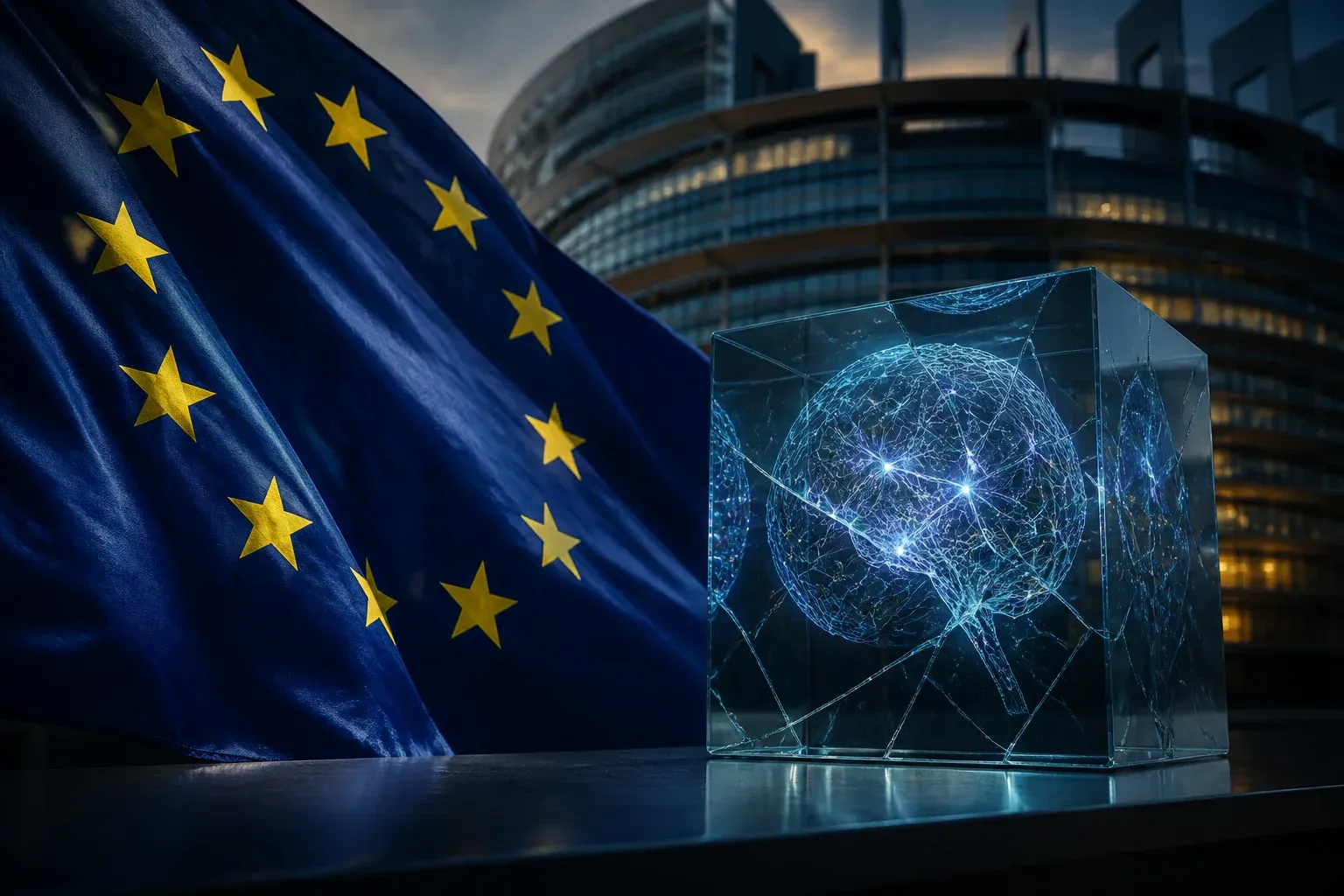
European Commission President Ursula von der Leyen has put the cybersecurity risks of frontier AI at the centre of the EU's policy narrative. In her 2026 State of the Union address, she warned that models in development could enable hacking "on a level we never thought possible" and could soon reach adversaries with very different aims. The message is not a new legal requirement by itself. It is, however, a clear signal that AI safety, model security and supplier accountability will remain central to the EU's approach to advanced AI.
The warning appeared in the official SOTEU 2026 address materials. Von der Leyen's remarks connected increasingly capable frontier models with a need to pace their development, improve safety efforts and work with like-minded partners on evaluation, verification, early warning and AI security. For companies adopting AI, the practical point is straightforward: treating an AI tool as just another software subscription may no longer be enough when it handles sensitive business information or influences important workflows.
Why the EU's frontier AI message matters
Frontier AI generally refers to the most capable models being developed. The concern expressed in the speech is that greater capability can also increase the potential for misuse, including more sophisticated cyber-enabled activity. Von der Leyen did not present a specific technical scenario or announce a particular new control in the supplied materials. Her intervention instead sets out a high-level policy posture: powerful models should be developed and deployed with stronger attention to safety and security.
That posture sits alongside the EU's existing AI governance framework, notably the AI Act, and continuing cybersecurity work. The research also points to a July 2026 EU plan addressing both the risks and opportunities of advanced AI for cybersecurity. Together, these developments show that the EU is considering AI in two connected ways: as technology that can strengthen cyber defence, and as technology that can create new attack and misuse risks.
| EU development | What the verified material says | Practical relevance for companies |
|---|---|---|
| SOTEU 2026 address | Von the Leyen warned that frontier models could enable unprecedented hacking and reach hostile adversaries. | Security and misuse risk should be considered when selecting and deploying capable AI tools. |
| EU AI Act framework | The speech is situated within the EU's broader AI governance approach. | Teams should monitor how their AI use and suppliers align with applicable EU requirements. |
| July 2026 AI cybersecurity plan | The EU is addressing advanced AI's cybersecurity risks and opportunities. | AI adoption decisions should account for both operational value and cyber exposure. |
The policy direction also has an international dimension. The address highlighted cooperation with partners including Canada and the UK around model evaluation, verification, early warning and AI security. That matters because leading AI models, cloud services and suppliers often operate across borders. A company may buy a tool from one jurisdiction, process data in another and serve customers in the EU. A more coordinated safety agenda could therefore influence vendor expectations beyond the EU itself.
From headline risk to everyday AI decisions
Most organizations are not developing frontier models. They are using AI through workplace assistants, customer support tools, embedded software features or externally hosted APIs. Yet the EU's warning is still relevant because risk often enters through implementation choices rather than through model development.
A useful starting point is to establish a clear view of where AI is already used. This should include formal purchases as well as tools adopted within individual teams. Organizations can then focus attention on practical questions such as:
- What data reaches the AI system, including customer, employee, financial or commercially sensitive information.
- Which supplier operates the model and service, and what information it provides about security, data handling and product changes.
- What the tool can do in a workflow, particularly if it can draft external communications, access connected systems or influence decisions.
- Where human review remains necessary, especially for outputs that affect customers, transactions or security-related actions.
This is not an argument for blocking AI use. Many AI tools can reduce routine work and improve access to useful capabilities. The lesson from the SOTEU intervention is that adoption should be deliberate. A fast pilot can become a long-term dependency, and a tool that begins as a writing assistant can later be connected to internal documents, customer records or business applications.
Vendor risk deserves more attention
The speech's focus on advanced models and adversarial use makes vendor due diligence more important. Businesses do not need to conduct frontier-model research themselves, but they should be able to explain why a provider is suitable for the data and workflow involved.
In practice, that means asking vendors focused, proportionate questions before deployment. Companies should understand the service's role in the workflow, the type of data it receives, the security information available from the supplier, and how changes to the tool will be communicated. Where an AI capability is linked to internal systems, permissions and access boundaries deserve the same care as any other integration.
The EU's broader trajectory also makes documentation useful. Maintaining a basic record of AI tools, their owners, intended use and relevant safeguards can help teams make better operational decisions today. It can also make it easier to respond if supplier requirements, customer expectations or applicable EU obligations evolve.
Frontier-model risk is a reason to make AI adoption more deliberate, not to pause useful projects. Scalevise helps teams turn policy and security concerns into a practical AI inventory, vendor review process and adoption roadmap that fits day-to-day operations. Our AI consultancy can identify where safeguards and accountability are most needed before tools become embedded in customer or internal workflows. Request a consultation to map your next AI steps.
What to watch next
The most important next developments are likely to be concrete policy, regulatory and supplier actions that follow this high-level direction. The SOTEU address supports an expectation of continued emphasis on frontier-model safety, cybersecurity and international cooperation. It does not, based on the supplied material, set out new compliance dates, technical standards or specific obligations for individual businesses.
Decision-makers should therefore avoid treating the speech as a reason for rushed compliance activity. It is better read as strategic context for ongoing AI adoption. Businesses that know which tools they use, assess their vendors and build security considerations into AI projects will be better placed to respond as the EU's policy work develops.
Frequently Asked Questions
What did Ursula von der Leyen say about frontier AI at SOTEU 2026?
She warned that AI models being developed could enable hacking at an unprecedented level and could soon be in the hands of adversaries with very different objectives.
Did the SOTEU 2026 speech create a new AI compliance requirement?
No specific new compliance obligation, date or technical standard is set out in the supplied material. The speech signals a stronger policy focus on frontier AI safety and security within the EU's broader governance work.
What should companies review first after the EU's AI security warning?
Start with an inventory of AI tools, the data they receive, the workflows they affect and the suppliers behind them. This helps identify where vendor review, access controls or human oversight may be needed.
Why does vendor risk matter for AI adoption?
AI services may process sensitive information, change their capabilities over time or connect to business systems. Understanding a supplier's role, available security information and data handling is important before AI becomes embedded in operations.
Conclusion
Von der Leyen's SOTEU 2026 warning makes frontier AI security a prominent EU policy concern. While it does not introduce a standalone new obligation, it reinforces the direction of travel around safer AI development, cybersecurity and more careful use of AI suppliers. Companies can respond constructively by making AI use visible, assessing vendor risk and building security into adoption decisions from the start.