
From n8n to Microservices: Why Large Automation Workflows Eventually Break
Scaling workflows in n8n is fast and effective until complexity, performance, and maintenance start becoming serious problems. This article explains why growing companies eventually move toward microservices and hybrid automation architectures.
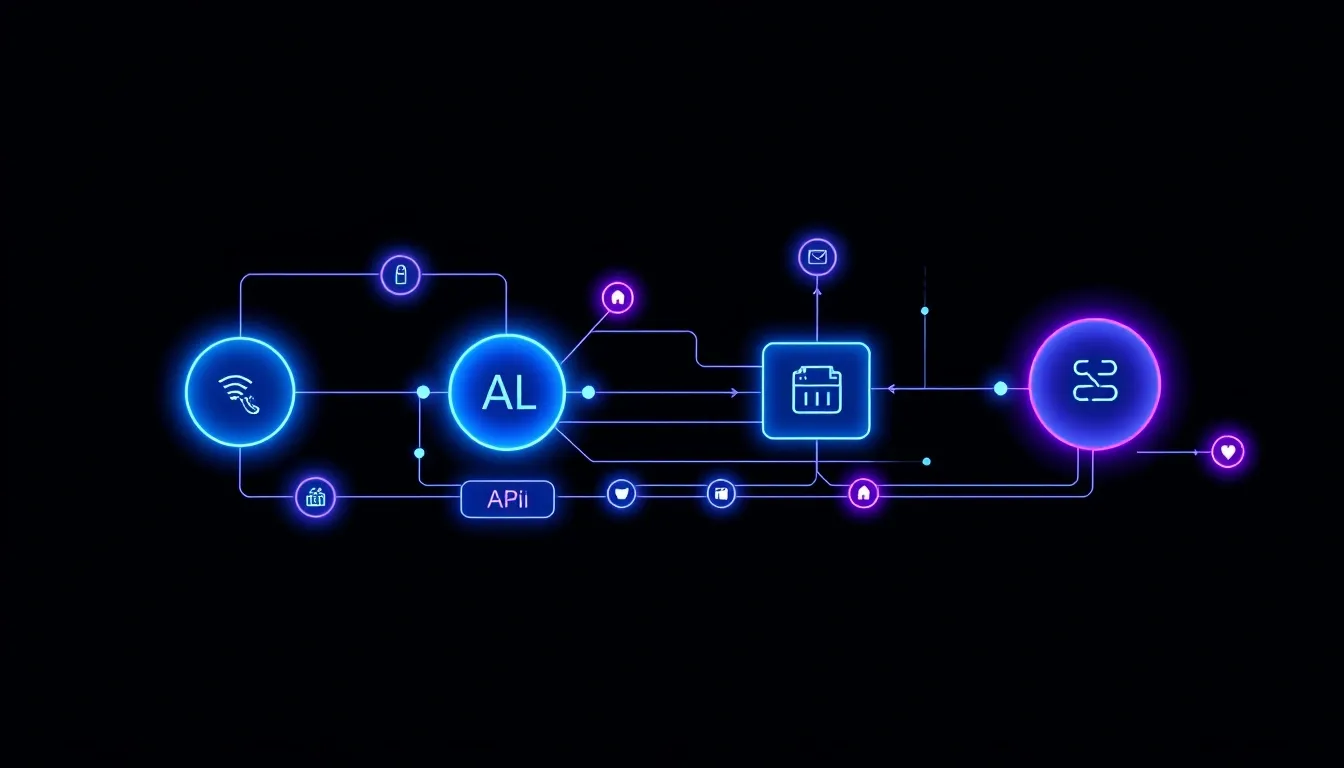
Tools like n8n have completely changed how companies build automations. What used to require backend developers, APIs, cronjobs, and infrastructure can now be connected visually in hours instead of weeks.
For startups and growing companies, this is often the perfect solution. Teams can automate onboarding, CRM synchronization, lead routing, notifications, reporting, and AI enrichment flows without building a full engineering department first.
But there is a hidden problem that many businesses eventually run into.
The workflow quietly turns into an application.
What started as a simple automation grows into hundreds of nodes, multiple API integrations, retry mechanisms, conditional logic, AI processing, database operations, and custom JavaScript. At that point, maintaining the workflow becomes increasingly difficult.
This is where many companies start looking at microservices.
The Real Scaling Problem
The issue is usually not n8n itself. The issue is using workflow automation for responsibilities that belong inside software architecture.
A workflow tool is excellent for orchestration. It is far less effective as the core foundation of an entire platform.
Over time, teams often notice:
- workflows becoming difficult to debug
- changes unexpectedly affecting other processes
- performance bottlenecks
- unreliable retries
- duplicated logic across automations
- security and governance concerns
The biggest danger is operational dependency. One broken workflow can suddenly impact onboarding, customer communication, reporting, and internal systems all at once.
Why Companies Move Toward Microservices
Microservices separate functionality into independent services instead of placing everything inside one large workflow.
A growing company may split systems like this:
| Service | Responsibility |
|---|---|
| Lead Service | Processes incoming leads |
| AI Service | Handles AI scoring and enrichment |
| Billing Service | Manages subscriptions and invoices |
| Reporting Service | Generates exports and dashboards |
| Notification Service | Sends emails and alerts |
This architecture gives companies much more flexibility and reliability.
If one service fails, the rest of the system can continue operating. Teams can scale heavy AI processing independently from lightweight API requests. Developers can also deploy changes without risking the entire automation infrastructure.
For AI driven systems, this becomes even more important. AI workflows often require queues, asynchronous processing, vector databases, GPU workloads, and long running tasks. Those responsibilities quickly become difficult to manage entirely inside visual workflow platforms.
Why Most Companies Should Not Fully Abandon n8n
Moving fully away from workflow platforms is usually a mistake.
The strongest architectures today are hybrid systems.
n8n remains extremely valuable for orchestration, triggers, internal automations, and operational workflows. Microservices handle the heavier responsibilities like authentication, AI processing, reporting engines, and complex business logic.
That combination creates both speed and scalability.
The goal is not replacing workflows. The goal is preventing workflows from becoming unmaintainable software systems.
Final Thoughts
Most companies do not fail because they started with workflow automation. They fail because they scaled without evolving the architecture behind it.
n8n is an excellent starting point. But once workflows become business critical, architecture starts mattering far more than convenience alone.
At Scalevise, we help companies transform fragile workflows into reliable and scalable automation infrastructures. This includes migrating complex n8n environments toward structured architectures using APIs, custom middleware, AI services, queues, and scalable backend systems without losing the flexibility that made automation valuable in the first place.