
Voice Agents for Shopify That Know Your Inventory and Automate Sales and Support
Inventory-aware voice agents for Shopify go beyond scripted bots. By accessing live product, variant, and order data, they handle availability questions, guide purchases, automate support, and turn voice conversations into measurable revenue.
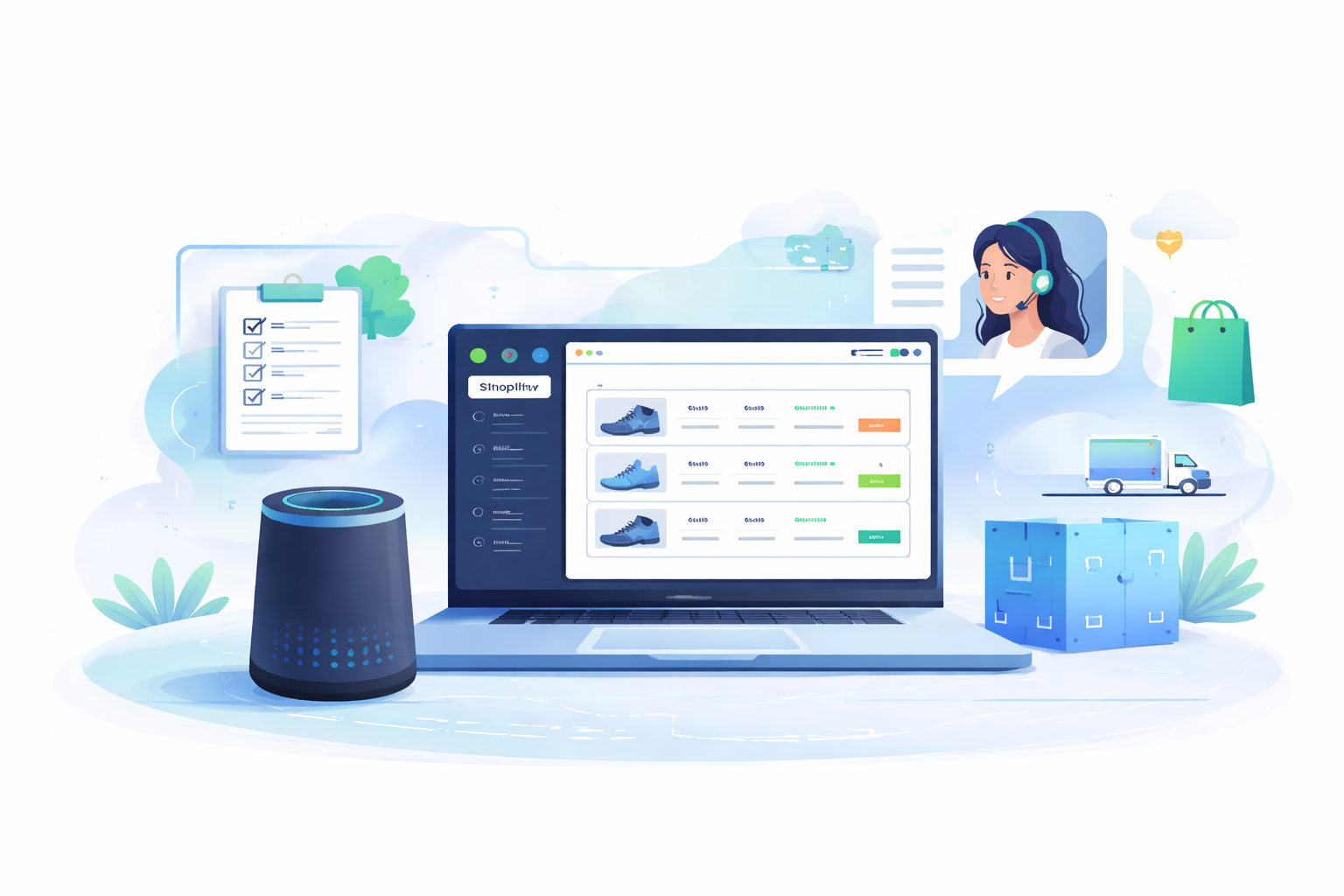
For Shopify merchants operating at scale, voice agents are becoming a serious operational asset. Not as a gimmick, but as a conversion layer and a support automation channel that understands products, stock levels, variants, pricing, and order state in real time.
This article explains what an inventory aware voice agent for Shopify really is, how it works under the hood, and where it delivers measurable business value. No hype. Just practical use cases and architectural considerations.
What Is an Inventory Aware Voice Agent
A Shopify voice agent is a conversational system that handles spoken interactions with customers over phone or web voice. The key differentiator is inventory awareness.
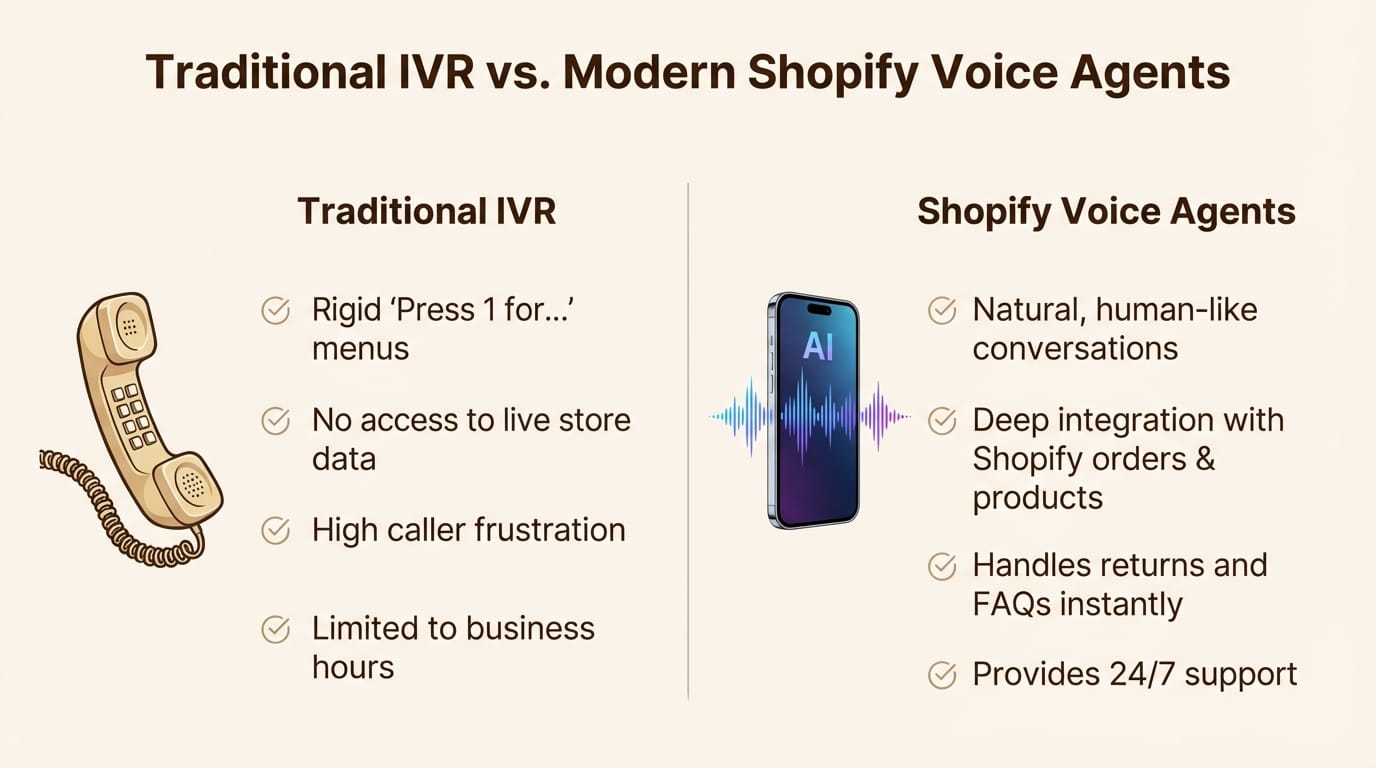
That means the agent does not rely on static scripts or generic answers. It queries live Shopify data before responding. Product availability. Variants. Sizes. Colors. Delivery estimates. Backorders. Restock timing.
In practice, the voice agent behaves like a trained sales or support employee who always has the Shopify admin panel open and up to date.
Why Inventory Awareness Is the Hard Part
Most voice agents fail because they are disconnected from operational data. They can talk, but they cannot act with certainty.
Inventory awareness requires:
- Real time access to Shopify products, variants, and inventory levels
- Contextual understanding of customer intent
- Guardrails to avoid promising unavailable stock
- Fallback logic when data is incomplete or delayed
This is where most off the shelf voice bots break down. They either hallucinate availability or default to vague answers that frustrate customers.
A production grade solution treats inventory as a first class data source, not an afterthought.
High Level Architecture
At a conceptual level, an inventory aware Shopify voice agent consists of five layers.
- Voice interface
Handles speech to text and text to speech. Phone calls, browser voice, or embedded widgets. - Conversation engine
Manages intent detection, dialogue flow, and context persistence across turns. - Shopify integration layer
Queries products, variants, inventory, collections, pricing rules, and order data via API. - Business logic layer
Applies rules such as low stock thresholds, delivery promises, regional availability, or upsell logic. - Escalation and logging
Routes to human agents when needed and logs every interaction for analytics and compliance.
This separation is critical. Mixing conversation logic with commerce logic is a recipe for brittle systems.
Core Use Cases That Actually Convert
1. Product Availability Calls
A classic example. Customers call asking:
Do you have the Nike Air Max in size 42 in black?
The voice agent queries Shopify inventory in real time, checks variant availability, and responds with certainty.
If available, it can continue with:
We have two left in stock. Would you like me to reserve one or send you a checkout link by SMS or email?
This reduces friction and captures high intent buyers who would otherwise hang up or bounce.
2. Restock and Backorder Handling
When a product is out of stock, the agent does not just say no.
It can answer:
This item is currently out of stock. We expect a restock in approximately seven days. I can notify you as soon as it is available or suggest a similar alternative that is in stock today.
That response requires live inventory data, restock metadata, and product relationships. It is not trivial, but the payoff is retention instead of churn.
3. Order Status and Fulfillment Questions
Voice agents shine in post purchase support.
Customers frequently call with questions like:
Where is my order
Has my order shipped
Can I change my delivery address
The agent can authenticate the caller, retrieve the order from Shopify, check fulfillment status, and provide a clear answer without human intervention.
This alone can deflect a large percentage of inbound support calls.
4. Guided Product Discovery
Inventory aware voice agents are not limited to yes or no answers.
They can guide customers through product selection while respecting stock constraints.
For example:
I am looking for a summer jacket under 150 euros in medium.
The agent filters products by collection, price, size, and availability, then presents only valid options.
This is conversational merchandising, not search.
5. Upsell and Cross Sell Based on Stock
Upsells only work if they are actually available.
A voice agent can intelligently suggest complementary products that are in stock and relevant to the current item.
If a customer is buying running shoes, the agent might suggest socks or insoles that have healthy inventory levels, avoiding low stock items that could complicate fulfillment.
Also see: 10 Shopify Automation Ideas with n8n
Business Impact for Shopify Merchants
Inventory aware voice agents deliver value in three measurable areas.
- First, conversion rate. Customers who get immediate, accurate answers are more likely to buy.
- Second, operational efficiency. Support teams spend less time answering repetitive availability and order questions.
- Third, customer experience. Confidence builds when the system gives precise answers instead of vague promises.
Merchants who treat voice as a serious channel see it evolve from cost center to revenue contributor.
Common Pitfalls to Avoid
There are several traps teams fall into when implementing Shopify voice agents.
- One is relying on cached inventory data. Even a few minutes of delay can cause overselling or misinformation.
- Another is over automation. Some scenarios still require human judgment. Escalation paths must be clear and fast.
- A third is ignoring analytics. Every voice interaction is a data point. Without logging and analysis, optimization is impossible.
When Voice Agents Make Sense and When They Do Not
Voice agents are not for every store.
They make sense when:
- You have frequent inbound calls about products or orders
- Your catalog has multiple variants or complex availability
- Your average order value justifies automation investment
They are less effective for:
- Very small catalogs with low volume
- Stores without clear inventory discipline
- Merchants expecting instant results without integration work
Build Inventory-Aware Voice Agents for Shopify with Scalevise
Most voice agents can talk. Very few can actually sell.
We design and implement production-grade Shopify voice agents that connect directly to your live inventory, products, variants, and orders. No scripts. No guesses. Just accurate answers, real conversions, and automated support that scales with your store.
What we deliver:
- Real-time Shopify inventory and variant awareness
- Voice agents for sales, support, and order handling
- Secure API integrations with clear business logic
- Human handoff when automation should stop
- Full visibility into conversations and performance
This is not a plug-and-play bot.
It is a tailored system designed around your catalog, your workflows, and your growth targets.
Book a Strategy Call
Use the calendar below to schedule a short, no-obligation call.
We will assess your Shopify setup, identify high-impact voice use cases, and outline what an inventory-aware voice agent would look like for your business.
Prefer email? Reach us directly at contact@scalevise.com.
Final Thoughts
Voice agents that truly know your Shopify inventory are not simple bots. They are integrated systems that sit at the intersection of commerce, automation, and customer experience.
When designed correctly, they do not just talk. They sell, support, and retain customers with the same accuracy as a trained employee.
The key is realism. Live data. Clear logic. And a focus on real business outcomes rather than novelty.
Voice commerce is maturing. Inventory awareness is the baseline, not a bonus.